
Gulf Sovereign Funds Bet Big on US Chip Race
Baca dalam 60 detik
- These investments bypass traditional oil revenue streams, signaling a strategic pivot toward technology asset ownership.
- The funds gain board influence and technology transfer rights that could reshape their domestic industries.
- For Washington, Gulf capital fills a funding gap left by cautious private equity, enabling faster construction of fabs under the CHIPS Act.
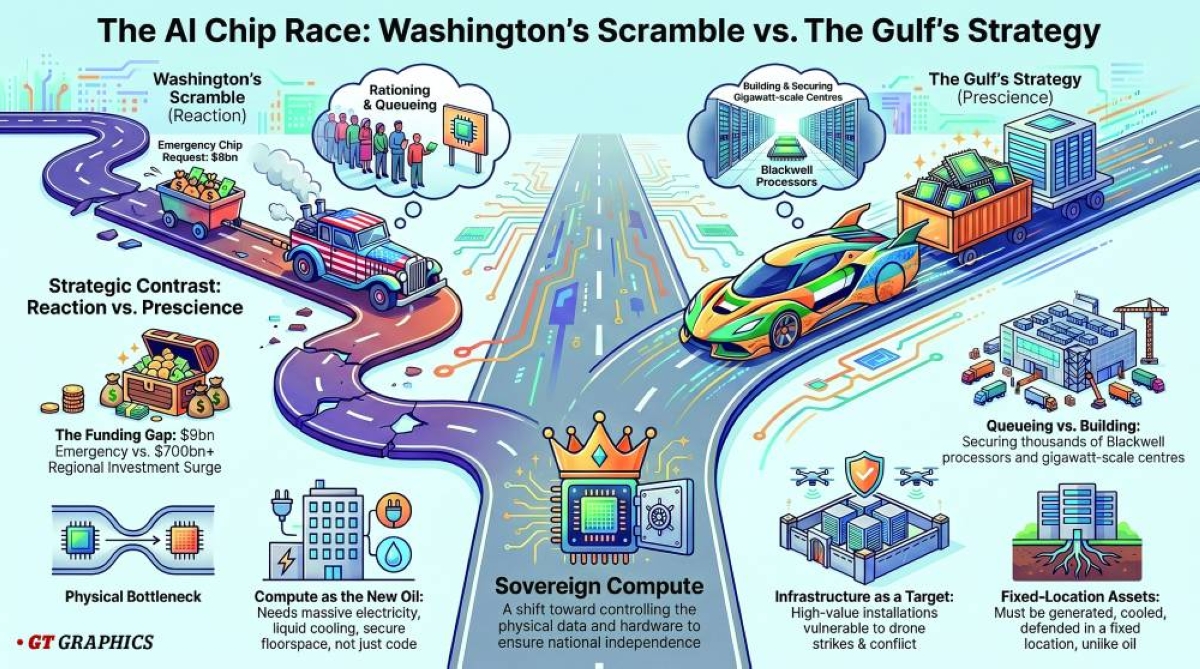
Sovereign funds from Saudi Arabia, UAE, and Qatar have committed over $50 billion to US chip projects since 2023, targeting advanced fabrication and design firms. These investments bypass traditional oil revenue streams, signaling a strategic pivot toward technology asset ownership. The funds gain board influence and technology transfer rights that could reshape their domestic industries.
For Washington, Gulf capital fills a funding gap left by cautious private equity, enabling faster construction of fabs under the CHIPS Act. The partnership reduces reliance on East Asian suppliers while deepening strategic ties with Middle Eastern allies. Critics warn of technology leakage, but strict export controls and joint venture structures mitigate risks.
The Gulf's sovereign bet aligns with their Vision 2030 diversification goals, positioning them as future tech hubs. By owning stakes in cutting-edge chip production, they secure preferential access to advanced semiconductors for AI and defense. This dual-use advantage could grant them leverage in future energy-for-tech negotiations.
Power Move: Gulf sovereign funds aren't just investing in chips—they're buying geopolitical insurance. As the US-China tech war intensifies, these stakes convert oil wealth into technological sovereignty. Expect Gulf states to demand co-development rights for next-gen chips, turning passive capital into active industrial power.
This article was edited with AI assistance for readability. Read original here.

