Trump-Xi Meeting: When China's Economic Self-Reliance Reshapes the Global Trade Map
Baca dalam 60 detik
- Pertemuan puncak Trump-Xi menjadi sorotan karena China kini lebih tahan terhadap tekanan eksternal berkat strategi swasembada.
- Defisit dagang AS-China kembali melebar akibat lonjakan permintaan komponen AI, meski tarif masih berlaku.
- Negara-negara ASEAN, termasuk Indonesia, menghadapi dilema antara menjadi mitra dagang atau terdampak banjir barang murah China.
US President Donald Trump and Chinese President Xi Jinping are scheduled to meet in their second summit this year, a moment awaited by global market players. But unlike in earlier eras, China's position is now far more solid. A self-sufficiency strategy pushed over the past few years has made the world's second-largest economy no longer fully dependent on Washington's goodwill.
The latest data show the US trade deficit with China briefly shrank to its lowest level since 2017 in April, but widened again as demand for artificial intelligence (AI)-related components surged. According to China Customs data accessed through Wind Information, imports of technology goods from China actually increased, indicating that tariffs imposed by the previous administration were not enough to curb US consumer and industrial appetite.
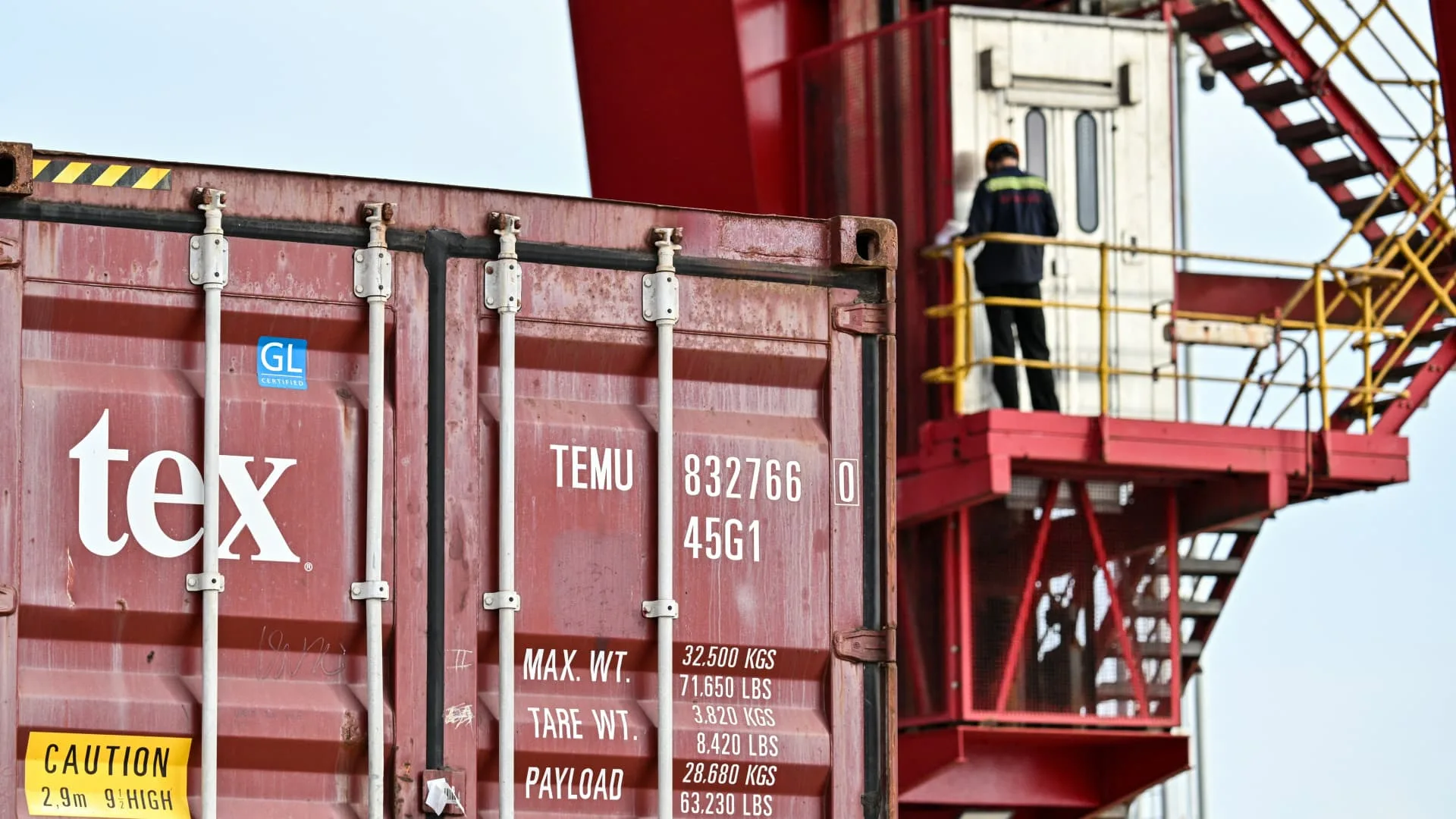
More interestingly, the world's dependence on Chinese-made goods is only deepening. The president of the European Chamber of Commerce in China, Jens Eskelund, noted that more than 60% of US imports still come from Asia, unchanged since before the "Liberation Day" policy. He estimates that half to three-quarters of container traffic from China to Southeast Asia then continues on to other destinations. "I previously estimated China would account for 40% of global container exports by 2030, but that milestone was already reached this summer," he said.
This shift is inseparable from China's property crisis, which began to worsen in 2022. Domestic demand weakened, forcing Chinese companies to pivot to export markets. Eskelund said there is a direct correlation between falling export prices and accelerating export volumes. "China can do it because China is the only player," he stressed.
On the other hand, the domestic economic slowdown has pushed Chinese companies to compete more aggressively, both in global markets and among themselves. A September survey by the American Chamber of Commerce in Shanghai found that three-quarters of respondents considered local Chinese competitors superior, with the product quality gap narrowing by 6 percentage points from last year. For the first time since 2022, domestic competition surpassed geopolitical tensions as the main challenge for members of that chamber of commerce.
"There is no indication that China's strategy depends on the actions of others. This is a strategy of one-way dependence by the world on China that they will weaponize," said Chad Bown, a senior fellow at the Peterson Institute for International Economics.
For Indonesia, this dynamic creates its own dilemma. On one hand, Indonesia can leverage its position as a trading partner to attract investment from Chinese companies seeking an alternative production base. On the other hand, a flood of cheap Chinese goods could threaten domestic manufacturing industries, especially textiles and electronics. The government needs to strengthen anti-dumping policy and push downstreaming so it does not merely become a market.
The European Union is also starting to follow the US in monitoring exports from China. EU Trade Commissioner Maroš Šefčovič urged "real results" from China before October and is scheduled to visit Beijing next month. Eskelund added that the EU has the largest trade deficit with China compared with other economies.
Going forward, the Trump-Xi meeting is expected to produce only an extension of the trade truce, not a major deal. Goldman Sachs economist Hui Shan said Chinese policymakers do not feel the need to immediately loosen monetary policy because some subsectors are still growing strongly, such as industrial robot production, which rose 34.6% year-on-year in August. However, with house prices already down 30% over six years and a weak labor market, pressure to reform remains strong. Will China continue to rely on exports as a safety valve, or will it instead accelerate domestic reform?