London Buses Slow Down, Ridership Falls: A Warning for Public Transport Worldwide
Baca dalam 60 detik
- Rata-rata kecepatan bus London turun menjadi 9,18 mph pada 2025-26, terendah sejak pencatatan dimulai 2013-14.
- Penurunan kecepatan 10% berkorelasi dengan penurunan permintaan 6%, memicu lingkaran setan penurunan layanan.
- Fenomena ini melanda 15 jaringan bus di Eropa, Asia, dan Amerika Utara, dengan implikasi bagi kota-kota di Indonesia.
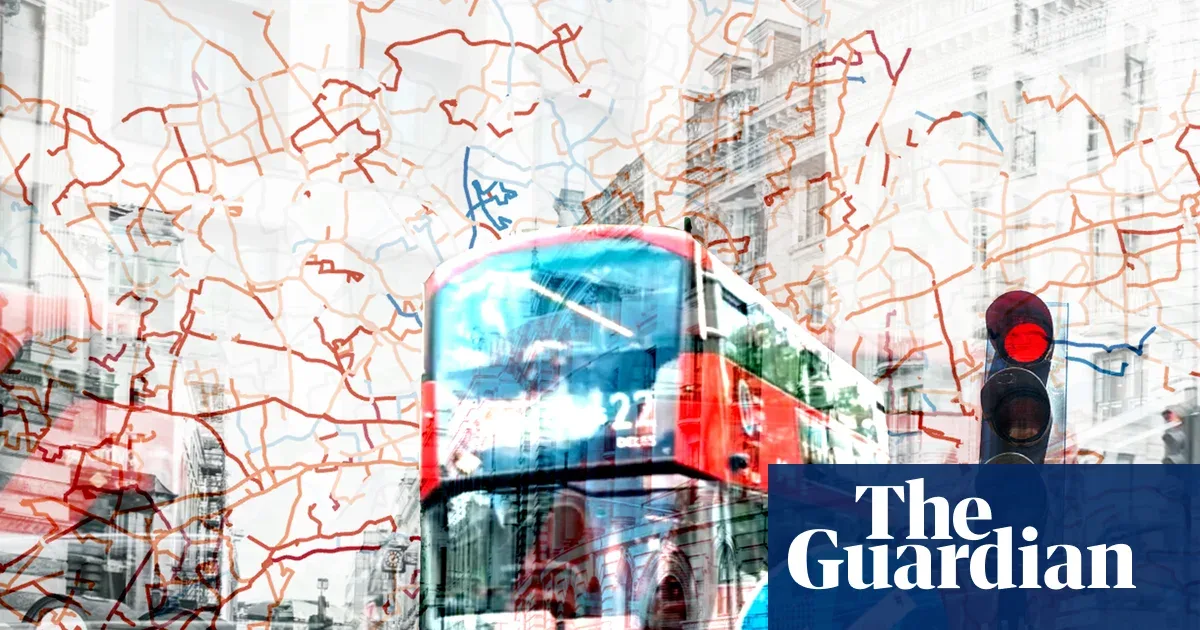
London's bus network, the icon of public transport in the British capital, is in serious decline. The latest data shows that average bus speeds across the network in 2025-26 were just 9.18 mph, the lowest since records began in 2013-14, or a 4.8% drop in a decade. This decline is not merely a statistical figure but a blow to millions of residents who depend on buses every day.
On route 22, which crosses the city center to Oxford Circus, buses averaged under 6 mph in 2025, 16% slower than a decade earlier. A journey that once took 51 minutes now takes an hour. A reporter who rode that bus on a June morning recorded the bus coming to a complete stop for 40 minutes out of a total 108-minute journey. A similar pattern appears on route 207 to White City, which slowed 14% to 7.4 mph—slower than a novice cyclist—and route 243 to Waterloo, which fell 5%.
The impact is felt in ridership. Since 2013, London bus passengers have plunged by more than 300 million a year, or 16%, even as the city's population grew by nearly one million. In 2024, ridership fell to 1.8 billion from a level consistently above 2 billion between 2010 and 2019. The decline has been worsened by service cuts: total TfL bus mileage shrank from an average of 487 million km a year (2010-2019) to about 460 million km over the past three years.
London Mayor Sadiq Khan acknowledged the problem. "We are very concerned about bus usage. One of the reasons, when you talk to passengers, is a lack of reliability. And why is it not reliable? Because of bus speeds," he said. He also stressed that low-income residents are hit hardest because bus fares are far cheaper than the Underground.
The main cause of London's bus congestion is pressure on road space and the high volume of roadworks. Graham Vidler, CEO of the Confederation of Passenger Transport, said unplanned and uncoordinated roadworks are the biggest factor. "The amount of roadworks seems to have mushroomed," he said. Seb Dance, deputy mayor for transport, added that aging infrastructure such as water, electricity, and gas mains worsens the situation.
In addition, the expansion of cycle lanes—from 90 km to 450 km in a decade—has reduced space for buses. Operators complain that priority given to cyclists and pedestrians comes at the expense of bus speeds. But Dance argues that the main problem is too many private cars, and the solution is to move people onto public transport and bicycles.
This phenomenon is not limited to London. A 2026 report from the Transport Strategy Centre at Imperial College London found persistent bus speed declines across 15 networks in Europe, Asia, and North America. In Paris, Istanbul, Kuala Lumpur, and Singapore, bus journeys are more than 10% slower than before the pandemic. In Barcelona, the redevelopment of Plaça de les Glòries Catalanes increased bus travel times by more than 25%. In New York, the widening of cycle lanes on Sixth Avenue cut peak-hour bus speeds by 8%.
The TSC report concludes that when buses are fast and reliable, ridership rises, strengthening the system's viability; conversely, when speeds fall, ridership erodes, threatening sustainability goals. "Making buses better is a key lever for achieving equitable, low-carbon, and resilient cities," the report said.
Indonesian Context
For Indonesia, especially Jakarta and other major cities, this warning is relevant. Jakarta has developed TransJakarta and integrated it with the MRT and LRT, but congestion challenges and road-space priorities remain acute. If fast and reliable buses do not become a priority, Jakarta may well follow London's path: falling ridership, ballooning operating costs, and unequal transport access for low-income groups. The lesson from London shows that investment in buses—including dedicated lanes, traffic-light priority, and coordination of roadworks—is not merely a cost but an investment in equitable and sustainable mobility.
Looking ahead, London is trying to reverse the situation through the Fusion program, which links traffic-light systems to give priority to buses, and a lane-rental scheme to speed up roadworks. But with targets to reduce vehicle speeds for safety and rising extreme temperatures, the challenges remain great. Will cities around the world, including in Indonesia, learn from London's experience before buses truly stop being the main choice?