Harvest Moon 2026: Schedule, How to Watch, and a Chance to Observe Saturn
Baca dalam 60 detik
- Bulan Purnama Panen (Harvest Moon) akan mencapai puncak iluminasi pada 26 September 2026 pukul 12.49 ET atau 23.49 WIB.
- Fenomena ini memberikan cahaya ekstra di awal malam, dahulu membantu petani memanen tanaman musim panas.
- Saturnus dapat diamati setelah pukul 21.00 waktu setempat, dan pada Sabtu akan tampak tepat di atas Bulan.
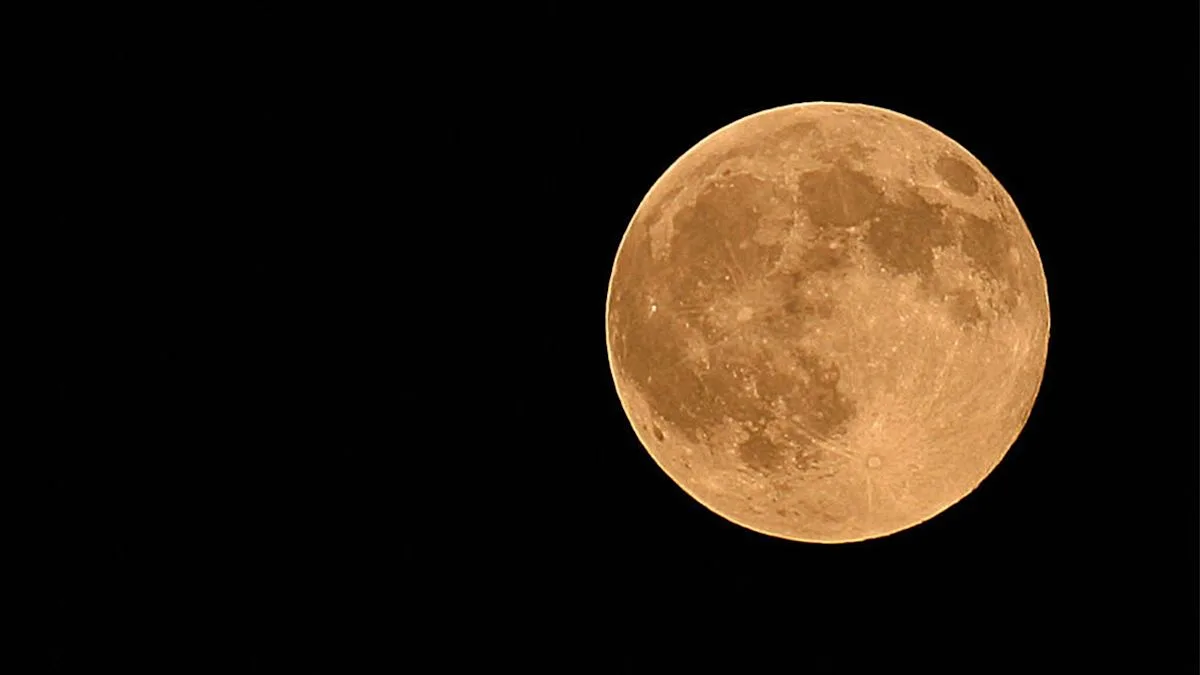
The night sky this weekend will be graced by the Harvest Moon, a full moon that reaches peak illumination on 26 September 2026 at 12.49 Eastern Time (ET), or 23.49 WIB. For observers in Indonesia, the best moment to see it is shortly after sunset, looking toward the eastern sky.
The Harvest Moon is not just an ordinary full moon. According to the Farmer's Almanac, its name comes from agrarian tradition: the moonlight that appears shortly after dusk gave farmers natural light while harvesting summer crops. The phenomenon is also unique because it does not always fall in September—it sometimes shifts to October, depending on how the lunar cycle aligns with the Gregorian calendar. If it occurs in September, it replaces the Full Corn Moon; if in October, it takes the place of the Full Hunter's Moon.
For people in Indonesia, the chance to observe the Harvest Moon is fairly open as long as the weather is clear. No special equipment is needed—just look toward the eastern sky after dusk. However, light pollution in large cities can reduce the sharpness of the observation. Observers in areas with dark skies, such as rural or mountainous regions, may get a more dramatic view.
Besides the Moon, Saturn is also a draw. Space.com reports that the ringed planet can be seen starting at 21.00 local time, rising from the east-southeast horizon as a bright yellow-white point. On Saturday, Saturn will be directly above the Moon, creating a sky composition that is appealing to photograph.
"The Harvest Moon provides extra light in the early evening, and long ago that was a marker for farmers to speed up the harvest," the Farmer's Almanac explained.
In Indonesia, this phenomenon can be a moment for astronomy education as well as sky tourism. Several amateur astronomy communities often hold joint observations. Although it has no direct impact on the economic sector, enthusiasm for astrotourism—such as in the Bromo, Dieng, or Nusa Penida areas—could increase. Local governments can use it as an environmentally friendly nighttime tourist attraction.
Scientifically, the Harvest Moon occurs because of the angle of the Moon's orbit relative to Earth. At this time, the Moon rises only about 20–30 minutes later each night, unlike an ordinary full moon, which rises about 50 minutes later. The effect is that moonlight illuminates the sky longer in the early evening. This phenomenon is not linked to disasters or climate change, but is purely a predictable astronomical event.
For readers who want to watch, note the date 26 September 2026. If the weather is cloudy, there is still time up to three days afterward because the Moon will appear almost full. Meanwhile, next year's Harvest Moon is scheduled for 15 September 2027 according to Time and Date. Are you ready to enjoy this sky show?