Daphne Koller: Causal AI and 'Virtual Human' Are Key to Medical Breakthroughs, Not Just Prediction
Baca dalam 60 detik
- Daphne Koller mengembangkan model AI kausal untuk biologi manusia yang dapat memprediksi respons pasien terhadap intervensi medis.
- Pendekatan ini menantang keterbatasan korelasi statistik dalam penemuan obat, dengan membangun basis data kausal terbesar dari miliaran sel manusia.
- Bagi Indonesia, adopsi AI kausal dalam riset medis dapat mempercepat penemuan obat untuk penyakit tropis dan mengurangi ketergantungan pada impor farmasi.
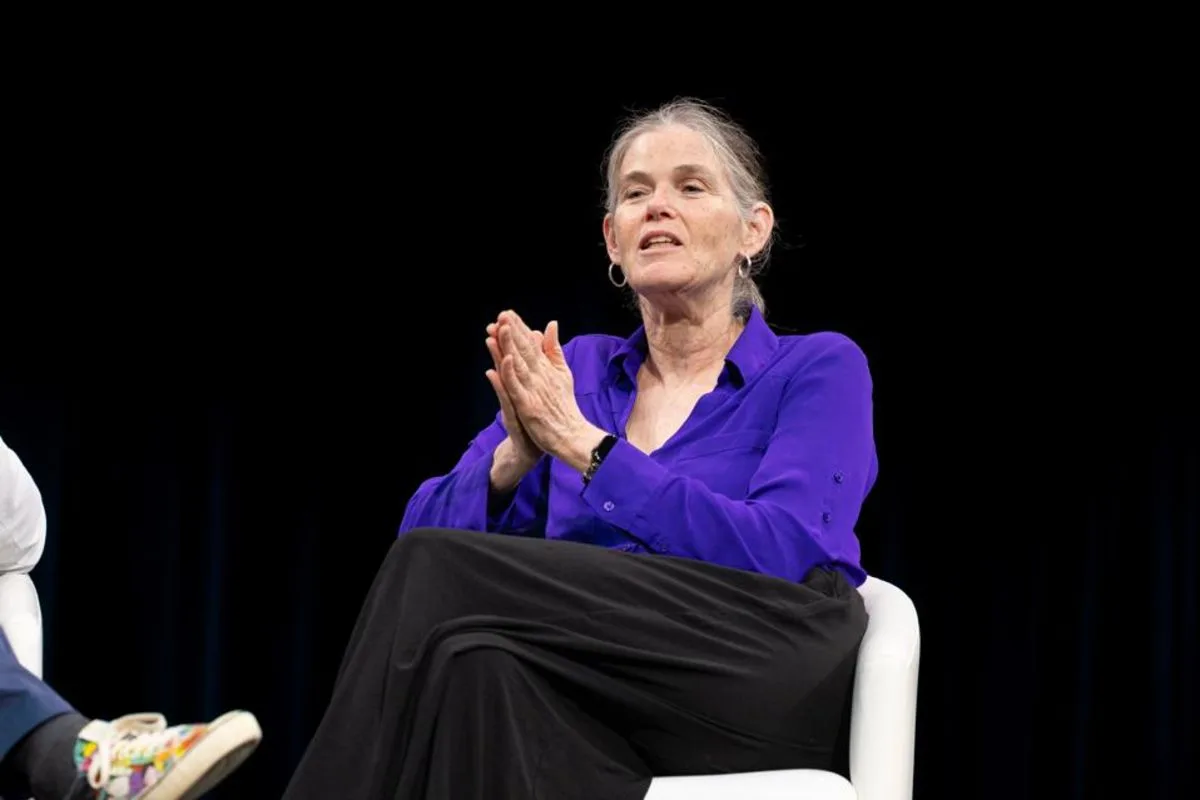
Daphne Koller, computer scientist and founder of Coursera, said that advances in artificial intelligence (AI) in health care cannot rely on data correlation alone. In an interview at the Imagination in Action event in California, she stressed the need for causal AI to understand human biology in depth. Koller, who now leads the biotechnology company insitro, has spent the past eight years building AI models that can predict the effects of medical interventions on real human bodies—something she calls a "virtual human".
According to Koller, the real world in which AI operates has a complexity that is often underestimated. Unlike the digital data generated by billions of people on the internet, AI for health must work at the speed of the physical world. "You're no longer working at the speed of light," she said, describing the challenge of integrating AI bits with the atoms of the human body. Accurate predictions of how patients will respond to treatment require an understanding of cause and effect, not just statistical patterns.
Koller explained that this causal approach is crucial because many failures in drug discovery stem from mistaking correlation for causation. "If you ask a statistician, an economist, or a clinician, they will say correlation and causation are very different," she said. To that end, insitro developed what it calls a "causal data factory"—taking billions of cells from various tissue types, manipulating specific genes, and observing the results. Using live-cell microscopy and sequencing technology, they are assembling the largest causal database of human biology ever created.
Koller highlighted the example of ALS (amyotrophic lateral sclerosis), for which there is still no cure. Available drugs extend life by only two to three months. "That's a problem that offers a tremendous opportunity to uncover new biology," she said. She hopes the causal AI approach can produce drugs that truly modify the disease, not just relieve symptoms. However, she also cautioned that drug discovery has no magic wand; it requires patience and an understanding of what is feasible.
In the Indonesian context, the development of causal AI for health could be a breath of fresh air. The country still faces major challenges in drug research, especially for tropical diseases such as dengue, malaria, and tuberculosis. So far, Indonesia has relied heavily on imports of pharmaceutical ingredients and finished drugs. By adopting a similar approach, research institutions such as BRIN and universities could build causal databases from the local population, accelerating the discovery of more effective drug candidates. Investment in computing infrastructure and cross-disciplinary collaboration is a prerequisite.
"I believe more and more companies will become AI companies with a strong vertical presence," Koller said, emphasizing the importance of deep, specialized tools for solving real problems.
Koller also touched on the role of universities. She urged that the walls of the ivory tower be made more porous, allowing the exchange of people, ideas, and intellectual property between industry and academia. According to her, universities need to reevaluate how they operate so they can have the impact they had a century ago. She said she was grateful not to be a university president because of the many complicated considerations, but she believes there is a great opportunity for visionary leaders.
At the end of the interview, Koller offered a message to young people and researchers: dare to step outside the comfort zone of your discipline. "There's a tremendous wealth of opportunity for those willing to accept the discomfort of being at the boundary between disciplines," she said. She encouraged them not to just work on small variations of transformer models, but to do something truly transformative in fields such as agriculture, government, or health. "Do good while achieving success," she concluded.
Going forward, the question is how quickly causal AI can be widely adopted, including in Indonesia, and whether regulation and the research ecosystem are ready to support it. If successful, it is not impossible that Indonesia could develop innovative drugs for diseases that have long been neglected.