2013 Bitcoin 'Whale' Wallet Wakes Up, Moves Rp560 Billion With No Sign of Selling
Baca dalam 60 detik
- Dompet berisi 411,45 BTC yang tak tersentuh sejak 2013 tiba-tiba memindahkan seluruh dananya ke alamat baru, dengan nilai aset melonjak dari sekitar Rp880 juta menjadi lebih dari Rp560 miliar.
- Pemilik tidak melakukan pembelian, penjualan, atau perpindahan selama 13 tahun, melewati tiga halving, boom 2017, keruntuhan FTX 2022, dan peluncuran ETF Bitcoin spot 2024.
- Tujuan transfer bukan bursa, melainkan dompet pribadi dengan format SegWit modern, menandakan perawatan kustodian alih-alih niat melepas ke pasar.
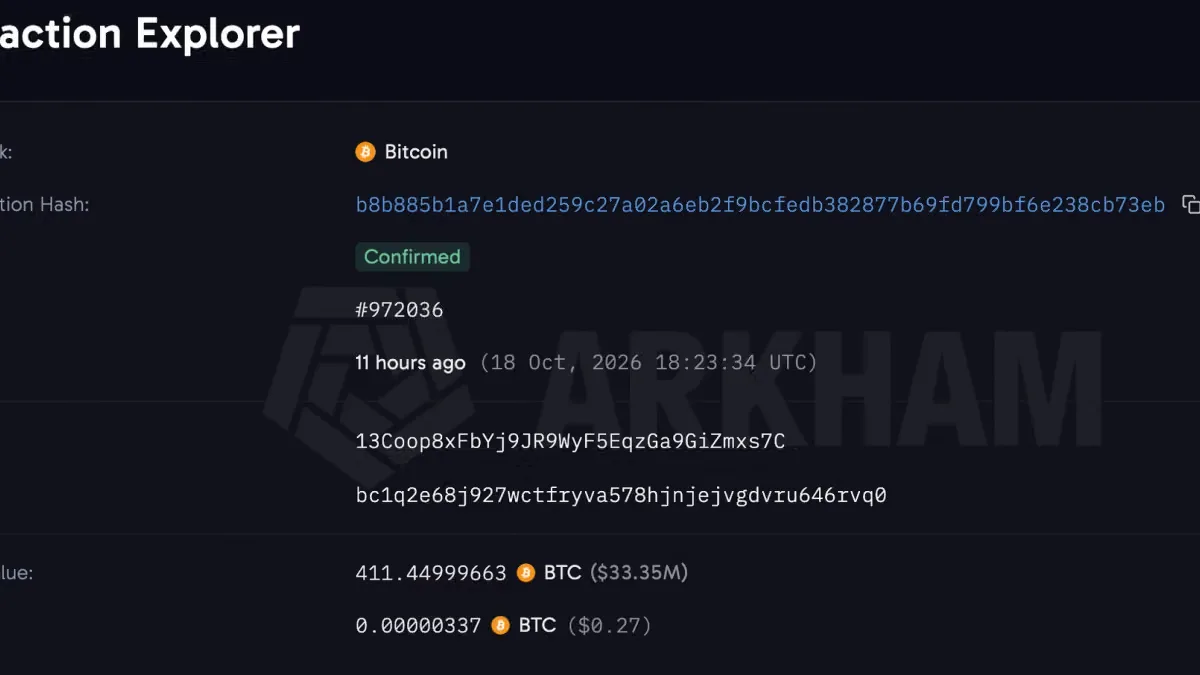
A Bitcoin wallet that had been inactive since 2013 moved again on Sunday (18/10/2026), transferring all 411.45 BTC to a new address. According to Arkham Intelligence data, the assets were worth about US$34 million, or more than Rp560 billion, at the price at the time, around US$82,600 per coin. Yet when the balance was first acquired 13 years ago, the entire holding was worth only about US$54,000, or around Rp880 million.
The transfer is not an isolated incident. A day earlier, two other long-dormant wallets moved a combined 417 Bitcoin. A week earlier, a large 'whale' that had been frozen since before the Covid-19 crisis also moved its funds. The pattern echoes 2025, when a number of large holders woke from long slumber one after another. However, unlike a mass sell-off, most of the coins were moved to new private wallets rather than to exchanges.
The wallet that became active on Sunday received most of its funds, around 411 BTC, on 11 September 2013, when Bitcoin was still around US$131. Over the following 13 years, its owner never bought, sold, or moved a single coin. It simply sat still while watching the asset's value surge more than 600-fold, through three halvings, the peak of the 2017 boom, the collapse of FTX in 2022, and the launch of spot Bitcoin ETFs in 2024.
Although its owner was passive, the wallet had received dozens of micro-deposits worth less than one dollar. Some came from addresses that Arkham categorized as phishing. This is a common scam tactic known as 'address poisoning': attackers send small amounts of crypto (dust) to high-value wallets, hoping the victim will accidentally copy the scammer's address from transaction history when making a transfer later.
At 18:23 UTC on Sunday, the owner sent the entire fortune to a new address and paid only a 337 satoshi transaction fee. To date, the funds have not moved to any exchange. The new destination wallet has received only this one transfer and has not initiated any outgoing transaction. The absence of movement points to routine custodial maintenance rather than a sell-off that would shake the market.
The pattern of moving old wallets to a new format reflects an effort to secure assets rather than a bearish signal. Market participants should not immediately link it to selling pressure.
The 2013 source wallet used an old address format, while the destination wallet uses SegWit (P2WPKH), a modern standard that offers better security and lower transaction fees. Long-term holders often migrate to updated formats to secure assets before taking major financial steps.
For Indonesian investors, this event is a reminder that digital asset custody is not just about storing private keys. Migrating to safer address formats and monitoring for potential address poisoning attacks are part of risk governance that is increasingly relevant as domestic crypto adoption grows. Financial authorities and domestic exchange providers are also expected to provide similar education so customers do not fall victim to the micro-scams that lurk around high-value wallets.
Going forward, the question is not whether this wallet will sell, but whether this wave of old wallets 'waking up' will continue and trigger new speculation in the market. As long as funds keep flowing to private wallets rather than exchanges, selling pressure can be said to be not yet real. However, if that flow ever reverses, the market should be on guard.