Charles Hoskinson Writes New Programming Language for Cardano Himself, Here's the Impact
Baca dalam 60 detik
- Pendiri Cardano, Charles Hoskinson, mengembangkan bahasa pemrograman baru untuk jaringan blockchain-nya secara pribadi.
- Bahasa ini akan menggabungkan transaction intents, proof-carrying data, dan Groth16 proofs untuk aplikasi terdesentralisasi yang lebih efisien.
- Meski detail teknis belum diungkap, langkah ini berpotensi memperkuat ekosistem Cardano di tengah persaingan ketat platform smart contract.
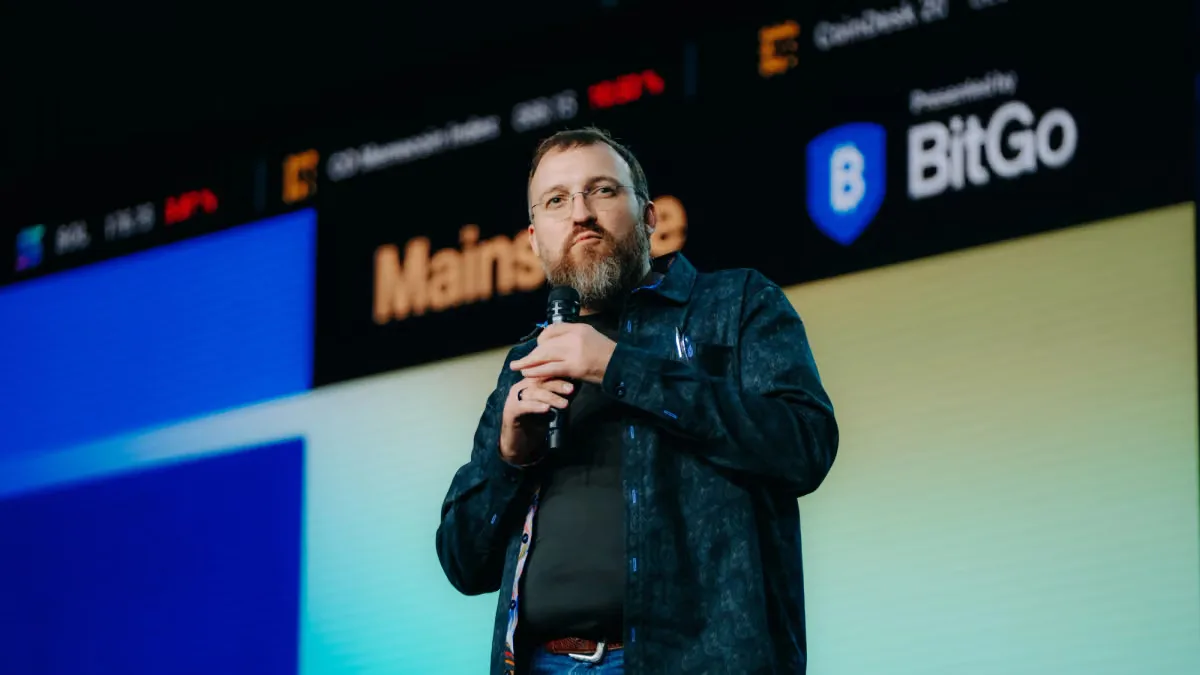
Charles Hoskinson, the founder of Cardano, has surprisingly announced that he is writing a new programming language for the blockchain he founded. The announcement was made through his personal X account on Sunday (19/10/2026), marking a rare move by a CEO who is directly involved in core technical development amid a large engineering team.
According to his post, Hoskinson is working on this project with Lucas Rosa, a software engineer at Input Output Global (IOG) who also helped create Aiken, one of Cardano's main smart contract languages. The new language is claimed to be the first to combine users' intent when transacting with cryptographic proof that the rules have been followed.
There are three main features it will support: transaction intents, proof-carrying data, and Groth16 proofs. Transaction intents allow users to state the purpose of a transaction without having to detail the steps—for example, a trader can request a token swap only if the final price meets certain conditions. Proof-carrying data attaches cryptographic proof to information so that other applications can verify rule compliance without recalculating the entire process. Meanwhile, Groth16 is a proof system that produces concise, quickly verifiable proofs, enabling validation of conditions without revealing private data.
The combination of the three could potentially allow developers to build applications that coordinate trades, check complex conditions, and pass verified information between services, with Cardano only needing to check a small proof at the end. Currently, Cardano developers use Plutus (Haskell-based) and Aiken for smart contracts, while Midnight—the privacy-focused blockchain built by IOG—has its own language called Compact.
Hoskinson's move is unusual. Most blockchain founders whose networks are already large tend to delegate technical development to their engineering teams. However, Hoskinson has chosen to get directly involved, a strong signal that he wants to ensure the direction of Cardano's evolution stays in line with his vision. Even so, without public code or a deadline, the community is still waiting for concrete evidence.
"I am literally personally developing a programming language for Cardano," Hoskinson wrote on X, as quoted.
In the Indonesian context, this development could affect local developers who are building applications on top of Cardano. A more expressive and efficient language can lower the barrier to entry for developers in the country, especially in the decentralized finance (DeFi) and supply chain sectors. However, adoption still depends on the availability of documentation and support from the global community.
Going forward, the public will be waiting to see whether this language is actually launched and able to attract developers amid fierce competition from smart contract platforms such as Ethereum, Solana, and others. If successful, Cardano could potentially expand the scope of applications that can be built on it, while strengthening its position as a blockchain that is serious about technical innovation.