From Zero to 756 Pairs: Sandwich Terns Rebound Three Years After Bird Flu
Baca dalam 60 detik
- Koloni sandwich tern di Pagham Harbour yang sempat musnah akibat flu burung 2022 kini kembali bersarang dengan 756 pasang.
- Restorasi habitat dan pengendalian predator menjadi kunci pemulihan, seiring lonjakan sepuluh kali lipat anakan black-headed gull.
- Pendekatan berbasis kawasan di Solent menawarkan model bagi pengelolaan pesisir Indonesia yang menghadapi tekanan serupa.
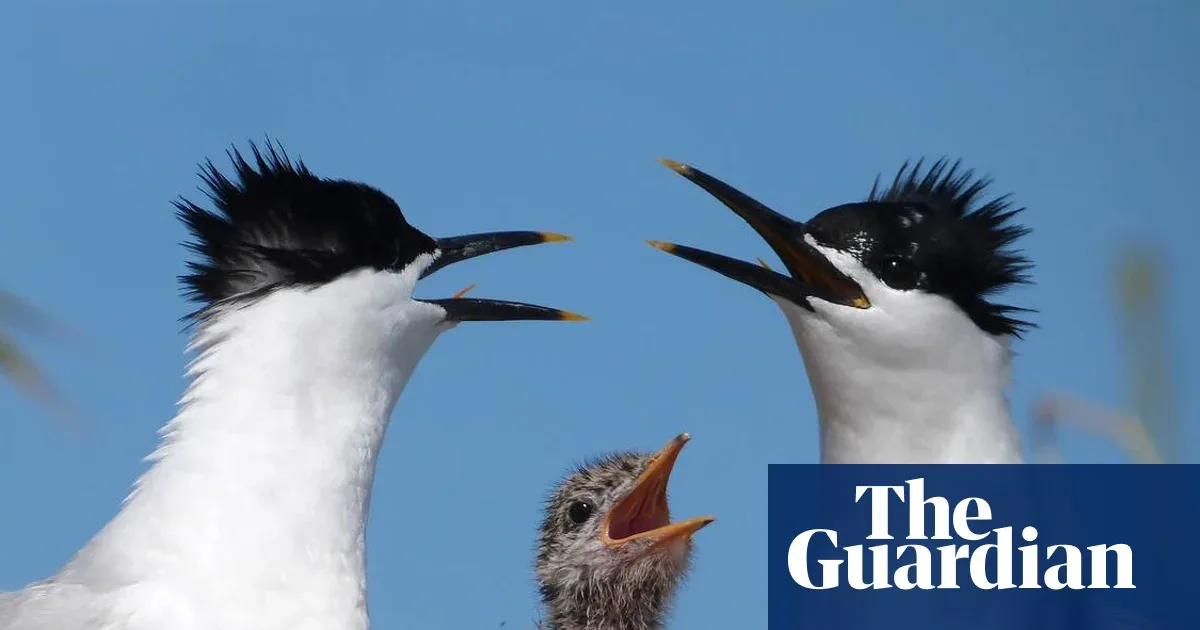
The total devastation that struck the sandwich tern colony at Pagham Harbour, West Sussex, in 2022 turned out not to be the end of the story. Three years later, the area that was once empty is again a nesting ground for 756 pairs of seabirds, one of the fastest recoveries recorded on the southern coast of England.
The revival was not a coincidence. A team from the Royal Society for the Protection of Birds (RSPB), together with volunteers, carried out a series of interventions across 52,000 hectares of coastline and estuaries between the southern coast and the Isle of Wight. They not only installed special fencing to ward off land predators such as foxes, but also conducted regular patrols, monitored for rats, and selectively cleared vegetation so that shorebirds would have safe nesting space.
The results exceeded expectations. Besides the sandwich terns, which produced 570 chicks this summer, the black-headed gull population jumped tenfold from 51 chicks in 2025 to 504 chicks in 2026. Little terns rose from 21 to 34, while avocets recorded 18 pairs nesting on small artificial islands in the saline lagoon at Ferry Pool.
Wez Smith, senior project manager at RSPB, said that in 2022 sandwich terns, black-headed gulls, and Mediterranean gulls were hit hard by highly pathogenic avian influenza (HPAI) until they abandoned their colonies. "It took several years of dedicated conservation action, but the situation began to turn around last year, and now this site is thriving with record-breaking populations," he said.
The success at Pagham Harbour was also supported by simple but effective innovations. At RSPB Medmerry, floating rafts were provided as predator-free nesting sites for common terns and black-headed gulls, far from disturbance by dogs and boats. Similar rafts were deployed at West Hayling, Hampshire, and proved to increase the number of breeding common terns.
The effort is part of the Solent Seascape Project, a long-term partnership led by the Blue Marine Foundation together with various institutions. Its focus does not stop at birds but includes the restoration of seagrass meadows, oyster reefs, and salt marshes along the coast. This whole-ecosystem approach underscores that wildlife recovery depends on improving habitats as a whole, not merely protecting a single species.
For Indonesia, the Solent story is relevant as a mirror. The country has tropical coastlines that serve as migration routes for waterbirds and underpin the livelihoods of small-scale fishers. Development pressure, pollution, and disease among wildlife pose real threats. The collaboration model between conservation organizations, local governments, and coastal communities, as practiced by RSPB, can be adapted, especially in the management of marine conservation areas and coastal national parks.
The question now is whether the success in the Solent will hold up against the next wave of bird flu. As the virus continues to mutate and climate change reshapes coastal landscapes, conservation strategies are required to be not only reactive but also adaptive and based on long-term data.