Guardian Cartoon Highlights Putin's Shadow Over White House Press Secretary's Chair
Baca dalam 60 detik
- Kartunis Nicola Jennings menggambarkan jubir baru Gedung Putih sebagai figur yang tak lepas dari pengaruh Donald Trump dan Vladimir Putin.
- Karya ini menyoroti persepsi publik tentang eratnya hubungan Trump-Putin yang terus menjadi sorotan media internasional.
- Karikatur politik kembali menegaskan peran media visual dalam mengawal isu demokrasi dan transparansi pemerintahan.
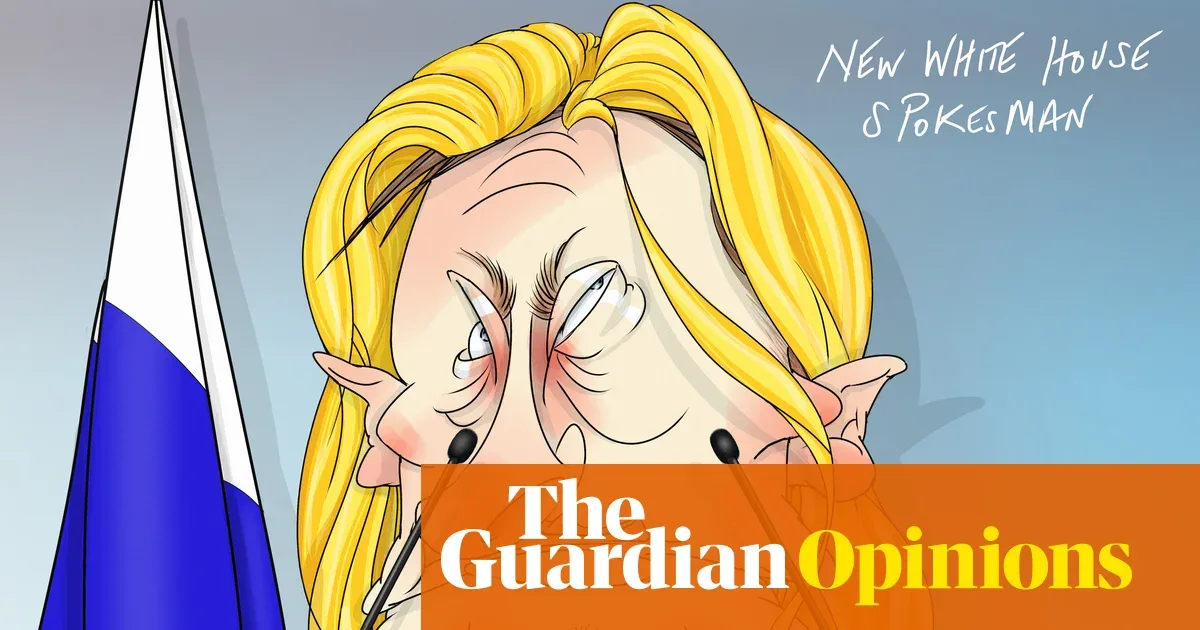
Senior Guardian cartoonist Nicola Jennings has once again drawn public attention with a work highlighting the new White House press secretary. In the cartoon released on 18 October 2026, Jennings does not merely depict the face of the new official but also slips in symbols linking the position to two major names: Donald Trump and Vladimir Putin. The work immediately became a talking point because it is seen as representing public concern over the direction of US political communication under Trump's leadership.
Through her distinctive strokes, Jennings portrays the press secretary as if standing in the shadow of those two controversial figures. Trump, known for frequently criticizing the mainstream media, and Putin, whose relations with Washington warmed at certain periods, form the backdrop that reinforces the visual message. The cartoon is not merely a humorous illustration but a sharp critique of the independence of the presidential press secretary's role. The public is invited to question how far the official White House voice still reflects the public interest rather than personal interests or foreign pressure.
In the context of US politics, the position of White House press secretary is always in the spotlight. The person is the face of the administration before the press and the public, as well as a filter of information from the president. When Trump returned to power, expectations regarding the press secretary's loyalty and communication style rose. Jennings appears to want to emphasize that the neutrality and professionalism of the press secretary are now being tested. The cartoon can also be read as a jab at a communication style that tends to be confrontational and personal, as Trump often displayed during his campaigns.
For Indonesia, the cartoon is relevant as a mirror of how visual media in a democracy play a role in guarding transparency. In Indonesia, political cartoons also have a long tradition, for example the works of G.M. Sudarta or Benny Rachmadi, which often criticized government policy in a light yet piercing way. This phenomenon shows that press freedom and artistic expression remain important pillars in maintaining accountability of power. As international relations grow more complex, including US-Russia relations that affect global stability, visual criticism such as Jennings's work serves as a reminder of the importance of public oversight.
“Political cartoons are not merely entertainment but a mirror of collective anxiety,” goes a view often voiced by media observers regarding Jennings's work.
As of this news being published, there has been no official response from the White House or the press secretary regarding the cartoon. However, public reactions on social media show that Jennings's work has succeeded in sparking discussion about the ethics of political communication and foreign influence in the Trump administration. Several observers assess that the cartoon will remain relevant as long as the Trump-Putin relationship issue and the controversial leadership style remain in the spotlight.
Going forward, the public will await how the new White House press secretary carries out the role amid political pressure and media scrutiny. Will the person be able to keep a distance from the influence of Trump and Putin, or instead become a mouthpiece that reinforces both their narratives? Jennings's cartoon has thrown that question into the public space, and the answer can only be tested through real performance on the international stage.