Trump Flaunts Power in Kentucky, Promises $5,000 per US Citizen and Drug Investment
Baca dalam 60 detik
- Donald Trump menggelar kampanye di Highland Heights, Kentucky, untuk mendongkrak suara Partai Republik yang tertekan menjelang pemilu sela.
- Ia membual tentang kekuasaannya mengubah nama Teluk Meksiko dan Danau Ontario, serta menjanjikan insentif fiskal besar yang berpotensi menambah defisit.
- Janji $5.000 per orang dewasa dan revitalisasi pabrik obat di Kentucky menjadi ujian kredibilitas fiskal di tengah kekhawatiran pasar obligasi.
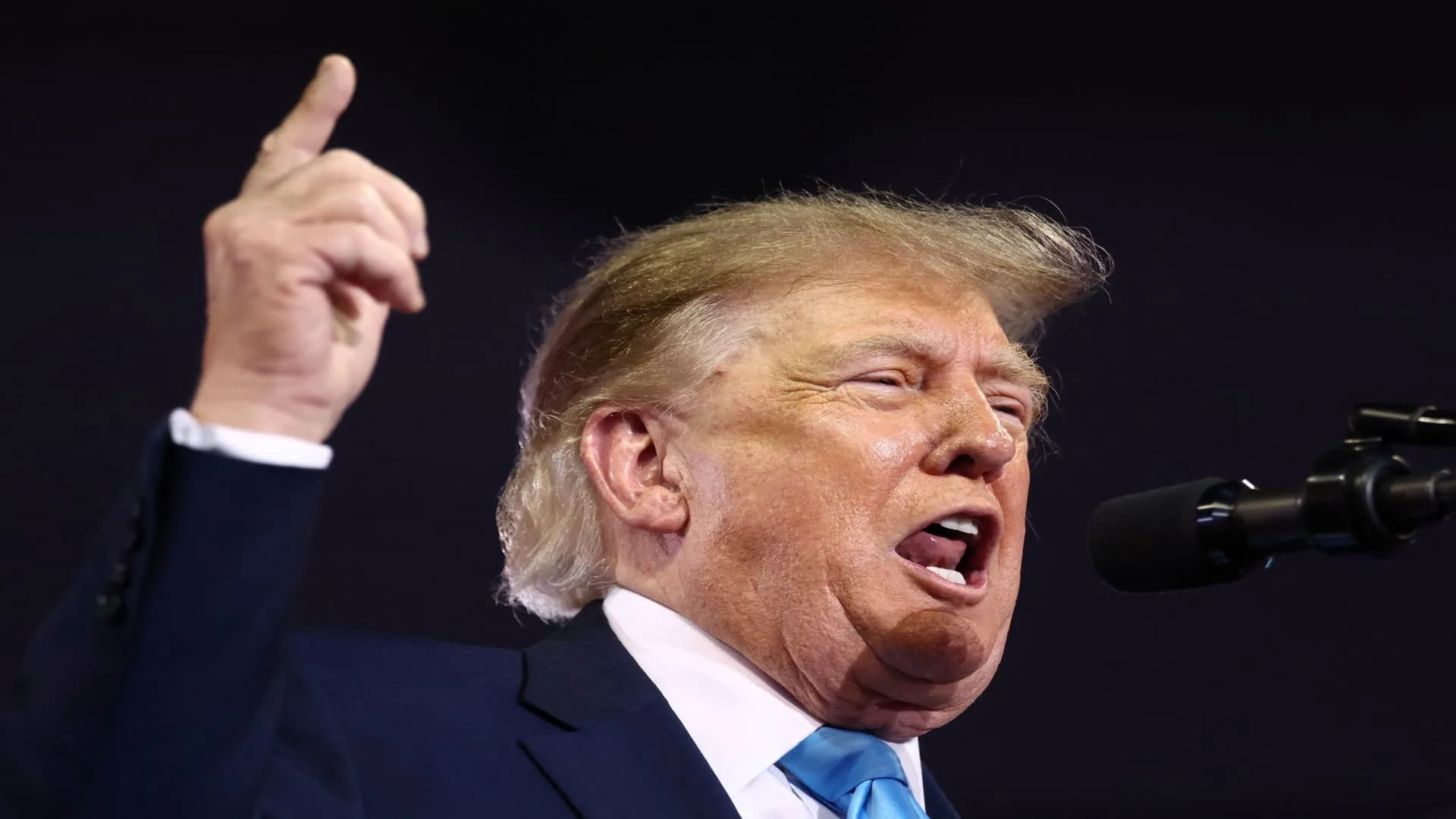
US President Donald Trump once again positioned himself as the main draw of the Republican Party campaign. At a rally at Truist Arena, Highland Heights, Kentucky, on Saturday (17/10/2026), he praised his power, which he said was far greater in his second term, while urging supporters to go to the polls to keep control of Congress in the upcoming November midterms.
Before the crowd, Trump brought up his decision to change the nomenclature of the Gulf of Mexico to the Gulf of America—a move he claimed was impossible during his first term. “Google wouldn't take my call before. Now they kiss my hand,” he said, as quoted by CNBC. He also claimed to have renamed Lake Ontario in Canada to Lake America, even though the change has no clear basis in international law.
That confident rhetoric contrasts with the political reality facing the Republican Party. Several of the party's candidates are reportedly struggling to attract support due to tariff policies that have raised the price of goods and a prolonged war with Iran. The party's internal polling even describes Trump as a liability that could increase vote losses. Yet instead of toning it down, Trump has placed himself at the forefront, turning the midterms into a referendum on his leadership.
In a speech that jumped from one topic to another, Trump also touched on gasoline prices. He promised the Iran war would soon end and fuel prices would fall below pre-conflict levels. He has made such claims several times without a clear deadline. The crowd responded with cheers, but economic analysts warn that a drop in oil prices cannot be guaranteed by political statements alone.
What drew the most market attention was an old promise he repeated: if Republicans win the House and Senate, every adult citizen will receive $5,000. That figure, by rough calculation, amounts to more than $1 trillion—excluding administrative costs—and will almost certainly require parliamentary approval. With the annual deficit already close to $1.8 trillion, economists estimate the promise could trigger turmoil in the government bond market, raise Treasury yields, and ultimately weigh on consumer and business borrowing costs.
In Kentucky, Trump added a new conditional promise: if Republicans win, the Department of Defense will invest funds to revitalize pharmaceutical plants in the state. He did not specify the size of the investment or the procurement mechanism. For Kentucky residents, this promise feels more concrete because it touches direct jobs, but it still raises questions about the budget source and regulatory feasibility.
“I can do extraordinary things,” Trump said, describing his power in his second term, adding that he had also renamed a lake in Canada to Lake America.
Trump's statements reflect a campaign style that relies on personal strength rather than a policy coalition. He nominated one of his personal lawyers as Attorney General, ordered military strikes on vessels accused of smuggling drugs, and sought to have his name added to the Kennedy Center. Those steps reinforce the narrative that he is the center of power, but also raise concerns about abuse of authority and potential investigations if Democrats win Congress.
For Indonesia, Trump's fiscal promises and geopolitical tensions in the Middle East warrant close attention. A swelling US deficit could push up global bond yields, which have long served as a benchmark for emerging market financial markets, including Indonesia. In addition, if the Iran war truly ends, crude oil prices could fall and ease the burden of domestic energy subsidies. However, the massive cash assistance promise could instead trigger inflation in the US and accelerate the Fed's interest rate normalization, which in turn would pressure the rupiah exchange rate and foreign capital flows.
The November midterms will be the first test of Trump's strategy of placing himself as the central figure. If Republicans win, he will claim a mandate to continue his populist agenda. If they lose, pressure from within the party to reduce Trump's role is expected to intensify. The question is whether those fiscal promises without clear funding can withstand budget reality, or instead become a boomerang that accelerates political fragmentation in Washington?