Tokenmaxxing: When Companies Burn Billions of Dollars on AI With Nothing to Show
Baca dalam 60 detik
- Meta menghabiskan 60 triliun token AI dalam sebulan hanya untuk bersaing di papan peringkat internal, dengan estimasi biaya mencapai US$900 juta.
- Perusahaan teknologi berlomba meningkatkan konsumsi token sebagai tolok ukur produktivitas, meski banyak penggunaan tidak efektif dan memicu pemborosan.
- Para ahli mendorong efisiensi token melalui pemilihan model yang tepat, prompt yang jelas, dan pemantauan biaya agar AI tetap ekonomis.
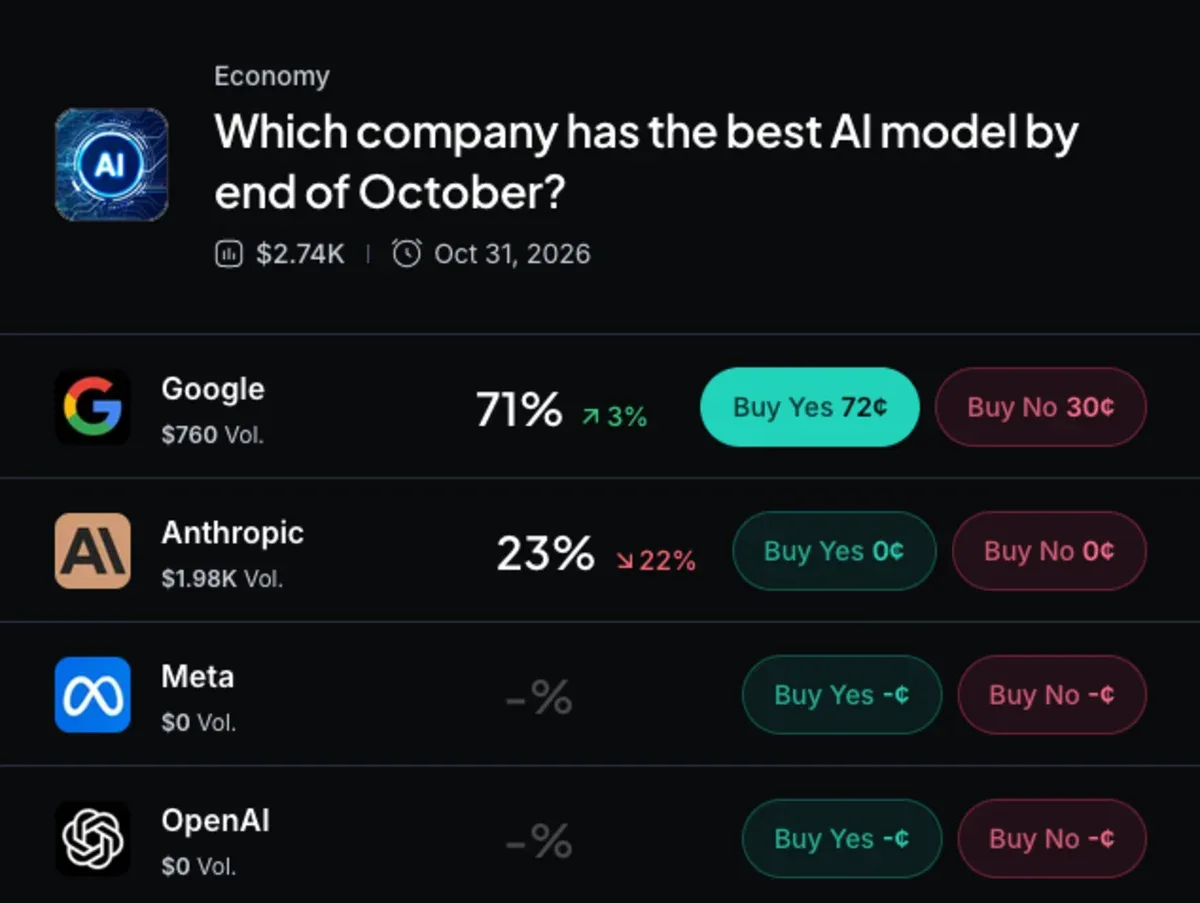
Meta burned through 60 trillion AI tokens in just 30 days earlier this year, all to claim the top spot on an internal leaderboard nicknamed "Claudeonomics." Technology columnist Gergely Orosz estimates the cost at around US$900 million based on Anthropic's official pricing, though Meta likely pays far less. The phenomenon reflects how technology companies treat tokens as a status symbol rather than merely a work tool.
Similar wasteful practices occur at many companies. Bain & Company consultant Jue Wang observed that users often jump straight to the most advanced models like Opus for simple tasks such as writing emails. "A lot of companies and users default to Opus for everything, including writing emails," he told the Associated Press some time ago. He likened it to hiring Albert Einstein to count change at a fast-food restaurant.
Tokens are the units of text processed by AI models, roughly equivalent to three-quarters of a word. Every word typed into ChatGPT or Claude, and every word generated, counts as tokens. On a US$20 subscription, tokens determine how quickly a user hits the usage limit. On the API, tokens determine the bill developers must pay.
This wasteful behavior stems from a Silicon Valley culture of showing off token consumption. Microsoft, Shopify, and Amazon reportedly have employee leaderboards based on the number of tokens used. Nvidia CEO Jensen Huang even said he would be "very worried" if a US$500,000-a-year engineer did not burn at least US$250,000 in tokens. At Amazon, employees admitted inflating their numbers by running internal AI tools for irrelevant tasks, until a senior vice president admonished, "Don't use AI just to use AI."
Behind the waste, three concepts explain where tokens go. First, the agent loop: a model that can use tools, think, search the web or run code, then repeat until finished, resending the entire conversation each round. Second, orchestration: one model acts as a manager that splits requests among subagents, each running a loop with its own memory. Anthropic notes that agent teams in Claude Code can use about seven times more tokens than standard sessions. Third, graphs: frameworks like LangGraph map workflows like a subway map, so the model follows a fixed route instead of looping aimlessly.
To curb waste, users can adopt a few simple habits without coding. First, switch to smaller, faster models for tasks like email, summaries, and rewriting, while reserving top models for complex reasoning. Test five tasks from last week on both models; if the small model passes, use it. On the API, this step can cut bills by up to 99%. Second, write clear and specific prompts, because three rounds of correction requests will resend the entire conversation and add cost. Third, start a new chat whenever the topic changes, because the model rereads the entire conversation every time the user sends a message. Anthropic calls the quality decline from long context "context rot." Fourth, limit output length, for example "three points, under 100 words," because output tokens cost five times more than input. Fifth, take advantage of free models through OpenRouter or run local models with LM Studio or Ollama on an 8GB graphics card or an M-series Mac.
For advanced users, efficiency can be improved by turning off extended thinking for simple questions, setting monthly spending limits in Claude Pro and Max settings, and using commands like /model, /clear, /compact, /context, /mcp, and /usage in Claude Code. Avoid pasting a 5,000-row spreadsheet into a chat; ask for a formula or short script, run it yourself, then give the result to the model. Disable unused MCP servers and keep agent instruction files under 200 lines. For major changes, use plan mode by pressing Shift+Tab so the agent proposes a plan before touching files. Limit the number of steps and the dollar budget for each agent process, and define "done" before starting.
At the API level, optimization can be done by placing stable instructions at the beginning and changing parts at the end, then marking stable blocks for caching. Both major providers offer a 50% discount for batch processing, so uploading 1,000 invoices as a single batch file is far cheaper than 1,000 direct calls. A Stanford-led study found that models use information best at the beginning or end of a prompt, and worst when information is buried in the middle. For work that is expensive to get wrong, such as contract clauses or payment figures, consider a second model as a checker.
Even as token prices keep falling, AI spending is rising. Silicon Data shows token prices have fallen more than 90% since 2023, but spending on large language models has multiplied since late 2025. Bain & Company notes token costs halved between December 2024 and 2025, while the number of tokens consumed grew 450%. This phenomenon is known as the Jevons paradox: when a resource becomes cheaper, people end up spending more in total.
In Indonesia, the wave of generative AI adoption is also starting to be felt in the financial services, e-commerce, and public services sectors. Without good token governance, companies risk following the same wasteful pattern, especially if they only chase usage volume without measuring value. Industry players need to set internal policies on model selection, budget limits, and API usage audits. The question is, will companies in the country learn from the overconsumption in Silicon Valley, or repeat it under the label of digital transformation?