2025 Nobel Prize in Chemistry Spurs 'Molecular Sponge' to Patch Data Center Water Crisis
Baca dalam 60 detik
- Startup Atoco memanfaatkan riset peraih Nobel Kimia 2025 untuk mengekstrak air dari udara dengan limbah panas pusat data.
- Prototipe di California menghasilkan 300 liter air per hari; integrasi dengan pusat data besar berpotensi menembus 1.000 liter per hari.
- Inovasi ini dinilai belum mampu menutup konsumsi air pusat data yang bisa jutaan liter per hari, tetapi menjadi langkah awal efisiensi sumber daya.
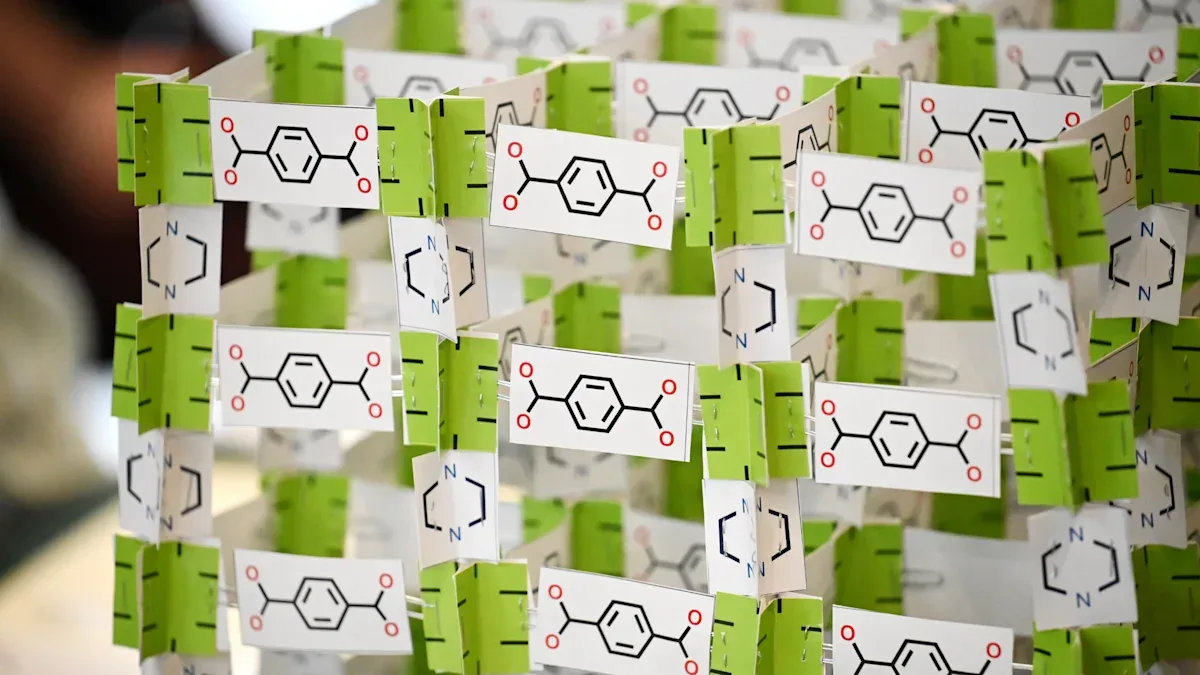
2025 Nobel Prize in Chemistry laureate Omar Yaghi, through his startup Atoco, has developed a device capable of harvesting water from the air by harnessing waste heat from data centers. The technology could become an answer to public concerns in the United States over data center water consumption, an issue that has received far less attention than pollution and electricity.
Atoco uses a material called metal-organic framework (MOF), a metal-organic framework capable of capturing polar water molecules with very high affinity. Because its binding power exceeds the air's capacity to hold those molecules, MOF sheets can absorb water vapor from the atmosphere and store it stably within a carbon matrix. Researchers call it a "molecular sponge" because its capacity far exceeds that of conventional sponges and it cannot be wrung out like an ordinary sponge.
To release the trapped water, the MOF must be heated. This is where waste heat from data centers comes in. The data center industry, especially facilities serving AI workloads, generates large amounts of heat and often struggles to dispose of it. Atoco designed the technology from the outset to exploit that condition, and the surge in data center construction in recent years has only strengthened the relevance of this use case.
Promising as it is, the technology does not immediately solve the problem. Data centers still consume far more water than the device can produce. For illustration, 1,000 liters per day is equivalent to the daily water needs of about 10 households in Indonesia, while a single gigawatt data center can use millions of liters every day. In other words, Atoco is better positioned as one element in a mosaic of material, electricity, and water efficiency, not a single solution.
"MOFs can be designed with various structures and chemical affinities. Water is just one molecule that can be captured; hydrogen and petroleum can be too. MOFs could even draw pollutants from the sea or air, or store valuable resources for transport," Yaghi said, as quoted from a company statement.
For Indonesia, the implications of this technology warrant close attention. Several large data center projects are being built in Batam, Bekasi, and other industrial areas. If adopted in the future, MOFs could help ease pressure on local raw water supplies, especially in drought-prone regions. However, without strict regulation and transparency in water consumption, the presence of this technology risks becoming a justification for unchecked data center expansion.
Going forward, the question is not only how efficiently MOFs produce water, but also how strong the data center industry's commitment is to reducing overall water consumption. Without changes in operating patterns and policies that drive efficiency, innovations like Atoco will only be a temporary patch amid an increasingly real water crisis.