Prabowo's Seventh Cabinet Reshuffle: New Faces in Economy and Security Seats
Baca dalam 60 detik
- Presiden Prabowo Subianto merombak susunan Kabinet Merah Putih pada 1 Oktober 2026, menandai perubahan ketujuh sejak pemerintahan dibentuk.
- Sejumlah posisi strategis mengalami rotasi, termasuk masuknya nama baru di lingkungan Kementerian Keuangan dan Kementerian Perindustrian.
- Pelantikan serentak di Istana Kepresidenan Jakarta mencakup menteri, wakil menteri, kepala badan, hingga jabatan Kapolri dan Wakil Panglima TNI.
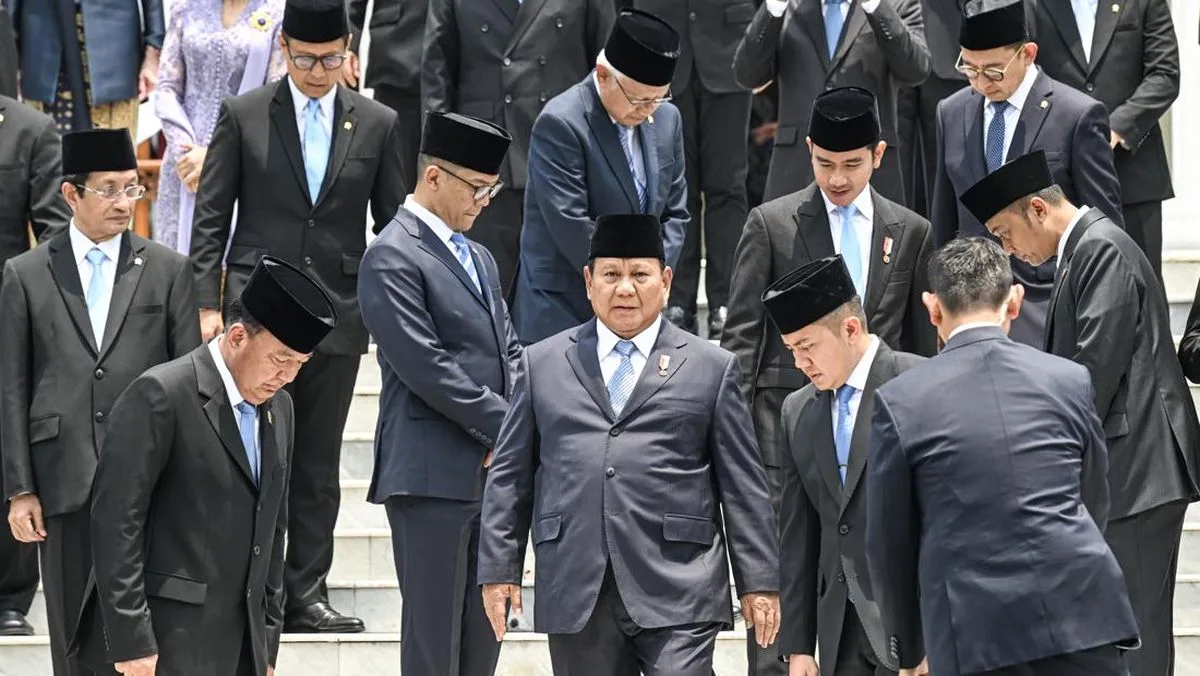
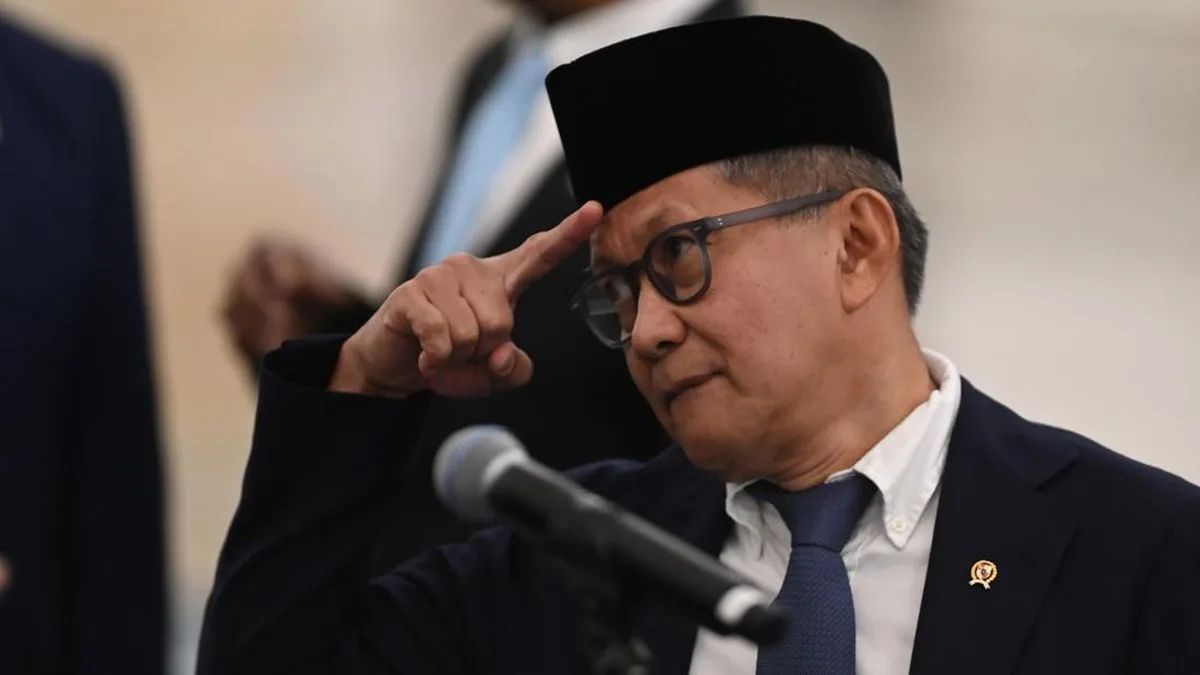
President Prabowo Subianto once again changed the composition of the Merah Putih Cabinet on Thursday, October 1, 2026. This seventh reshuffle touched a number of key positions, from the economic affairs coordinator to deputy minister seats within the Ministry of Finance. The inauguration was held simultaneously at the Presidential Palace in Jakarta, covering ministers, deputy ministers, minister-level officials, and the Chief of the Indonesian National Police.
The move underscores that Prabowo does not yet feel the previous formation was solid enough to carry out his priority agenda, especially in the fiscal and industrialization sectors. A number of new names entered the inner circle, such as Dradjad Wibowo, M. Sarmuji, Luky Alfirman, and Nurkholish Ibnu Amman. Sarmuji was entrusted with the seat of Minister of Industry, while Luky Alfirman and Nurkholish Ibnu Amman filled the positions of Deputy Minister of Finance alongside Suahasil Nazara.
Among the coordinators, Dudung Abdurachman filled the seat of Coordinating Minister for Political and Security Affairs, while Airlangga Hartarto continued to lead the Coordinating Ministry for Economic Affairs. Bahlil Lahadalia was entrusted with two strategic positions at once: Minister of Energy and Mineral Resources and Coordinating Minister for Downstreaming and Energy Transition. This placement underlines the government's focus on accelerating downstreaming as a growth engine, while also raising questions about the workload borne by one person.
Interestingly, a number of new ministries were retained, such as the Ministry of Hajj and Umrah led by Mochammad Irfan Yusuf, and the North Java Coastal Authority headed by Didit Herdiawan with Fadil Imran as deputy. The presence of this authority body indicates that the development project for the northern coast of Java remains a long-term priority, even though its realization has so far not been widely visible on the ground.
"This reshuffle shows Prabowo wants to ensure every ministry has the right person to execute priority programs, especially in the economic and security fields," said a political analyst monitoring the dynamics of the palace.
On the security side, the appointment of General Suyudi Ario Seto as Chief of Police and General Tandyo Budi Revita as Deputy Commander of the Indonesian National Armed Forces marks regeneration within the security apparatus. Meanwhile, Listyo Sigit Prabowo moved to the position of Head of the Presidential Staff, a role that usually handles strategic policy coordination in the president's inner circle. This rotation can be read as Prabowo's effort to place loyal and experienced figures in positions that directly intersect with decision-making.
For the market and business players, the new composition at the Ministry of Finance and the Ministry of Industry will be an important signal. Three deputy ministers at the Finance Ministry could accelerate fiscal coordination, but also pose internal coordination challenges. Meanwhile at the Industry Ministry, Sarmuji faces pressure to drive manufacturing growth that has so far stagnated at around 4-5 percent.
The big question is whether this seventh reshuffle will be the last in the near term, or whether it instead signals that Prabowo is still searching for the right cabinet formula. What is clear is that, with the remaining term of office continuing to run, every change carries no small political and administrative consequences. The public and investors are certainly waiting to see whether these new faces can translate the president's grand vision into policies with real impact on the ground.