Gibran's Calm Amid a Legal Storm: Coalition Signals and a Test of the Constitutional Court's Authority
Baca dalam 60 detik
- Permohonan pembatalan pencalonan Gibran Rakabuming Raka terdaftar di MK dengan nomor 01/PHPU.PRES-XXIV/2026, namun KPU menilai perkara ini bukan ranah sengketa hasil pemilu.
- Ketenangan Gibran dinilai bersumber dari dua hal: kuatnya posisi hukum karena tenggat waktu dan kewenangan MK, serta solidnya koalisi politik pengusung Prabowo-Gibran.
- Perkara ini membuka pertanyaan lebih besar tentang batas kewenangan MK versus Bawaslu dalam sengketa proses pemilu, dengan implikasi pada kepastian hukum iklim investasi.
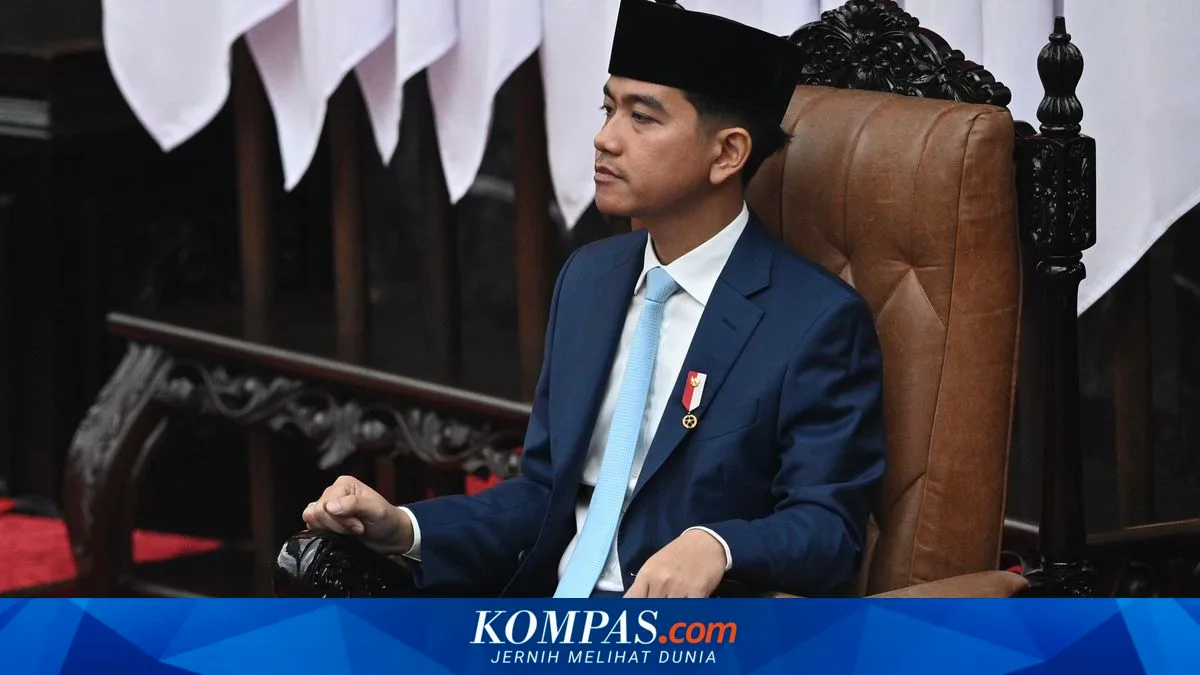
Gibran Rakabuming Raka remains calm in the face of a petition seeking to annul his candidacy as vice president, which is now moving through the Constitutional Court (MK). That stance is not without reason. Two frameworks make his position relatively solid: legal considerations concerning the authority of institutions and deadlines, and the political configuration of the coalition supporting the Prabowo Subianto-Gibran administration.
The petition is registered under Number 01/PHPU.PRES-XXIV/2026. At the hearing on 23 September 2026, the General Elections Commission (KPU) raised objections. According to the KPU, a case questioning the educational requirements of a vice-presidential candidate is an election process dispute, not an election result dispute. Consequently, the authority to resolve it lies with Bawaslu, not the MK. The difference in definition between the two types of disputes is the core of the matter.
Article 24C paragraph (1) of the 1945 Constitution gives the MK the mandate to decide disputes over general election results. That mandate differs from the resolution of election process disputes governed by Law Number 7 of 2017 on General Elections as amended by Law Number 7 of 2023. Articles 460 and 461 of the Election Law govern the handling of administrative violations, while process disputes are governed by Article 466 and subsequent articles through a mechanism involving Bawaslu. Meanwhile, Article 475 paragraph (2) stipulates that objections in presidential election result disputes concern only the vote count results that affect the determination of the elected pair or the pair taking part in a re-run.
Because the educational requirements of a vice-presidential candidate are part of the nomination process, the verification of the completeness and validity of documents is carried out before the KPU determines the candidate pairs. This means the petition, which also seeks to annul Gibran's inauguration, touches on the mechanism for removing a vice president as governed by the 1945 Constitution—a domain that does not automatically fall under the MK's authority in result disputes.
Politically, Gibran is one package with Prabowo Subianto in the 2024 Presidential Election. As long as the cohesion of the supporting parties and the governing coalition holds, and each actor retains bargaining value, that relationship becomes an additional factor explaining his calm. The emergence of this case can also be read in the context of developments in the diploma case of former President Joko Widodo. As several parties questioning Jokowi's diploma begin to face difficulties in legal proceedings, the issue of Gibran's educational requirements has also come to the fore.
That shift in the object of the case opens space for political analysis regarding a possible link between the two. If the political actors in both cases can be traced within the same network, the diploma issues of Jokowi and Gibran can be read as part of the same political dynamics, not merely two standalone legal cases. However, without clear evidence of a connection, such a reading remains speculative and cannot serve as a legal basis.
"Gibran's calm can be read through two interrelated dimensions, namely law and politics," so goes the core of the argument circulating among observers, as reflected in a column in the national media.
For readers in Indonesia, especially market participants and professionals, this case is not merely elite drama. Uncertainty over the authority of the MK and Bawaslu could create a precedent that affects how election disputes are handled in the future. The business world typically responds to legal uncertainty by holding back long-term investment decisions. Therefore, clarity on which institution has the authority to handle election process disputes is important for maintaining the investment climate and political stability.
Moreover, this case tests how consistently the MK interprets the limits of its authority. If the MK accepts a petition that is substantively a process dispute, there is a risk of an expansion of authority that could trigger criticism. Conversely, if the MK rejects it, the public will await an explanation of whether Bawaslu is truly the right forum and whether its mechanism can deliver justice for the parties.
Going forward, two scenarios merit attention. First, the MK affirms that this case is not within its domain and allows the petitioner to take the Bawaslu route. Second, the MK chooses to open a gap for substantive review that could broaden the scope of the dispute. The first option maintains the status quo and strengthens legal certainty; the second could drag the MK deeper into a political vortex. The question is whether these state institutions can maintain the limits of their authority for the sake of the legal certainty awaited by the market and the public?