Russian Attack Hits Ukrainian Academy of Sciences: One Dead, Director Calls It 'Terrorism Against Science'
Baca dalam 60 detik
- Ledakan menghantam gedung National Academy of Sciences Ukraina saat staf masih berada di dalam, menewaskan satu orang.
- Direktur akademi menegaskan lembaganya tidak punya kaitan militer dan menuduh Moskow sengaja menyasar pusat riset.
- Insiden ini memperbarui kekhawatiran tentang keselamatan institusi sipil dan masa depan kolaborasi riset internasional.
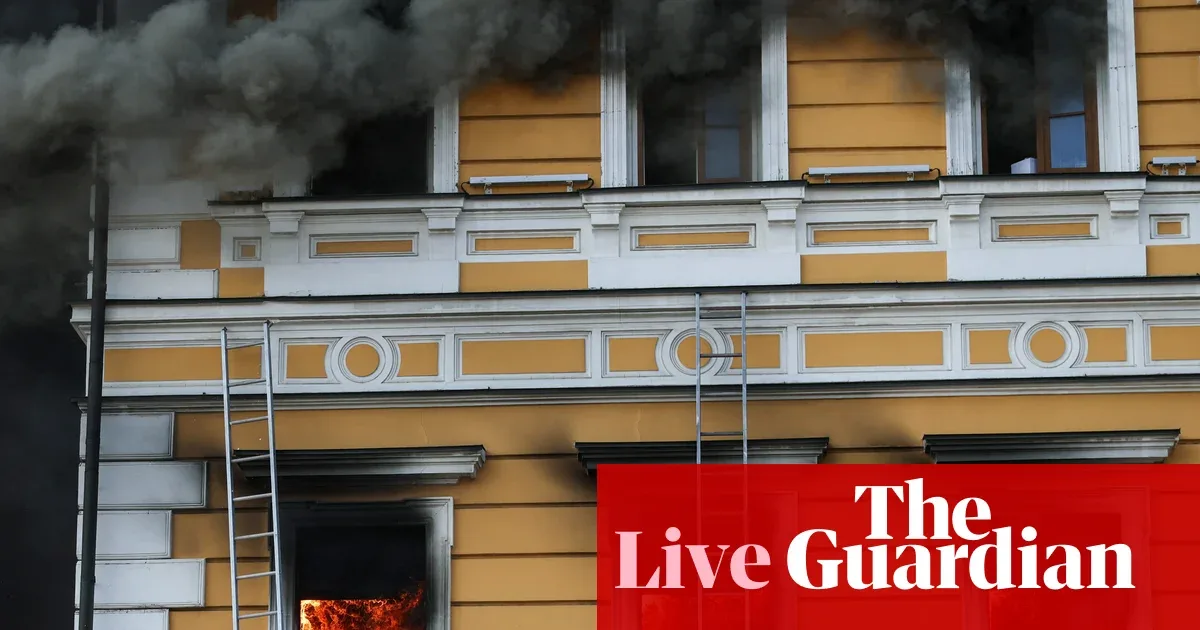
An explosion struck the complex of the National Academy of Sciences of Ukraine while staff were still inside the building, killing at least one person. Anatoly Zagorodny, the institution's director, witnessed the flames that burned part of the building and said he feared his colleagues were still trapped inside.
Zagorodny said he did not understand the reason behind the attack. According to him, the academy he leads is a leading research center in Ukraine and has no connection to military activity. "We are not connected to the military. This is an attack on science. This is terrorism," he said, as quoted from international media reports.
The incident adds to a long list of attacks targeting civilian facilities in Ukraine since the protracted conflict erupted. Unlike strikes on energy infrastructure or military installations, the destruction of a research institution raises new questions about the limits of targets in modern warfare. Science academies are usually places where scientists develop basic research, technology, and innovation that benefit the wider public, not for combat purposes.
From a strategic standpoint, attacks on educational and research institutions can cause broader long-term damage than their physical destruction. The loss of researchers' lives, the destruction of data archives, and the interruption of research programs can cripple a country's innovation capacity for years. For Ukraine, which is striving to defend its sovereignty while rebuilding its economy, a blow to the academic world is a loss that is not easily recovered.
Indonesian context: This event is a reminder that geopolitical stability in Europe can affect the global order, including countries in Southeast Asia. The protracted tension between Russia and Ukraine has disrupted global food and energy supply chains, which Indonesia also feels through commodity price fluctuations and inflationary pressure. In addition, the attack on a research institution highlights the importance of protecting scientific assets and international cooperation in science, which has long served as a bridge for diplomacy between nations. Indonesia, as a country with a growing population of researchers, needs to pay attention to how armed conflict can threaten academic freedom and cross-border collaboration.
"We are not connected to the military. This is an attack on science. This is terrorism." — Anatoly Zagorodny, Director of the National Academy of Sciences of Ukraine
So far, there has been no official statement from the Russian side regarding the incident. The pattern of attacks targeting civilian facilities is often denied by Moscow on the grounds that it only targets military infrastructure. However, firsthand testimony from the scene and statements from survivors are strong evidence that the impact of conflict can never be confined to the battlefield alone.
Going forward, the global scientific community faces a difficult question: how to protect research centers from the ravages of war? Will international organizations such as UNESCO take concrete steps to safeguard the safety of scientists in conflict zones? Without a collective response, attacks like this could set a bad precedent that threatens the progress of civilization.