KPU: Gibran Disqualification Lawsuit at Constitutional Court Is an Impeachment Attempt, Not an Election Dispute
Baca dalam 60 detik
- KPU menegaskan permohonan diskualifikasi Gibran Rakabuming Raka tidak dapat diproses MK karena masuk ranah pemakzulan yang mensyaratkan usulan DPR.
- Para pemohon meminta MK membatalkan pelantikan Gibran sebagai wapres dan memerintahkan MPR memilih penggantinya dalam 60 hari.
- Sidang PHPU Presiden 2026 mempertemukan KPU sebagai termohon dengan koalisi pemohon yang mencakup KIPP, Partai Ummat, dan Denny Indrayana.
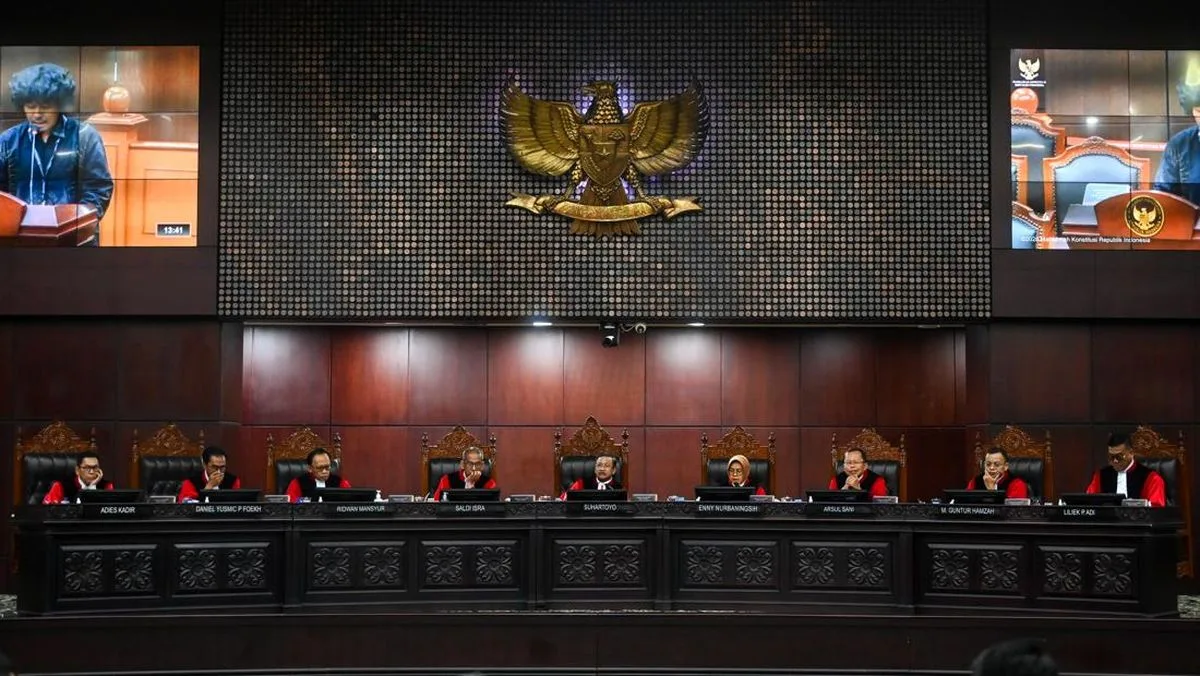
The General Elections Commission (KPU) of the Republic of Indonesia argues that the lawsuit questioning the validity of Gibran Rakabuming Raka's educational qualification as a vice-presidential candidate should not be heard by the Constitutional Court (MK) because it falls into the category of impeachment. The argument was presented by the KPU as respondent in the hearing on the 2026 presidential election results dispute (PHPU) on Wednesday (23/9) evening.
According to the KPU's legal counsel, the petitioners' request essentially demands the removal of a vice president who has already been inaugurated. The KPU argues that the petitioners themselves are in fact aware that the Constitutional Court has no authority to adjudicate the case, as reflected on page 45, points 122 to 124 of the petition file.
The KPU cites Article 1 paragraph (3) of the 1945 Constitution, which affirms Indonesia as a state based on law. Consequently, the entire exercise of judicial power must rest on statutory regulations. The Constitutional Court's authority to rule on election results disputes, the KPU says, has been explicitly limited and provides no exception clause. "The Constitutional Court is bound by statutory regulations to rule only on election results disputes, and there is no norm governing exceptions, so it may not step outside that corridor of authority," said the KPU's legal counsel.
The KPU also highlighted the situation in which the president and vice president have already been inaugurated. Articles 7A and 7B of the 1945 Constitution, according to the KPU, have prepared an impeachment pathway, and the Constitutional Court still has a role in providing consideration within that process. However, that role can only be exercised if there is a proposal from the DPR. The KPU argues that the petitioners cannot skip that stage. "If the Petitioners argue in their posita that communication efforts with the DPR are not yet complete, that does not mean the Petitioners can immediately refer the case to the Constitutional Court without a prior DPR proposal. Doing so would violate the applicable statutory provisions," said the KPU.
The KPU's conclusion: the Constitutional Court has the authority to examine, adjudicate, and rule on the impeachment of the president and vice president only if there is a proposal from the DPR in accordance with the constitutional mechanism. "With this, we conclude that the Constitutional Court has the authority to examine, adjudicate, and rule on a DPR proposal in the impeachment process of the President and Vice President," said the KPU.
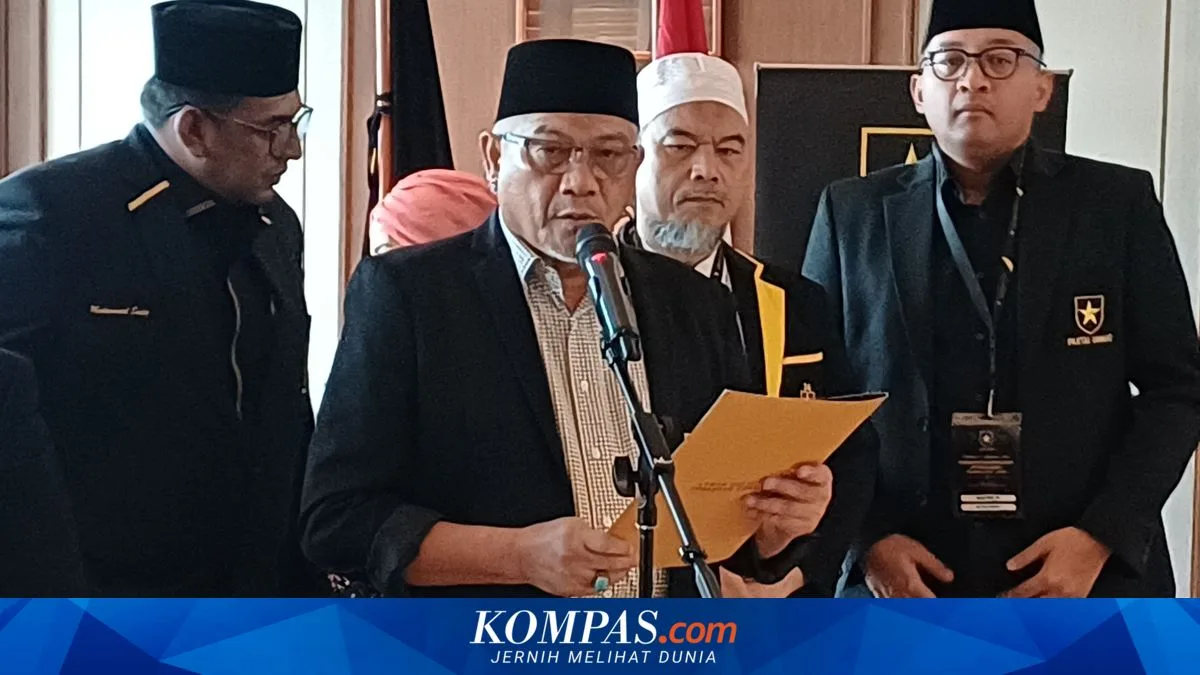
The petition was filed by several parties: the Independent Committee for Election Monitoring (KIPP), Partai Ummat, Denny Indrayana, six citizens grouped in the Forum of Retired TNI Soldiers, M Subhan, Bonatua Silalahi, and Tiurma M.S. Sihombing. In their petitum, they ask the Constitutional Court to declare that the educational requirement in Article 169 letter r of the Election Law is imperative and must be fulfilled at the time of registration and designation of presidential and vice-presidential candidate pairs. They also demand that the Constitutional Court disqualify Gibran for allegedly failing to meet that educational requirement.
In addition, the petitioners ask the Constitutional Court to declare that the designation of Gibran as vice-presidential candidate in the 2024 Election was legally defective from the outset and non-binding; to annul the KPU Decision insofar as it concerns Gibran's designation; to annul Gibran's inauguration as vice president by the MPR; and to order the MPR to hold a session to elect a vice president from two candidates proposed by the president within 60 days of the ruling being read out.
For the public, this case is not merely a contest of legal arguments. It tests the extent to which the limits of the Constitutional Court's authority are upheld when political pressure mounts. If the Constitutional Court grants the petition, the precedent could widen: any question about the integrity of an elected official could potentially be dragged into the realm of election disputes, bypassing the political mechanism in the DPR. Conversely, if the Constitutional Court rejects it, questions about the enforcement of candidacy requirements remain unresolved, especially since an earlier ruling on the age limit for presidential and vice-presidential candidates was once controversial.
What bears watching is that the Constitutional Court's decision in this case will serve as a reference for election organizers and political parties in drafting candidacy requirements going forward. It will also determine whether the impeachment mechanism is genuinely preserved as a constitutional pathway, or instead eroded by litigation maneuvers. The public waits to see whether the Constitutional Court will firmly assert the limits of its authority, or open a new gap that shifts political disputes into the courtroom.