Megawati Leads Farewell to Guruh Soekarnoputra, an Arts Maestro and PDIP Politician
Baca dalam 60 detik
- Guruh Soekarnoputra, adik Megawati Soekarnoputri, dimakamkan di TPU Karet Bivak, Jakarta, pada Sabtu (26/9).
- Rano Karno menyebut almarhum sebagai seniman besar dan pejuang partai yang konsisten membela rakyat.
- Kepergian Guruh meninggalkan warisan seni dan politik yang akan mempengaruhi dinamika PDIP ke depan.
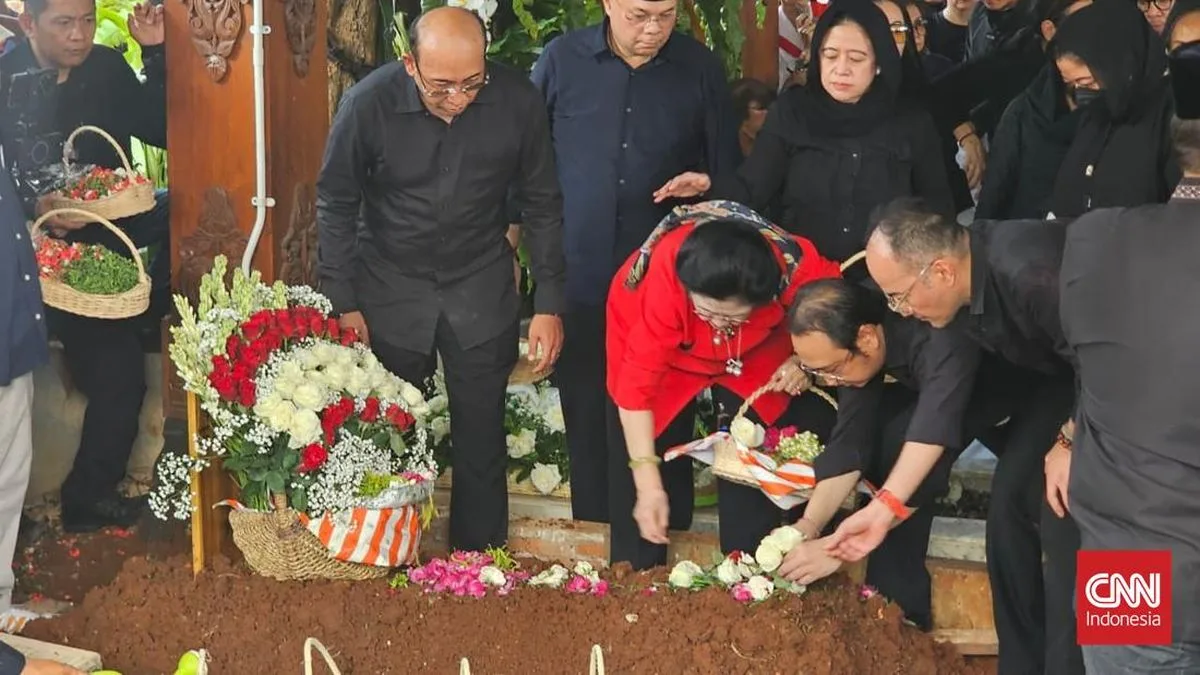
PDIP Chairwoman Megawati Soekarnoputri was present at the burial of her younger brother, Guruh Soekarnoputra, at the Karet Bivak Public Cemetery in Jakarta on Saturday (26/9). Dressed in her signature red, the fifth President of Indonesia sat beside the grave and scattered flowers after the burial plot was closed. The moment marked the Soekarno family's final tribute to one of its sons widely known in the worlds of art and politics.
The flower-scattering was continued by Megawati's daughter, Puan Maharani, along with a number of mourners dressed in black. The presence of several PDIP figures, including Jakarta Deputy Governor Rano Karno, underscored Guruh's position not merely as a family member but as a central figure in the party's history and in Indonesian culture.
Rano Karno, speaking on behalf of the family, said Guruh's passing was a great loss for the nation. According to him, the deceased was known not only as an artist but also as a party fighter loyal to the values of Marhaenism. "The extended family of PDI Perjuangan has lost a party fighter, and the Marhaenists have lost one of those who throughout his life carried the conviction of standing with the people," Rano said in his remarks.
Beyond his political career, Guruh left a deep mark on the music and dance industry. Songs such as "Kala Sang Surya Tenggelam", "Melati Suci", and "Zamrud Khatulistiwa" became part of Indonesia's musical heritage. He also founded the group Guruh Gipsy with Keenan Nasution, Abadi Soesman, and Chrisye, which influenced the development of progressive music in the country.
"With all humility, we apologize for any of the deceased's shortcomings, if there were ever words that offended, attitudes that hurt, or matters left unfinished, we ask that everything be forgiven and accepted with sincerity," Rano Karno said.
Guruh studied Archaeology at the University of Amsterdam until 1974, then earned a bachelor's degree in Public Administration from STIAMI in 2008 and a master's in Human Resource Management in 2010. His cross-disciplinary academic background reflected his interest in art, culture, and public service.
In the Indonesian context, Guruh's passing could affect PDIP's internal dynamics, especially ahead of upcoming political agendas. His figure, bridging the worlds of art and politics, often served as a balancing force within the party. That vacant role could be a challenge for PDIP in nurturing the cultural and ideological base he left behind.
Going forward, the public will watch how PDIP fills the space left by Guruh, particularly in maintaining ties with artist and intellectual communities. Will the party be able to produce a new figure capable of embracing both worlds, or will it lose the cultural appeal that has long been one of its hallmarks?