Mandatory Halal October 2026: Home Ministry Urges Regional Governments to Push Certification, Interprovincial Gap in Focus
Baca dalam 60 detik
- Kemendagri meminta pemerintah daerah mempercepat sertifikasi halal menjelang kewajiban Oktober 2026, termasuk sosialisasi dan pendaftaran produk.
- BPJPH mencatat 4,3 juta sertifikat halal hingga 22 September 2026, tetapi sebarannya timpang: Jawa Barat mendominasi, sementara Kalimantan Barat baru puluhan ribu.
- Daerah diminta mengalokasikan APBD untuk sertifikasi halal gratis bagi usaha mikro dan kecil, serta menyusun Perda/Perkada yang sesuai karakteristik wilayah.
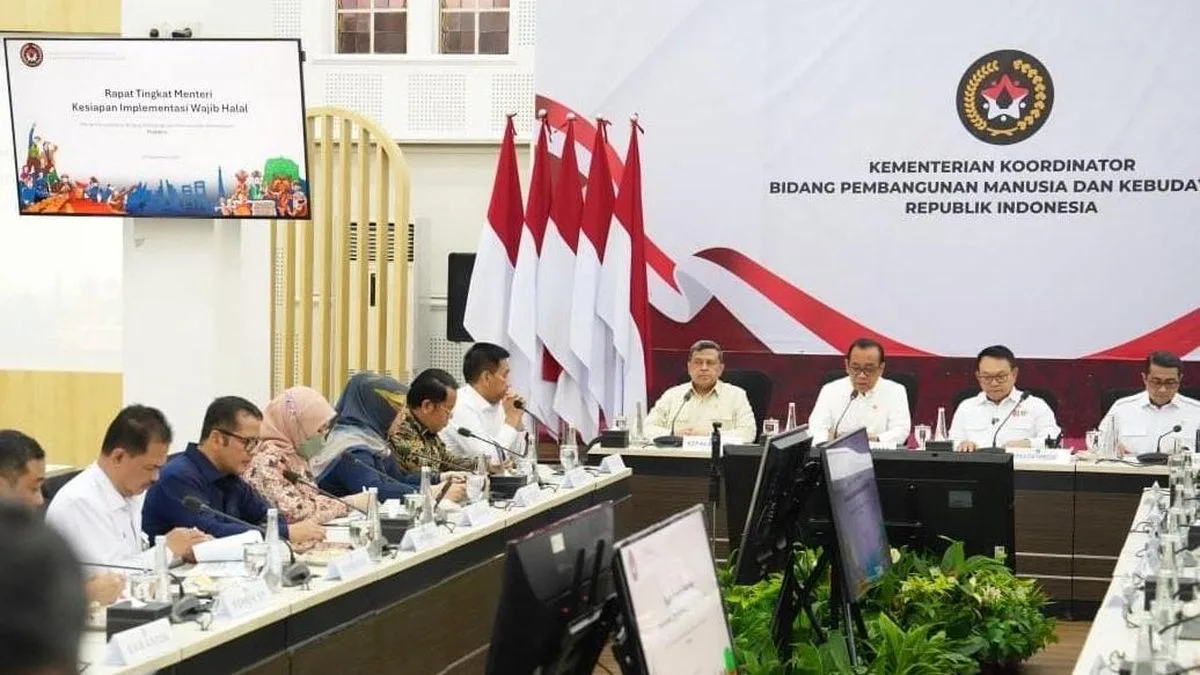
The Ministry of Home Affairs (Kemendagri) is accelerating the implementation of the mandatory halal certification requirement by asking regional governments (pemda) to take a more active role, as the October 2026 Mandatory Halal deadline draws closer. The move is aimed at ensuring no region is left behind in the certification process.
Deputy Minister of Home Affairs Akhmad Wiyagus, representing Home Affairs Minister Muhammad Tito Karnavian, conveyed the directive at the Ministerial-Level Meeting on Readiness for the Implementation of Mandatory Halal at the Coordinating Ministry for Human Development and Culture (Kemenko PMK), Jakarta, Wednesday (23/9). According to him, provincial, district, and city governments need to carry out a series of strategic steps, from massive outreach to facilitating halal certificate registration for businesses.
"Regional governments are asked to conduct massive outreach to the public and businesses regarding the October 2026 Mandatory Halal," Wiyagus said. He also encouraged businesses to immediately register their products, while stressing the importance of regional budget support.
Kemendagri instructed regional governments to allocate APBD funds, particularly from the Cooperatives-MSMEs and Industry affairs, to finance free halal certification for Micro and Small Enterprises (UMK), adjusted to each region's fiscal capacity. The step is considered crucial because certification costs are often the main obstacle for small businesses.
Although religious affairs are the absolute authority of the central government, Wiyagus stressed that regional governments still hold a vital role in overseeing the policy. "The main task of the Ministry of Home Affairs is to carry out general guidance and supervision of regional governments to oversee the acceleration of halal certification," he said. Kemendagri is also ready to facilitate the drafting of Regional Regulations (Perda) or Regional Head Regulations (Perkada) that align with each region's characteristics.
BPJPH data shows a striking inequality in achievement. West Java, Central Java, and East Java account for the largest share of national certification, while provinces such as West Kalimantan lag far behind. Wiyagus assessed that the national achievement has been massive, but the gap between regions needs to be a shared concern so that the implementation of mandatory halal is evenly distributed.
The mandatory halal policy is not merely an administrative matter, but has a direct impact on the competitiveness of domestic products. For Muslim consumers, who make up the majority of Indonesia's population, a halal certificate is a guarantee of product certainty. On the other hand, businesses are required to adapt to the new standard so as not to lose market access, especially ahead of the full enforcement of the requirement.
Regional governments face a double challenge: accelerating certification without burdening the budget, while ensuring outreach reaches businesses in remote areas. APBD support for UMK is a key instrument, but its effectiveness depends on fiscal capacity and the commitment of regional heads.
"Allocating APBD funds, particularly from the Cooperatives-MSMEs and Industry affairs, to facilitate free halal certification for UMK in accordance with each region's financial capacity," Wiyagus said.
With the October 2026 deadline drawing ever closer, the question now is: can the regions catch up, or will the certification gap widen and hamper the national target?