BNPB Chief Reports 209.78 Hectares Still Burning, Prabowo Calls for Special Report
Baca dalam 60 detik
- Kepala BNPB Suharyanto melaporkan 209,78 hektare hutan dan lahan di Sumatra dan Kalimantan masih dalam proses pemadaman hingga Rabu (23/9) sore.
- Presiden Prabowo Subianto menggelar rapat terbatas hibrida dari Istana Merdeka untuk memantau langsung penanganan karhutla, didampingi Seskab dan Mensesneg.
- Operasi modifikasi cuaca akan terus dijalankan hingga curah hujan kembali normal, menjadi penopang utama upaya pemadaman di tengah keterbatasan sumber daya air.
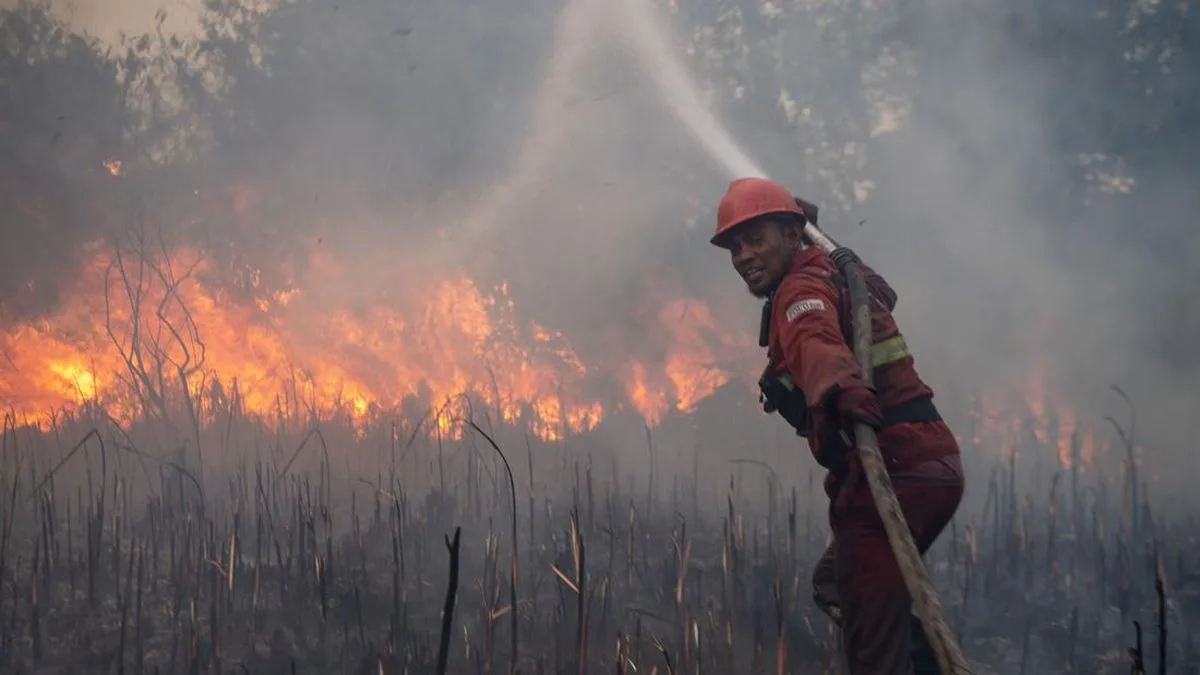
Head of the National Disaster Mitigation Agency (BNPB) Suharyanto reported that as of Wednesday (23/9) afternoon, 209.78 hectares of forest and land were still burning in Sumatra and Kalimantan. The figure was delivered directly to President Prabowo Subianto in a limited meeting held in a hybrid format from the Merdeka Palace, Jakarta.
In the report, Suharyanto stressed that his team continues to extinguish the remaining hotspots. "We report that as of today there are 209.78 hectares still being extinguished. We are monitoring this day by day so that we can ensure the area extinguished each day is large," he said, citing an official statement from the Presidential Secretariat.
The meeting itself signals that the government treats land and forest fires as a priority that cannot be handled at the technical level alone. Prabowo was accompanied by Cabinet Secretary Teddy Indra Wijaya and State Secretary Minister Prasetyo Hadi, while Suharyanto and BMKG Head Teuku Faisal Fathani delivered reports from their respective locations via video conference.
According to Teddy, the President's request for a direct report highlights special attention to West Kalimantan and Central Kalimantan, as well as overall conditions in Kalimantan and Sumatra. "This afternoon the President wanted the latest report from the Head of BNPB regarding the forest and land fire conditions in Kalimantan, particularly West Kalimantan and Central Kalimantan, and Kalimantan as a whole, as well as in Sumatra," Teddy said.
In addition to ground and aerial firefighting, the government is relying on weather modification operations (OMC) as the main instrument to speed up the response. Suharyanto stated that OMC will be carried out at least until the rainy season returns to normal. This means the effort does not depend solely on natural weather conditions, but also on the ability of atmospheric engineering to trigger rain in areas still burning.
"We report that as of today there are 209.78 hectares still being extinguished. We are monitoring this day by day so that we can ensure the area extinguished each day is large." — Suharyanto, Head of BNPB
For Indonesia, land and forest fires are not merely an environmental disaster. Their impact spills over into the health, transportation, and economic sectors. The resulting haze can degrade air quality and trigger respiratory problems, especially for vulnerable groups such as children and the elderly. On the other hand, reduced visibility can disrupt airport and flight operations, while the plantation and forestry sectors risk losses from unproductive land.
Historically, land and forest fires in Sumatra and Kalimantan have often been linked to land-clearing practices, by both corporations and communities. The government itself has not detailed the exact cause of the ongoing fires, but the current focus is on accelerating extinguishment and preventing the spread of hotspots. The presence of BMKG at the meeting shows that climate factors, including rainfall anomalies, are an important variable determining the effectiveness of OMC.
From a policy standpoint, Prabowo's move to call for direct reports from the heads of BNPB and BMKG shows a decision-making pattern based on field data. However, its effectiveness will depend on consistency of operations on the ground, cross-ministerial coordination, and regional readiness in responding to early warnings. Without that, the figure of 209.78 hectares could become the starting point of escalation if dry conditions continue.
Going forward, the remaining question is how quickly OMC can reduce the burned area before the rainy season truly arrives, and whether the government will strengthen law enforcement against the causes of land and forest fires. Without firm preventive measures, this annual disaster cycle risks repeating with ever-greater economic and health costs.