Trump-Venezuela Oil Deal: The 'Largest in History' Claim That Risks Falling Apart
Baca dalam 60 detik
- Pemerintah AS mengumumkan kepemilikan saham di perusahaan minyak Venezuela, Nabep, tetapi dasar hukum dan struktur transaksinya dipertanyakan.
- Regulasi Venezuela membatasi kontrak maksimal 25 tahun, sementara Pentagon tidak memiliki kewenangan resmi untuk memiliki saham perusahaan swasta.
- Investor besar menahan diri karena ketidakjelasan kesepakatan, sementara sosok Alejandro Betancourt menjadi pihak yang paling diuntungkan.
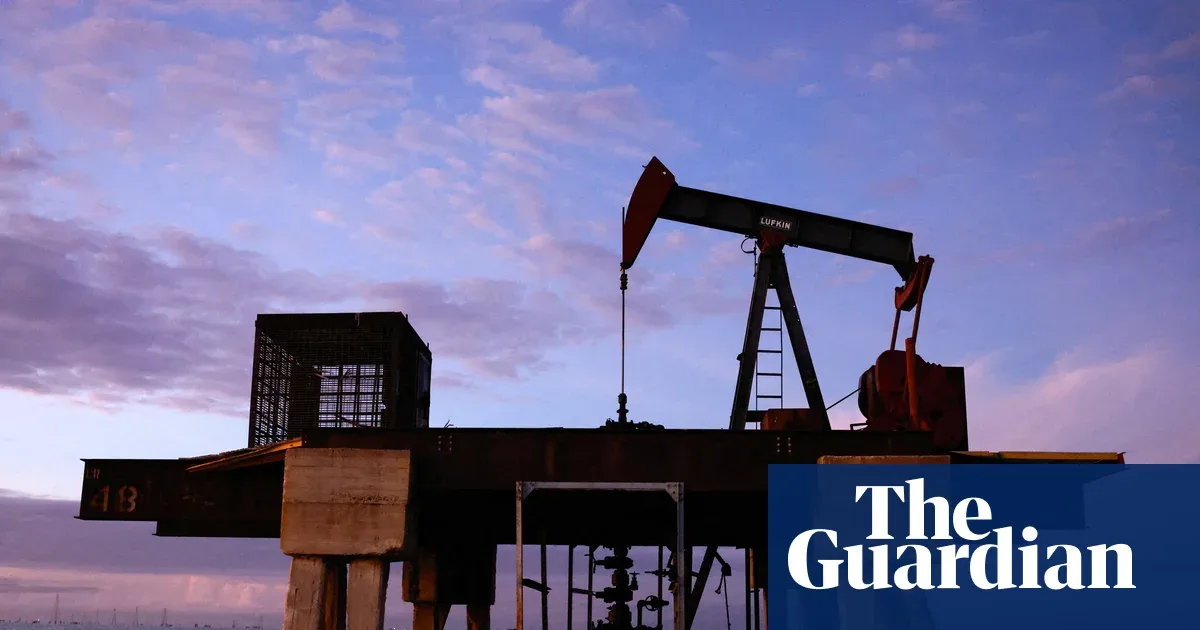
The administration of Donald Trump announced an oil deal with Venezuela as "the largest oil deal in world history", but a Guardian investigation reveals that the agreement faces legal and logistical hurdles that could derail it. The deal was reached after a US military operation that captured Venezuelan President Nicolás Maduro last January.
Trump has long been interested in controlling other countries' oil fields. In 1987 he asked why the US did not take over Iran's oil, and similar ideas surfaced repeatedly for Libya and Iraq. Now, after Maduro was ousted and replaced by Delcy Rodríguez, that ambition has found its opening. In August, Trump announced that the Pentagon's Office of Strategic Capital (OSC) would own a third of North American Blue Energy Partners (Nabep), Venezuela's second-largest private oil company.
Yet almost all of the Trump administration's claims about the deal are misleading, according to experts and officials who spoke to The Guardian. Venezuelan law does not allow 100-year contracts; the maximum is 25 years. The OSC also has no legal authority to own company shares. In addition, the deal's structure will not bring new capital into Venezuela's oil sector, and the oil will not help fill the US Strategic Petroleum Reserve any time soon.
At the center of the deal is Alejandro Betancourt López, a 46-year-old Venezuelan businessman with homes in Spain, the UK, and New York. Betancourt, who once hired Rudy Giuliani as his lawyer, has a history of international investigations into alleged corruption, though he has never been charged or convicted. He is said to have acted as an intermediary between Venezuela's interim government and the US.
"This deal is like a big wall that Mexico is going to pay for," said former US diplomat John Feeley, capturing doubts that Trump's promises can materialize.
Most striking is the Pentagon's involvement. The US Department of Defense, which had never before operated like a private equity fund, is now using the 1950s-era Defense Production Act to own shares in a foreign company. The OSC sits under Deputy Defense Secretary Stephen Feinberg, a former Cerberus executive, who installed Cerberus's David Lorch as head of the OSC. Yet a Pentagon spokesperson has itself stated that the OSC "does not take equity stakes in private companies".
Because the OSC lacks that authority, ownership of Nabep was ultimately shifted to another Pentagon office, Industrial Base Analysis and Sustainment (Ibas), whose mission is only to strengthen the US defense industrial base. "This is clearly not authority that Congress gave the OSC," said Ashley Deeks, vice dean of the University of Virginia School of Law.
Phil Gunson of the International Crisis Group said major investors are avoiding the deal because of its lack of clarity and potential rule violations. "They are worried about the irregularity and opacity of the agreement," he said. Meanwhile, Venezuelan legal expert Jose Ignacio Hernández asserted, "This is all just propaganda. It cannot be implemented as announced."
For Indonesia, this deal is a mirror of how oil-producing countries face geopolitical pressure and foreign intervention. As an OPEC member with declining oil reserves, Indonesia needs to watch the legal precedent the US is setting: using defense instruments to acquire another country's energy assets. If this model is applied elsewhere, oil price stability and global investment governance could be shaken.
Going forward, the big question is not only whether this deal can proceed, but whether the US Congress will let the Pentagon become an equity player in the foreign energy sector. If allowed, this precedent could change how sovereign nations manage their natural resources—and Indonesia needs to prepare for a similar possibility.