£233 Million Green Fund Gone in 6 Hours, English Farmers Deeply Disappointed
Baca dalam 60 detik
- Program insentif pertanian berkelanjutan (SFI) senilai £233 juta habis dalam waktu kurang dari enam jam setelah dibuka, meninggalkan ribuan petani tanpa akses pendanaan.
- Kelompok tani dan lingkungan menilai mekanisme 'siapa cepat dia dapat' tidak adil dan menuntut alokasi anggaran yang lebih besar serta sistem pendaftaran yang lebih pasti.
- Pemerintah Inggris berjanji membuka peluang pendanaan lagi pada 2027, namun para petani meragukan komitmen tersebut mengingat tekanan arus kas yang mendesak.
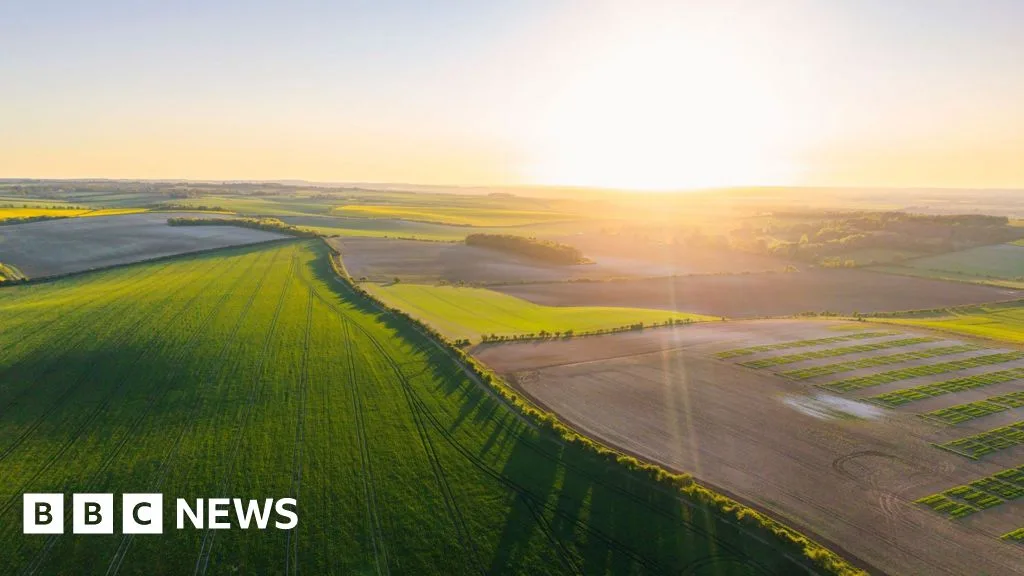
In less than six hours, a budget of £233 million (around Rp4.8 trillion) for an environmentally friendly farming scheme in England was snapped up by applicants. The Sustainable Farming Incentive (SFI) program, which opened at 10.00 BST on Tuesday (14/10/2025), closed at 15.48 BST because the funding quota had been fully used, leaving thousands of farmers without access.
This post-Brexit scheme was designed to replace European Union subsidies with payments for farmers who manage land sustainably, such as planting hedgerows, creating wildflower strips, and maintaining soil health. However, the registration mechanism using a first come, first served principle drew sharp criticism. The National Farmers' Union (NFU) demanded an explanation from the government as to why the registration window opened and closed so quickly, while many farmers had lost potential income.
"We need clarity and urgency from the government," said NFU Vice President Robyn Munt, as quoted by the BBC. She added that the surge in demand was not surprising given the increasingly heavy cash flow pressures facing farmers and food producers. "They are looking for certainty for next year, and this scheme is one of the few options available," she stressed.
Vicki Hird, head of farming at Wildlife Trusts, likened the scramble for funds to a "worse Oasis concert ticket rush". According to her, the budget provided had been inadequate for too long. "The Treasury must recognize this and allocate far more funding to ensure climate resilience in farming in the next budget," she said.
Criticism also came from the Nature Friendly Farming Network (NFFN). Martin Lines, an arable farmer from Cambridgeshire who leads NFFN, judged the SFI system with a registration window of only a few hours to be unworkable. "We need to find a better way based on whole-farm sustainable agreements, not a door that closes on the first day because the money has run out," he said. He emphasized that after years of extreme weather, many farmers were relying on this funding to adapt to climate change.
"This is not just about money, but about the future of sustainable English farming. The current system only benefits those with fast access, not those who need it most." — Martin Lines, NFFN
The UK government, through the Department for Environment, Food and Rural Affairs (Defra), stated it would provide further information on 2027 funding opportunities "soon". A Defra spokesperson explained that this year small farmers and newcomers were prioritized through a special window in the summer. "The minister also added £20 million to the initial £50 million announced by the prime minister in August," the spokesperson said. Agriculture Minister Stephen Morgan added that SFI was designed to be simpler and that farmers "responded enthusiastically".
Indonesian Context
The scramble for green funds in England serves as a mirror for Indonesia, which is developing payment for environmental services (PJL) schemes and carbon funds. If registration mechanisms are not designed inclusively, small farmers and indigenous communities risk being edged out by large corporations with better administrative capacity. The Indonesian government needs to ensure that programs such as Social Forestry and climate funding do not turn into a "first come, first served" contest that ignores the principle of fairness.
Going forward, the question is whether the UK government will fully reform the SFI system into a more certain long-term agreement, or instead let farmers continue to depend on narrow registration windows. Without fundamental improvement, UK food security and climate targets could be at stake.