Study: Tropical Countries Remain the Longest-Suffering Victims Even as the World Reaches Net Zero
Baca dalam 60 detik
- Riset University of Melbourne menemukan ketimpangan iklim tidak akan hilang meski emisi global mencapai net zero.
- Negara kaya penyumbang emisi terbesar justru paling sedikit merasakan dampak panas ekstrem.
- Laporan UNHCR memperingatkan krisis iklim dapat memperbesar risiko penduduk kehilangan kewarganegaraan.
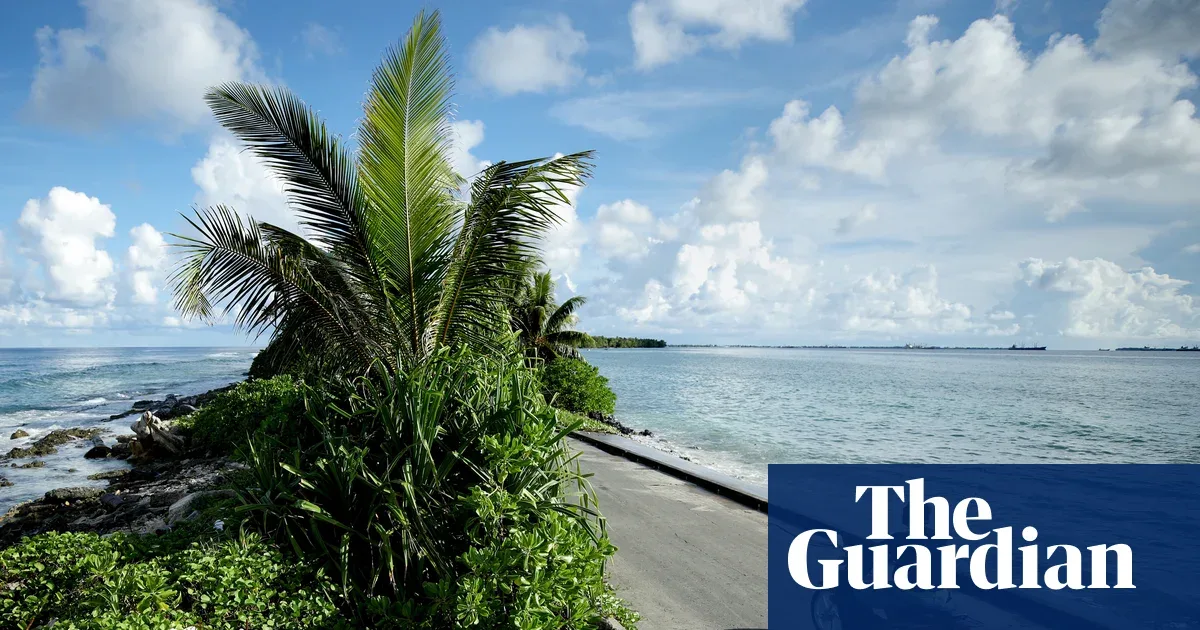
The net zero ambition that forms the spirit of the 2015 Paris Agreement does not automatically erase global climate inequality. Recent research from the University of Melbourne concludes that tropical regions—which have so far contributed the least emissions—will in fact be the last group to feel the benefits of falling temperatures, even after the world succeeds in pushing carbon emissions to net zero.
The study, published in the journal Environmental Research Letters, used three sets of computer modeling experiments to project temperature changes if global emissions reach net zero. The results were then overlaid with each country's gross domestic product (GDP) data. The research team led by Dr Andrew King found that today's uneven warming pattern will persist over the long term, with no sign of significant recovery.
“If we follow a pathway that approaches net zero, then the inequality we see in warming today will persist forever,” said King, as quoted in a university release. He added that the wealthy countries most responsible for the climate crisis are not the ones most exposed to its impacts. Instead, regions with small emissions bear the greatest warming burden.
King explained that tropical ecosystems, such as coral reefs, evolved within a narrower temperature range than ecosystems at high latitudes. As a result, even if the world succeeds in cutting emissions, heat stress on these ecosystems will continue for longer. According to him, the sooner net zero is reached, the smaller the chance of long-term warming that worsens inequality.
“Even when we reach net zero, we have already released an enormous amount of carbon into the atmosphere and its effects will continue for centuries. We cannot easily undo all that damage,” he stressed.
The findings coincide with a separate report from the UN refugee agency (UNHCR) highlighting how the climate crisis increases the risk of a person becoming stateless. The report, compiled together with the Peter McMullin Centre on Statelessness, urges countries to support “state continuity” for nations facing extreme climate damage, including Pacific islands losing land to rising sea levels.
UNHCR estimates that around 4.5 million people are currently stateless, but that figure is acknowledged to be far smaller than reality because stateless people often escape official statistics. The report warns that climate-driven disasters—such as wildfires, floods, and sea-level rise—could create more stateless people through forced displacement.
“There is a correlation between the regions most affected by climate change and high rates of statelessness. The recommendations we have drawn up are very feasible to prevent this risk,” said Associate Prof Radha Govil, one of the report's authors.
The report recommends digitizing citizenship records and taking steps to ensure that children who lose their parents in disasters still obtain citizenship status. This risk increases if mothers do not have rights equal to fathers in granting citizenship to their children.
Indonesian Context
For Indonesia, these findings are not merely academic discourse. As a tropical archipelagic country with the world's second-longest coastline, Indonesia faces layered threats: steadily rising temperatures, sea-level rise threatening coastal cities such as Jakarta and Semarang, and the vulnerability of marine ecosystems that form the backbone of the blue economy. The inequality exposed by King underscores that global mitigation efforts need to be accompanied by compensation and technology transfer from major emitting countries.
The Indonesian government itself has targeted net zero by 2060 or sooner. However, without a guarantee that developed countries will cut emissions more aggressively, tropical regions such as Indonesia will still bear the burden of warming that has already accumulated. On the other hand, the UNHCR report highlights the need for legal protection for people displaced by climate disasters—an issue that is increasingly relevant for coastal communities and small islands in Indonesia.
The question now is: will the largest emitting countries be willing to accelerate the energy transition and open equitable climate funding schemes, or will tropical regions continue to be the longest-suffering victims of a crisis they did not create?