Prabowo: Elite Mutual Cooperation Is Key to Indonesia's Rise, Danantara Asked to Fund LRT
Baca dalam 60 detik
- Presiden Prabowo Subianto menegaskan kolaborasi antar-pemimpin daerah dan pusat menjadi prasyarat utama kebangkitan ekonomi nasional.
- Peresmian LRT Kelapa Gading–Manggarai menjadi panggung politik anggaran, dengan permintaan agar Danantara turut menanggung pembangunan infrastruktur Jakarta.
- Pernyataan ini membuka spekulasi baru soal peran sovereign wealth fund dalam proyek strategis daerah dan implikasinya bagi investor infrastruktur.
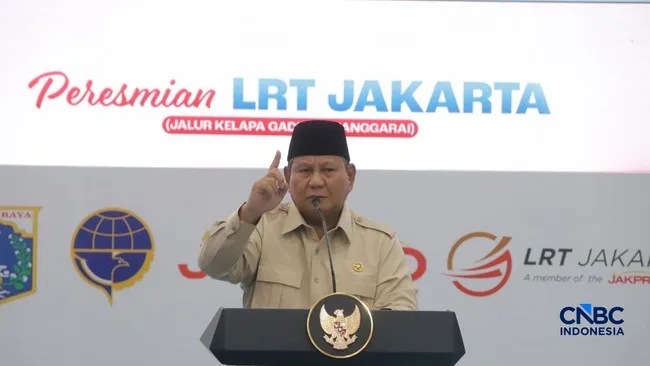
President Prabowo Subianto chose the inauguration of the Jakarta LRT Kelapa Gading–Manggarai route on Wednesday (16/9/2026) to deliver a broader political message: Indonesia can only rise if its leaders are willing to work together. More than a transport ceremony, the event at Manggarai Station became a stage for a statement of the government's vision.
In his remarks, Prabowo said Indonesia was moving toward the ideals of the nation's founders despite facing various problems. He expressed appreciation to all parties who made the LRT project a success, then linked it to DKI Jakarta's economic achievements, which Governor Pramono Anung reported had increased, both in terms of growth and investment.
Interestingly, Prabowo did not stop at praise. He explicitly agreed to Pramono's request that Danantara—the state investment management body—also help finance the construction of the Jakarta LRT. "Danantara must help. Because DKI does not belong only to those who live in DKI, DKI belongs to the entire nation," he said, as quoted from an official statement.
The statement opens a new chapter in the discussion about Danantara's role. So far, the sovereign wealth fund has been positioned as a strategic investment instrument at the national level. However, the request for Danantara to finance an LRT project—which administratively falls under regional authority—raises questions about the boundary between central and regional responsibilities.
For market players, this signal can be read two ways. On one hand, Danantara's involvement promises funding certainty for infrastructure projects that have so far relied on the regional budget and regional loans. On the other hand, the entry of state funds into a Jakarta-specific project could spark debate over capital allocation priorities, especially when other regions also need similar connectivity.
"If leaders can work together, can engage in mutual cooperation, this nation will rise to become an extraordinary nation." — President Prabowo Subianto
The Indonesian context matters here. Jakarta contributes a significant share of national gross domestic product, so smooth mobility in the capital has a direct impact on the investment climate. However, reliance on state investment funds for regional projects could set a fiscal precedent that warrants scrutiny, especially from investors monitoring budget discipline and governance.
Prabowo's statement also implies that the government wants to accelerate urban infrastructure development as an engine of growth. If Danantara does step in, a blended financing scheme involving the central government, regions, and the state investment body could become a new model—or instead trigger debate over transparency and accountability.
Going forward, the public is waiting for technical details: how much investment Danantara will allocate, how oversight will work, and whether other LRT projects in the regions will receive similar treatment. The answers to these questions will determine whether the "mutual cooperation" message truly becomes policy, or is merely rhetoric from the podium.