Deputy Home Minister Bima Arya: Competence Takes You to the Top, Character Keeps You There
Baca dalam 60 detik
- Wakil Menteri Dalam Negeri Bima Arya Sugiarto mendorong mahasiswa baru Universitas Muhammadiyah Surabaya membangun kapasitas global tanpa melepaskan akar kebangsaan.
- Ia menekankan bahwa ketangguhan mental dan integritas jauh lebih menentukan ketimbang sekadar kecerdasan akademik dalam perjalanan karier jangka panjang.
- Pesan ini menjadi sinyal bahwa pemerintah menyiapkan talenta muda yang mampu bersaing di panggung internasional sekaligus memperkuat fondasi sosial di dalam negeri.
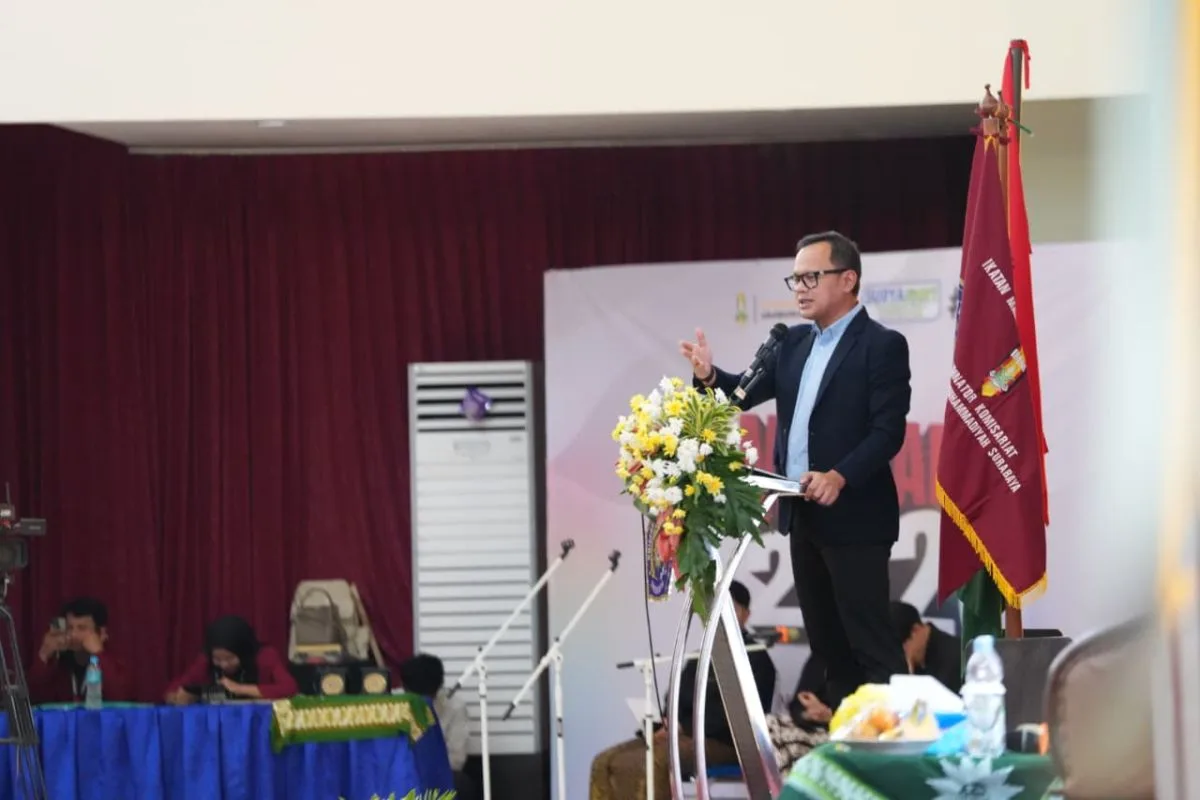
Deputy Minister of Home Affairs Bima Arya Sugiarto stressed that the long-term success of the younger generation is not determined solely by intellectual intelligence, but by the resilience of character formed through a long process. He delivered the message before new students of Universitas Muhammadiyah Surabaya at the Campus Dynamics Orientation Talkshow forum on Tuesday (15/9), as part of efforts to shape a generation capable of competing globally without being uprooted from its national identity.
In his presentation, Bima underscored the importance of balance between intellectual capacity and moral integrity. He argued that students need to hone their abilities to work on the international stage, while still making national values a compass in every step. According to him, a productive and contributing activist mentality must be the hallmark of today's younger generation.
Bima explained that competence is indeed the key to opening the door to success, but character is the determining factor in whether someone can maintain their position at the top. He likened life achievements to an iceberg: what the public sees is only a small part of a long process that includes discipline, patience, the ability to listen, and perseverance in facing challenges.
"What takes you to the top is competence. But what keeps you at the top is character," Bima asserted.
Furthermore, he linked the message to the spirit of fastabiqul khairat, a fundamental value in the Muhammadiyah tradition. The spirit of competing in good deeds, according to him, is not only about doing good to others, but also a mechanism to continuously improve one's capacity and deliver a broader impact on the surrounding environment.
In a more practical context, Bima introduced the concept of circle of esteem—a circle of friends made up of individuals who encourage, help, pray for, and remind one another. He advised students to be selective in building their closest circle, while remaining open to befriending anyone. According to him, a conducive social environment will be an important foundation for anyone who wants to grow into a leader.
This message is relevant not only for students, but also for young professionals and business actors in Indonesia. Amid increasingly tight global competition, technical skills are indeed an entry requirement, but reputation, integrity, and a healthy social network are often what distinguish those who rise quickly from those who last long. For investors and market players, the quality of human resources like this will ultimately affect productivity and national economic competitiveness.
The government, through the Ministry of Home Affairs, appears to want to emphasize that character building is not merely ceremonial rhetoric. It is part of a long-term strategy to prepare a generation capable of taking part on the global stage without losing its social and cultural roots. Universitas Muhammadiyah Surabaya, as one of the campuses with a broad education and community service ecosystem, is seen as a strategic partner in producing such talent.
Going forward, the question is how far such a message will be translated into concrete policies—for example in campus curricula, mentoring programs, or incentives for students who excel at the international level. Without measurable follow-up, the call to build character will only become seasonal rhetoric that quickly evaporates after student orientation ends.