Ministry of Home Affairs Oversees Transfer of PPPK Teachers to Central Government: Equity Solution or New Burden?
Baca dalam 60 detik
- Wamendagri Ribka Haluk menyatakan Kemendagri siap mengawal transisi tata kelola PPPK guru dari daerah ke pusat.
- Langkah ini menyasar ketimpangan distribusi guru dan keterbatasan fiskal daerah, tetapi skema regulasi dan mitigasi risiko masih belum final.
- Bagi daerah dan guru, kepastian status dan administrasi kepegawaian menjadi taruhan utama dalam tiga tahun ke depan.
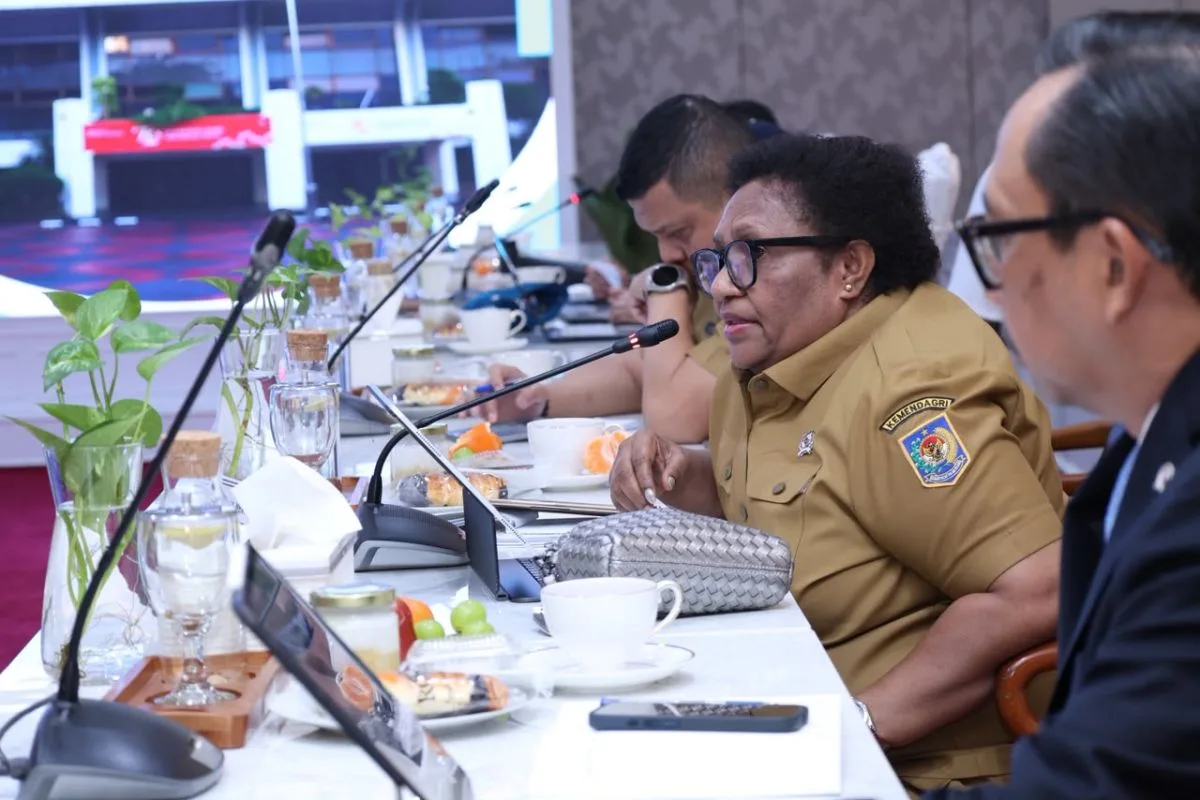
The central government has taken over governance of contract-based government employee (PPPK) teachers from regional governments. The Ministry of Home Affairs (Kemendagri) expressed its commitment to oversee the transition, following a cross-ministerial meeting on the restructuring of state civil apparatus (ASN) teachers at the Ministry of PANRB office in Jakarta on Tuesday (15/9). Deputy Minister of Home Affairs Ribka Haluk stressed that the transfer was not merely an administrative move but a corrective effort to address long-standing problems: uneven teacher distribution across regions and unequal regional fiscal capacity.
Data from the Ministry of Education, Culture, Research, and Technology show a striking disparity. Some urban areas have adequate teacher-student ratios, while many districts in eastern Indonesia suffer from a shortage of educators. On the other hand, regional budgets' ability to pay and develop PPPK teachers varies widely. "Teacher distribution between regions remains uneven. Taking into account the need for equitable teacher distribution and the limited fiscal capacity of regions, transferring governance to the central government is seen as an option that needs support," Ribka said in her official statement on Wednesday.
The plan emerges amid public pressure over education quality and teacher welfare. Until now, PPPK teachers in the regions have often faced uncertain status, delayed allowance payments, and protracted administrative burdens. The transfer to the central government is expected to cut bureaucracy and standardize management standards. However, some education observers warn that centralizing governance risks ignoring local contexts. "The central government must ensure recruitment and placement mechanisms that are sensitive to region-specific needs, not merely standardize formations," said a public policy analyst who declined to be named.
At the meeting, the government also discussed the fate of part-time PPPK staff. They will be transferred to become central government employees and given the opportunity to take part in the selection for prospective civil servants (CPNS). Meanwhile, national ASN teacher needs will be met gradually through CPNS formations over three years. This policy implies that the government wants to accelerate the consolidation of educators under a single employment legal framework, while reducing the status fragmentation that has complicated career planning.
"The transfer is expected to provide certainty of status for teachers while also improving teacher distribution nationally," Ribka asserted.
Nevertheless, the road to implementation remains long. Ribka cited the need to finalize data, map regulations, define transfer mechanisms, and set clear implementation stages. The Ministry of Home Affairs will only prepare coordination steps with regional governments after all legal bases and procedures are established. Risk mitigation is also in focus, especially potential employment, fiscal, and administrative problems in the regions, particularly for teachers who cannot yet be appointed as ASN.
For readers in Indonesia, especially teachers and education personnel, this policy carries direct consequences. Certainty of status means clarity on salaries, allowances, and career paths. However, a bumpy transition could create administrative gaps, payment delays, or even unclear placements. Regional governments are also required to adapt quickly, given that they have directly managed PPPK teachers until now. For investors and market players, this centralization could affect regional spending and education budget priorities, which in turn impacts purchasing power and human resource quality in the regions.
Going forward, the big question is how quickly implementing regulations are completed and how the government ensures no teacher is left in status limbo. If the transfer scheme merely changes hands without governance improvements, the goal of equity could become an illusion. Conversely, if designed with accurate data and participatory mechanisms, this step could become a milestone for national education reform. The public will wait to see whether the promise of status certainty truly materializes in the next three years.