Constitutional Court Rules on 18 Judicial Review Cases Today: From MBG, State Budget, to OJK
Baca dalam 60 detik
- Mahkamah Konstitusi menggelar sidang putusan atas 18 perkara pengujian undang-undang pada Rabu sore, mencakup sektor fiskal, energi, kesehatan, hingga pendidikan tinggi.
- Dua perkara pendidikan tinggi menyoroti akreditasi prodi dan beban biaya kampus swasta, sementara perkara MBG menyeret nama Busyro Muqoddas dan koalisi masyarakat sipil.
- Putusan ini berpotensi mengubah lanskap regulasi yang selama ini menjadi dasar kebijakan ekonomi dan tata kelola sektor keuangan, termasuk UU P2SK.
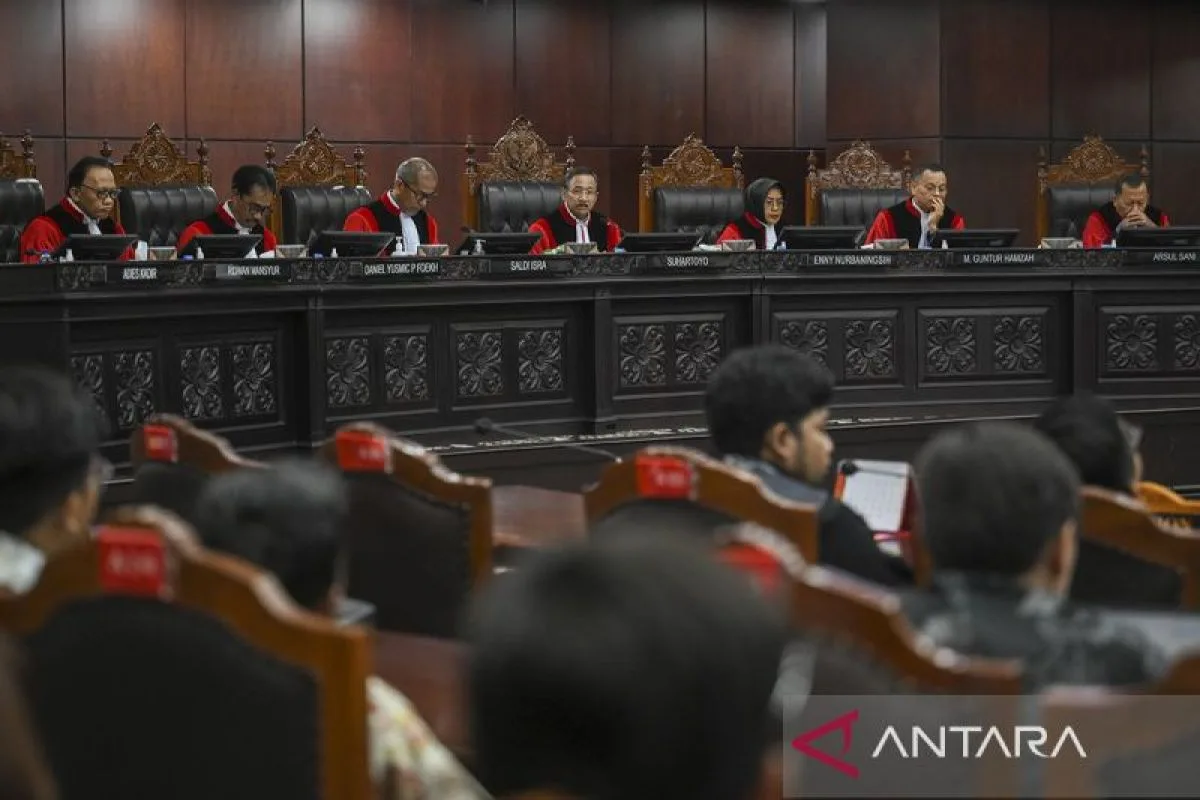
The Constitutional Court (MK) held a ruling hearing for 18 petitions for judicial review of laws on Wednesday (14/1) at 14.00 WIB. The hearing was one of the court's busiest agendas in recent months, with cases spanning the 2026 State Budget Law, the oil and gas sector, social security, and the development and strengthening of the financial sector (P2SK).
Earlier, at 13.00 WIB, the court first held a revision hearing for three petitions. The schedule signals that the court is rushing to clear a backlog of cases, especially those related to strategic laws enacted or amended in recent years.
Two prominent cases involve judicial review of the Higher Education Law. Petition No. 300/PUU-XXIV/2026, filed by Selfi Yurika, challenges the study program accreditation mechanism, while petition No. 294/PUU-XXIV/2026 from Aris Armunanto highlights cost constraints at private universities that are deemed to hinder the constitutional right to education. Both went through only two hearings, namely the preliminary hearing on 2 April 2026 and the revision hearing on 15 April 2026.
In addition, case No. 100/PUU-XXIV/2026, filed by MBG Watch together with a civil society coalition and Busyro Muqoddas, concerns the Free Nutritious Meals Program (MBG). This case also went through only two hearings, indicating the court considers the substance of the petition clear enough to rule on.
In substance, the case list shows the court is reviewing the foundations of fiscal and monetary policy. Petition No. 100/PUU-XXIV/2026 reviews the 2026 State Budget Law, while No. 304/PUU-XXIV/2026 reviews the Non-Tax State Revenue Law. Both bear directly on the government's fiscal space. There are also reviews of the BPJS Law (No. 309), the Minerba Law (No. 306), and the Public Services Law (No. 305) that touch the lives of many people.
In the context of the capital market and financial industry, case No. 297/PUU-XXIV/2026, which reviews Law 4/2026 on the Development and Strengthening of the Financial Sector (P2SK), is the most anticipated. This law is the legal umbrella for the Financial Services Authority (OJK) in regulating and supervising the financial sector, including banking, the capital market, and the non-bank financial industry. If the court grants part of the petition, there is potential for changes in authority or supervisory mechanisms that could affect the investment climate.
"Every Constitutional Court ruling on a financial sector law always has a multiplier effect. Market players need certainty, and that certainty is born from a clear ruling," said a public policy analyst who declined to be named.
For readers in Indonesia, especially investors and professionals, these rulings are not merely legal events. A change in the interpretation of the BPJS Law, for example, could affect social security contributions and benefits. The reviews of the Minerba Law and the Maritime Law (No. 180/PUU-XXIII/2025) have implications for natural resource governance and the authority of Bakamla. Meanwhile, cases involving the Health Law (No. 293) and the Criminal Code Law (No. 292) touch on criminal matters and public services.
Also worth noting, the two higher education cases highlight access and quality. If the court grants them, there could be corrections to accreditation policy and private campus financing schemes. This is relevant to hundreds of thousands of students and families bearing education costs.
With 18 rulings at once, the court is sending a signal that it does not want cases to pile up. However, the quality of the rulings remains at stake. The public will judge whether the court can maintain independence and consistency in interpreting the constitution, especially for laws born from fast-track legislative processes such as the Job Creation Law and the P2SK Law.
Going forward, the question is: how far will these rulings change the direction of economic and social policy? And are the government and the House of Representatives ready to adjust regulations if the court annuls or changes certain norms? All eyes are now on the Constitutional Court's courtroom.