Trump Hits Iran's Economy, China Positions Itself as Mediator
Baca dalam 60 detik
- Menteri Luar Negeri Iran Abbas Araghchi kembali ke Beijing untuk bertemu Wang Yi, kunjungan kedua sejak konflik AS-Israel-Iran meletus akhir Februari.
- China menawarkan rencana de-eskalasi empat poin, sementara AS melancarkan operasi blokade laut dan sanksi terhadap VTB Bank Rusia.
- Bagi Indonesia, ketegangan ini mengancam harga minyak dan stabilitas pasokan energi, sekaligus membuka peluang diplomasi non-blok.
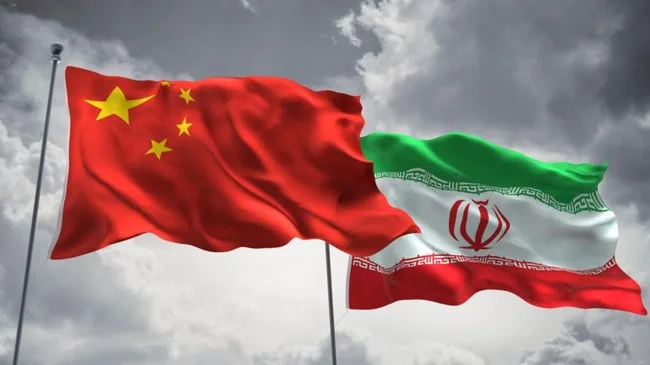
Iranian Foreign Minister Abbas Araghchi is scheduled to meet Chinese Foreign Minister Wang Yi in Beijing on Wednesday (16/9/2026), marking Tehran's second visit to China since the US-Israel war against Iran erupted in late February. The meeting's agenda is drawing attention because it takes place just weeks before a planned summit between US President Donald Trump and Chinese President Xi Jinping in Washington in late September.
Beijing's diplomatic move is not without calculation. In his speech at the BRICS summit in New Delhi earlier this week, Xi urged Global South countries to step forward as peacemakers in the Middle East. He laid out four de-escalation points emphasizing peaceful coexistence, respect for sovereignty, adherence to international law, and a balance between development and security. Although he did not explicitly offer direct mediation, Xi's maneuver is seen as an effort by China to expand its influence in a region long dominated by the US.
Former Iranian Foreign Minister Mohammad Javad Zarif welcomed the initiative. According to him, Xi's move offers a timely opportunity to ease tensions and affirms that multilateral diplomacy is the only path to stability. However, Professor of Chinese Literature at the University of Tehran, Hamed Vafaei, argues that the notion of Xi offering mediation is merely a loose interpretation, not a reflection of reality. This difference in interpretation shows that China's position remains ambiguous in the eyes of some in Iran itself.
On the other side, Western pressure continues to mount. Last week, the US and its European allies succeeded in pressing the IAEA to refer Iran to the UN Security Council. Nevertheless, the move is expected to be merely symbolic because China and Russia hold veto power. Iran's nuclear chief, Mohammad Eslami, was even barred from attending the IAEA General Conference in Vienna due to snapback sanctions reimposed by European powers. The US also launched "Operation Economic Exclusion" with a naval blockade at several southern Iranian ports, and imposed sanctions on VTB Bank of Russia — Russia's second-largest bank, which has direct access to China's national payment system.
"They (China) are essentially doing what we do. When they say China is spying on us, I say you're right, and we spy on them too," said US President Donald Trump, responding to intelligence reports that Iran obtained high-resolution satellite imagery from a Chinese entity before attacking a US military base in Jordan.
Trump's casual response was accompanied by praise for Xi Jinping. "I think he's behaved quite well," he said. This stance contrasts with rising military tensions, and raises the question of whether Washington is toning down its rhetoric ahead of the late-September summit.
Indonesian Context
For Indonesia, the escalation in the Middle East is not merely a geopolitical spectacle. As a crude oil importer, Indonesia is vulnerable to energy price spikes if the US blockade disrupts global supply. Tensions in the Strait of Hormuz and around the Persian Gulf could drive up risk premiums that feed into domestic fuel prices and inflation. On the other hand, China's position as a counterweight to the US opens room for Indonesia to strengthen non-aligned diplomacy, especially within the ASEAN framework. Investors need to watch the impact of sanctions on VTB Bank of Russia — which has access to China's payment system — because it could affect alternative trade transactions that have served as a sanctions-evasion channel.
Going forward, the Trump-Xi meeting in Washington will determine the policy direction. If China succeeds in playing the mediator role, its influence in the Global South will grow. But if the US remains aggressive, the risk of a broader economic confrontation will be hard to avoid. The question is, will Indonesia seize this momentum to fight for its energy interests and regional stability, or will it instead get caught in the vortex of rivalry between two major powers?