Prabowo Cuts Regional Transfers: Money Idles in Banks, Village Infrastructure Neglected
Baca dalam 60 detik
- Presiden Prabowo Subianto menegaskan pemangkasan Transfer ke Daerah (TKD) sebagai respons atas dana yang tidak terserap optimal oleh pemerintah daerah.
- Temuan lapangan menunjukkan alokasi dana desa Rp1 miliar per tahun selama satu dekade tidak diikuti pembangunan infrastruktur dasar seperti jembatan yang hanya membutuhkan Rp400 juta.
- Kebijakan ini berpotensi mengubah peta fiskal daerah dan menuntut akuntabilitas baru bagi kepala daerah dalam mengelola anggaran publik.
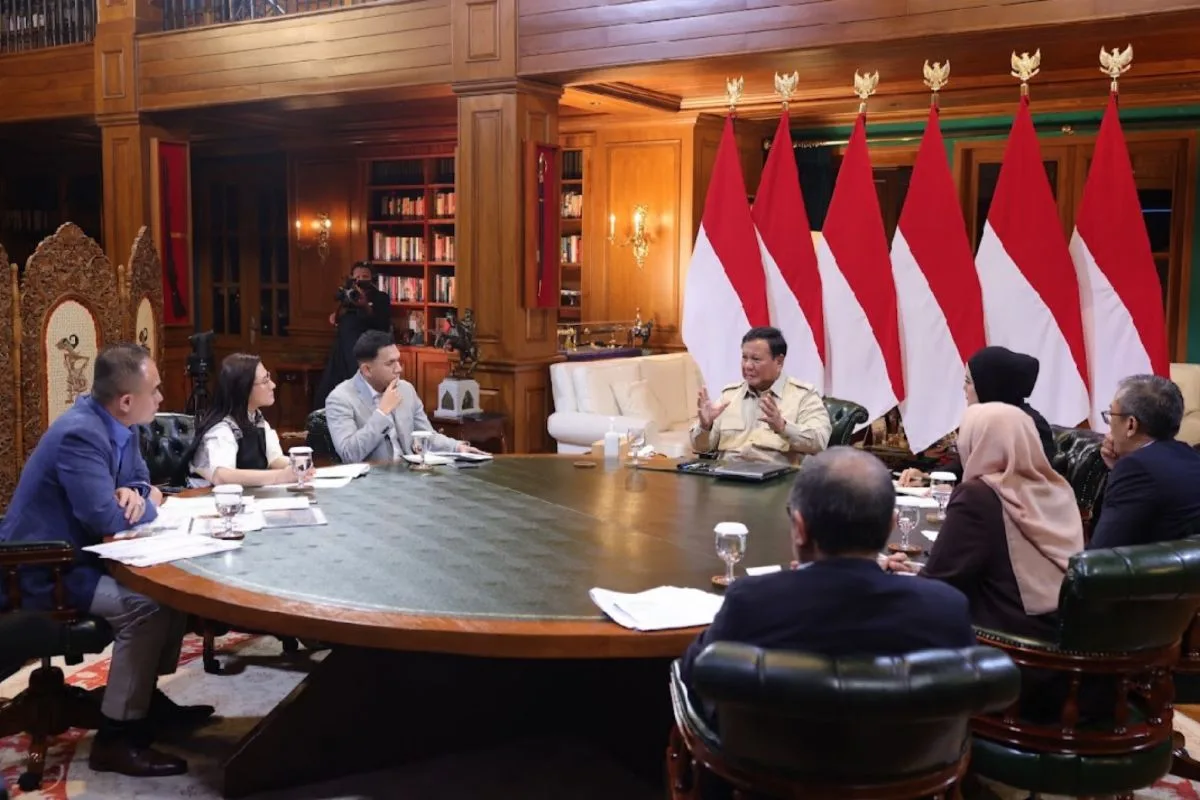
President Prabowo Subianto has decided to cut Regional Transfers (TKD) after finding evidence that funds channeled by the central government to regional coffers were not used as intended. In the "Presiden Prabowo Menjawab" program released by the Government Communication Agency in Jakarta on Wednesday, the head of state revealed that a number of funds had been left idle in regional bank accounts, even becoming a source of conflict between regional heads and local legislatures.
The statement is a strong signal that the central government is no longer merely disbursing budgets, but is beginning to apply a results-based logic. Prabowo considers the goal of fiscal decentralization—accelerating development and improving welfare—unachieved when state money is instead held up in regional coffers without program realization.
"Sometimes it's strange, the money is not used by the regional government. We have evidence. It's put in the bank, all sorts of things. Or there's conflict between the regent and the DPR. Between the governor and the DPR. So we've transferred the money, it's not used," Prabowo said on that occasion.
The sharpest criticism was directed at basic infrastructure at the village level. After 25 years of decentralization and village funds flowing at around Rp1 billion per village over the past ten years, Prabowo questioned why a simple bridge worth Rp400 million had yet to be built. The question highlights the gap between the size of the allocation and the minimal physical output on the ground.
Cutting TKD is not without risk. On one hand, the move could push regions to be more disciplined in budget planning and execution. On the other hand, cutting transfers could slow development programs in regions with limited fiscal capacity, especially regencies/cities with low own-source revenue. The central government needs to ensure the cuts do not punish well-performing regions, but instead target areas with chronic budget absorption problems.
For market players and investors, this policy carries dual implications. The construction and infrastructure sectors, which have so far relied on regional government spending, could face short-term uncertainty if transfers are cut. However, if the cuts are accompanied by governance improvements, in the medium term regional spending could be more productive and lead to more evenly distributed regional economic growth.
Regional governments actually have full authority to manage budgets according to local priorities. The problem is that this authority is often not matched by adequate planning capacity. Executive-legislative conflicts at the regional level, as mentioned by Prabowo, are one cause of delays in setting programs and disbursing budgets. As a result, funds that should be the fuel for development instead become a fiscal burden that produces nothing.
Going forward, the effectiveness of this policy will depend on the oversight mechanism accompanying the cuts. Without clear incentives and sanctions, cutting transfers will only amount to short-term savings without structural improvement. The question is whether the central government will build a transparent reward and punishment system for regions, or whether these cuts will merely be a political signal without fundamental governance change.