US 2026 Elections Could Reshape the Municipal Bond Market: Taxes and New Supply at Stake
Baca dalam 60 detik
- Hasil pemilu 2026 di tingkat negara bagian berpotensi mengubah lanskap obligasi kota (muni) melalui kebijakan pajak dan penerbitan surat utang baru.
- Negara bagian biru cenderung menaikkan pajak orang kaya, sementara negara bagian merah memangkas pajak properti, menciptakan disparitas yang memengaruhi daya tarik muni.
- Pasokan obligasi kota yang melimpah tahun ini menjadi ujian bagi investor untuk tetap selektif dan mencermati kualitas kredit.
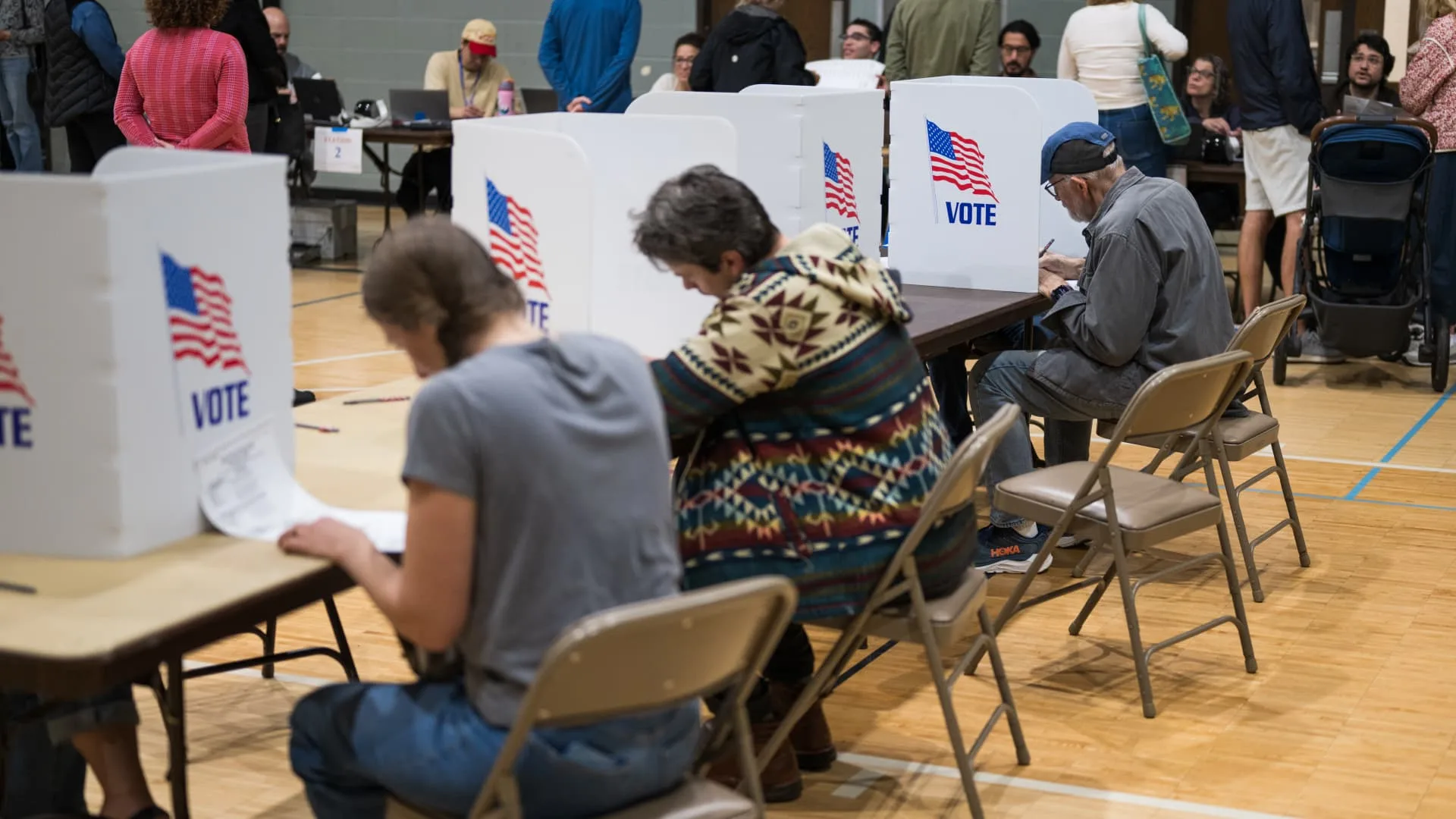
The United States midterm elections on Tuesday (3/11/2026) will not only determine the composition of Congress but also have direct implications for the multibillion-dollar municipal bond (muni) market. Several state-level initiatives could change tax structures and add new supply of debt, ultimately affecting yields and the appeal of these instruments for investors.
A sharp divide exists between Republican (red) and Democratic (blue) states. Blue states tend to introduce progressive income taxes for high earners, while red states are instead seeking to cut property taxes to improve affordability. According to Dan Close, head of the municipal division at Nuveen, “there is a total bifurcation between red and blue states.” These differing fiscal policies will create their own dynamics in the muni market.
In California, for example, there is a proposition dubbed the “billionaire tax” that would impose a one-time 5% levy on the wealth of certain taxpayers with assets of at least $1 billion. In addition, there is a measure that would make permanent a temporary tax increase for individuals earning above $371,000 (inflation-adjusted). If approved, this step could increase the value of the municipal bond tax exemption, prompting investors to flock to the muni market for shelter and pushing bond prices higher.
Conversely, Florida is considering raising the homestead property tax exemption cap for non-school levies from $25,000 to $150,000 in 2027 and $250,000 in 2028. If enacted, local governments would have to find other revenue sources or raise overall tax rates to cover the shortfall. Tom Kozlik, head of public policy and municipal strategy at HilltopSecurities, assesses that this “does not necessarily lead to a downgrade, but there will be an overall revenue balancing.” He stressed the importance of credit research because the impact is uneven.
Beyond tax policy, several states are also asking voters to approve new debt issuance. The already high supply this year is a major concern. Cooper Howard, director of fixed income research and strategy at the Schwab Center for Financial Research, sees supply as the biggest post-election issue. “That amount of issuance is one of the reasons why you have to see strong demand continue to keep pace with supply so that total return remains intact,” he said. Nevertheless, he added that new supply will not immediately flood the market because there is a multi-year window to issue it.
The next Congress's composition will also determine the direction of fiscal policy. Kozlik expects tax and affordability policy initiatives to materialize in the first quarter of next year, which could affect the housing sector, higher education, and public power financing. For investors, the moment before the election could be an opportunity. Close suggests watching bonds in states that will raise taxes, because bond prices typically rise along with tax increases. Nuveen recently launched a separately managed account specifically for Washington, following a surge in demand from financial advisers regarding the 9.9% tax on income above $1 million that takes effect in 2028.
Howard sees munis as attractive now, especially for investors in the 24% tax bracket and above. “The fundamentals are good and the credit quality of most bonds is also good,” he said. Kozlik is also bullish and calls yields “very attractive,” while advising investors to focus on bonds rated AA or higher. “Munis are part of the portfolio most investors want. It helps them sleep well at night,” he concluded. Looking ahead, will the muni market remain a haven for high-income investors amid political and fiscal uncertainty? The answer will soon be clear after the ballots close.