NOAA Cuts Under Trump Seen Weakening US Readiness for Extreme El Niño
Baca dalam 60 detik
- Administrasi Trump telah memangkas sekitar 20% staf NOAA dan memangkas anggaran riset iklim, memicu kekhawatiran akan kemampuan prediksi cuaca ekstrem.
- El Niño kuat tahun ini berpotensi memicu banjir, tanah longsor, dan gelombang panas di AS, sementara kapasitas respons federal melemah.
- Para ahli memperingatkan bahwa melemahnya NOAA tidak hanya berdampak bagi AS, tetapi juga memperlambat pertukaran data iklim global yang selama ini diandalkan banyak negara.
The decision by Donald Trump's administration to slash the budget and staff of the National Oceanic and Atmospheric Administration (NOAA) is seen as having weakened the United States' ability to predict, research, and respond to extreme weather disasters. The warning comes as the US prepares for a winter with a strong El Niño that could bring a series of hydrometeorological hazards.
Since the start of his second term, Trump has systematically reduced NOAA's capacity—from canceling research contracts and grants to closing a number of databases and laboratories. The agency that for decades has been a global reference for climate science has lost about 20% of its staff since January 2025. The National Weather Service (NWS), which sits under NOAA, has also been affected: several weather stations have delayed data collection and cut operating hours, with hundreds of meteorology positions still vacant across 122 forecast offices.
The impact is already being felt inside NOAA. Staff morale has fallen, fatigue has risen, and vital work has been hampered. “This system hasn't really been tested since all the cuts happened,” said Tom Di Liberto, a former NOAA climate scientist who is now media director at Climate Central. He added that a large-scale disaster will soon expose the most dangerous gaps.
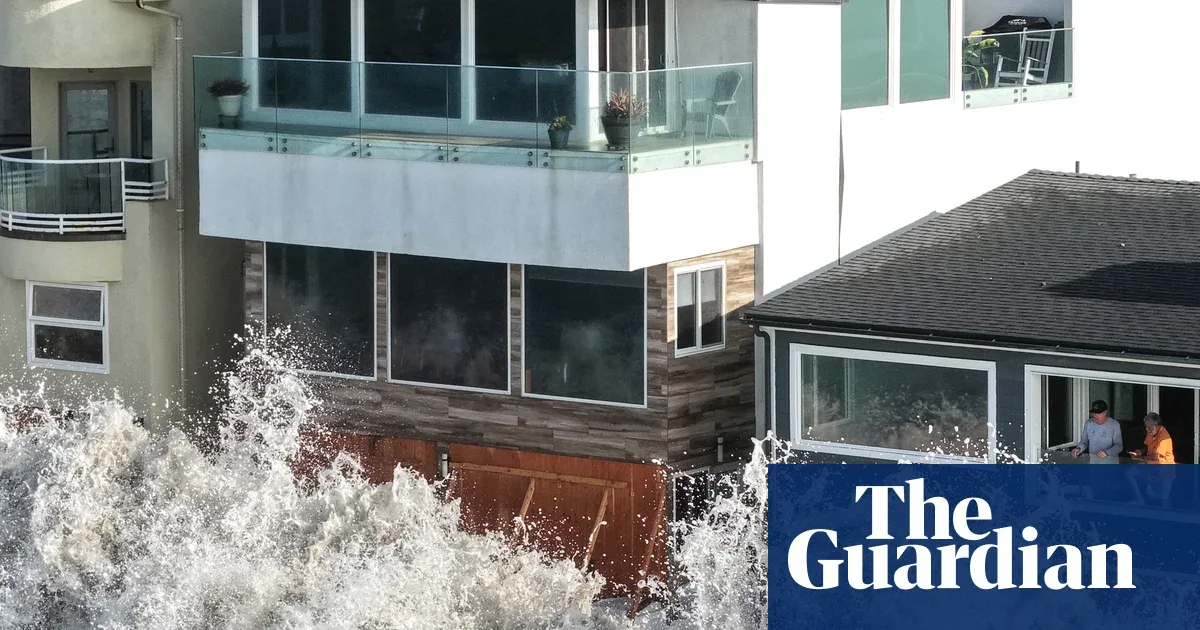
This year's El Niño, marked by above-average equatorial sea surface temperatures, has risen beyond the normal threshold and is expected to strengthen through autumn and winter in the Northern Hemisphere. The phenomenon could trigger dangerous temperature spikes, intensify storms in the western US, raise sea levels in California by about 30 centimeters, and create conditions for debris flows, landslides, and flash floods.
“Whether we as a country can handle extremes from coast to coast like what may happen this winter is a big question,” Di Liberto said. He and other experts argue that the reduced capacity at NOAA is not only a threat to US public safety but also to the global community that relies on NOAA's satellites, studies, and weather intelligence—including data sharing to monitor extreme weather in Europe, disaster response coordination in the Caribbean, and monitoring of deforestation and climate crisis impacts in the Amazon.
Monica Medina, a former deputy NOAA administrator under Obama, said she worries about loss of life and the government's inability to protect citizens when they are most in need. “If this is a real test” for a hotter and more fragile future, she added, “we will fail.”
Rick Spinrad, who spent three decades at NOAA and served as administrator under Biden, highlighted three main gaps: staff, operations, and public engagement. According to US Office of Personnel Management data last updated in August 2025, NOAA has lost more than 3,000 employees—the largest decline in the past decade. The public relations team tasked with disseminating critical information was cut by about half; information technology management staff fell by about 27%; and more than 500 science positions were lost with only 46 new hires. Meteorologists and meteorological technicians fell by about 10% even after NWS sought to add staff following the mass layoffs of 2025.
NWS analyzes about 6.3 billion observations every day and issues 1.5 million forecasts and up to 50,000 warnings per year. But limitations are beginning to show: delayed or restricted weather balloon launches have left parts of the Great Plains less prepared for tornadoes; warnings to rural communities in Alaska were limited when floods displaced more than 1,500 people this year; and the Government Accountability Office (GAO) found that NWS failed to provide adequate multilingual weather warnings, putting 26 million people in the US at higher risk.
“There's a hollowing-out process—there's no time to do anything but the most basic things,” said Dr Anna Zivian, a climate researcher and policy expert. “I suspect we haven't seen the worst results of the loss of capacity. You can't patch a gap that big.”
The Trump administration has also terminated dozens of grants to states, cities, nonprofits, and universities worth more than US$28 million, according to calculations by Grant Witness. Climate research was hit hardest, with the number of grant awards in fiscal year 2026 down 37% from the 2021–2024 average. Nevertheless, the White House has proposed cutting NOAA funding by US$1.6 billion—a 26% reduction—for next year's budget. Much of that proposal may not survive the budget process, but the policy direction is clear and adds pressure on the remaining staff.
“People at NOAA are nervous,” Di Liberto said. He said employees fear getting into trouble if they say things that contradict the administration's anti-climate narrative. “You want people operating at their best when facing extremes like this,” he said. Denial of the human-caused climate crisis from the highest level, he added, only makes it harder for scientists and forecasters to provide context for urgent information. “It's very difficult. Imagine being told the number six doesn't exist, then being asked to do math.”
This year's El Niño, despite the high risk, is also a valuable opportunity to learn and prepare—a picture of what the world may face as temperatures keep rising. But experts worry that a diminished NOAA is missing a vital research opportunity. “This El Niño is very useful for understanding where we stand in dealing with global extreme weather,” Di Liberto said. “Unfortunately, this winter we're going to learn a lot about our ability to handle multiple extremes happening at the same time.”
During the last strong El Niño a decade ago, NOAA deployed aircraft, weather balloons, drones, and research vessels to collect data. This year, only “a few uncrewed watercraft” will be deployed to the Pacific, according to an NPR report in September. The Trump administration briefly began dismantling a key ocean monitoring system during El Niño but restored it after widespread protests from scientists, fishermen, and public officials. About US$6 billion has been cut from weather satellite investments that should have driven forecasting advances; a GAO analysis warned of satellite coverage gaps that could severely disrupt data. Funding for a ten-year ocean monitoring project using autonomous robotic devices called biogeochemical-argo floats will also end at the end of October.
A NOAA spokesperson denied that the agency's capacity has weakened. In a statement by email, the spokesperson said this year's monitoring and data collection efforts build on previous work with “cutting-edge new technology” that was not previously available. “NOAA has never been more ready to study, prepare for, and respond to ENSO events,” the spokesperson said, emphasizing updated modeling tools and the use of uncrewed systems. “These advanced capabilities allow NOAA to streamline resources and study this year's El Niño more effectively than ever before.”
Spinrad and other experts agree that new technology has helped advance data collection and improve forecasting capabilities. “We're more capable than in the past because of technological developments, the satellites we fly, the observation systems we've built,” Spinrad said. “But everything this administration is doing shows that we can't and won't sustain that capability. So the real question is—are we now at a turning point?”
For Indonesia, the weakening of NOAA is not a distant matter. As an archipelagic country on the path of El Niño and La Niña, Indonesia has long used global climate data and models—including those published by NOAA—to calibrate seasonal forecasts, drought early warnings, and flood preparedness. Reduced US research and observation capacity could slow the updating of reference data used by BMKG and national research institutions, especially when ENSO phenomena increase weather uncertainty in the equatorial Pacific. When a country as large as the US weakens the backbone of its climate observation, developing countries on the front lines of the climate crisis must bear a greater burden of uncertainty.
This winter will be an open test of the government's claim that new technology is enough to close the gap. If extreme storms do hit, the public will judge not by official statements but by how quickly warnings reach communities. The question now is: will these cuts become a precedent for weakening other climate institutions around the world, or will they instead trigger a new push to strengthen global early warning systems?