Car-Free Oxford Street: A Real Test for a City Designed for People, Not Vehicles
Baca dalam 60 detik
- Setelah delapan tahun tertunda, Sadiq Khan resmi menutup ruas tersibuk Oxford Street dari lalu lintas kendaraan mulai pekan ini.
- Langkah ini diproyeksikan mendatangkan nilai tambah £82 juta per tahun dan menjadi laboratorium kebijakan bagi kota-kota lain yang ingin beralih dari dominasi mobil.
- Keberhasilan Oxford Street akan bergantung pada integrasi dengan transportasi publik dan zona emisi rendah, bukan sekadar penutupan jalan.
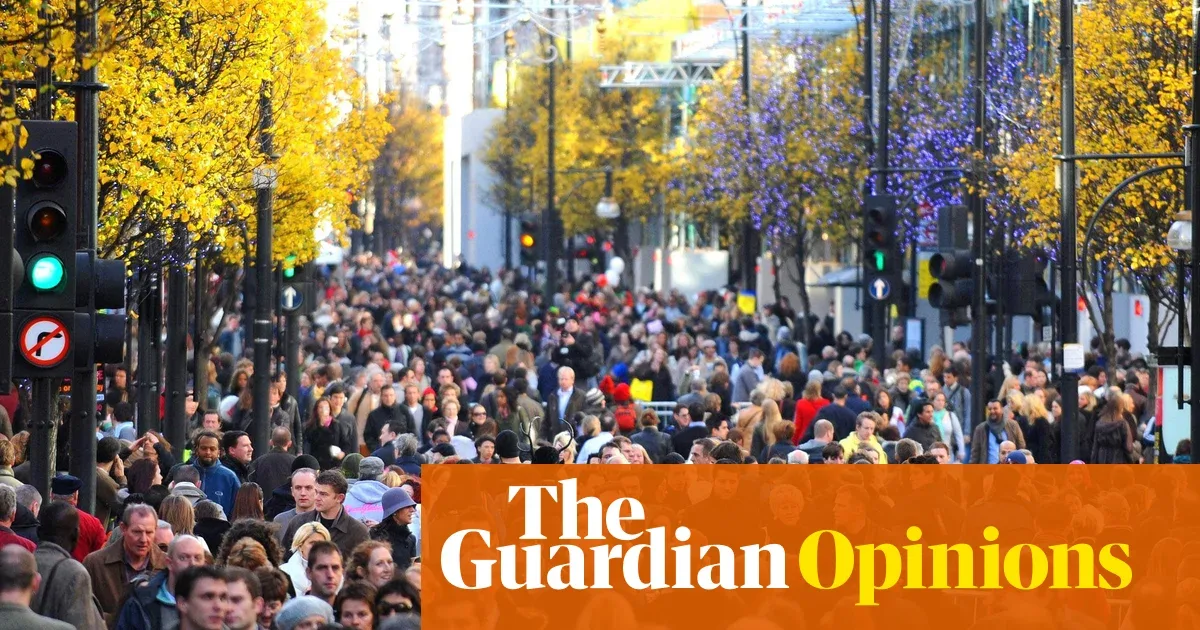
The busiest stretch of Oxford Street in London has finally been closed to motor vehicles. After nearly a decade as a political promise repeatedly postponed, London Mayor Sadiq Khan has delivered the pedestrianization project in the heart of Europe's busiest shopping district. The decision is not merely a matter of rearranging pavements; it is a test of whether a major city can shed its dependence on cars without sacrificing its economic pulse.
The Greater London Authority (GLA) estimates the scheme will generate added value of up to £82 million per year from higher visitor numbers and longer shopping stays. That figure is plausible given that since the pandemic, the number of vacant shops on Oxford Street has more than quadrupled. More interestingly, the project serves as a mirror for high street policy across the UK, which is often linked to the voter base of the Reform UK party. The Prime Minister is being urged to examine whether car-free public space can genuinely revive moribund town centers.
Behind the economic narrative lies a more pressing environmental rationale. The domestic transport sector remains the largest contributor to greenhouse gas emissions in the UK, and its decline has been slower than other sectors because of the dominance of private cars. 2024 data shows 59 percent of journeys in the UK are made by car, while in London the figure is 34 percent. The difference is no coincidence: the central government spends twice as much on London's transport system as on other regions of the UK, and bus fares in the capital are cheaper. In Leeds, which lacks adequate mass transit, nearly half of workers choose to drive.
The main criticism of pedestrianization comes from Westminster Council, which argues that traffic will simply shift to other streets. But empirical evidence paints a more complicated picture. A University of the West of England study found that closing strategic roads actually causes some traffic to disappear permanently as people switch to public transport or walking. An evaluation of 46 Low Traffic Neighbourhoods (LTNs) in London also concluded that spillover effects onto surrounding streets were very small. These findings challenge the assumption that closing one road segment automatically causes severe congestion elsewhere.
Oxford Street's success cannot stand alone. The London government needs to ensure this car-free zone is connected to pollution control policies on surrounding streets, such as the Ultra Low Emission Zone (Ulez). Transport for London estimates that pedestrianization will have only a minimal impact on nitrogen dioxide emissions because Ulez has already reduced them first. This is both an irony and proof of success: in 2014, Oxford Street was the location with the highest nitrogen dioxide pollution in the world. Now, after Ulez was expanded, air quality has improved, and the road closure is a logical next step.
Research from Imperial College shows that the 2023 expansion of Ulez had a significant impact on the health of primary school children in London, whose lung growth had previously been stunted by pollution. Khan faced political condemnation and racial attacks over the policy, but these findings strengthen his position.
For Indonesia, the lesson from Oxford Street is relevant to major cities still grappling with congestion and air pollution. Jakarta, for instance, has developed transit-oriented areas and pavements along several corridors, but dependence on private vehicles remains high. Vehicle restriction policies will not succeed without reliable and affordable public transport. London shows that uneven public transport investment between regions is itself the root of the problem. Without improved services in satellite cities, road closures will only shift the problem, not solve it.
Going forward, Oxford Street's pedestrianization will be tested by time: whether visits and spending actually increase, and whether surrounding traffic actually subsides. If successful, it could become a blueprint for other cities seeking to put people, not vehicles, at the center of planning. But if it fails, criticism of car-free policies will regain strength. The question is no longer whether a city can close a road to cars, but whether it dares to provide a viable alternative before that door is shut.