Oxford Study: Prostate Cancer Risk Can Be Detected in Blood 15 Years Before Diagnosis
Baca dalam 60 detik
- Penelitian Oxford Population Health menemukan 12 protein darah yang berkaitan dengan kanker prostat yang terdiagnosis lebih dari 15 tahun kemudian.
- Tujuh protein lain, termasuk ANKRD1, konsisten berhubungan dengan kanker prostat agresif yang menyebar atau berujung fatal.
- Temuan ini membuka jalan bagi pemahaman biologi penyakit, tetapi belum siap menjadi tes skrining klinis.
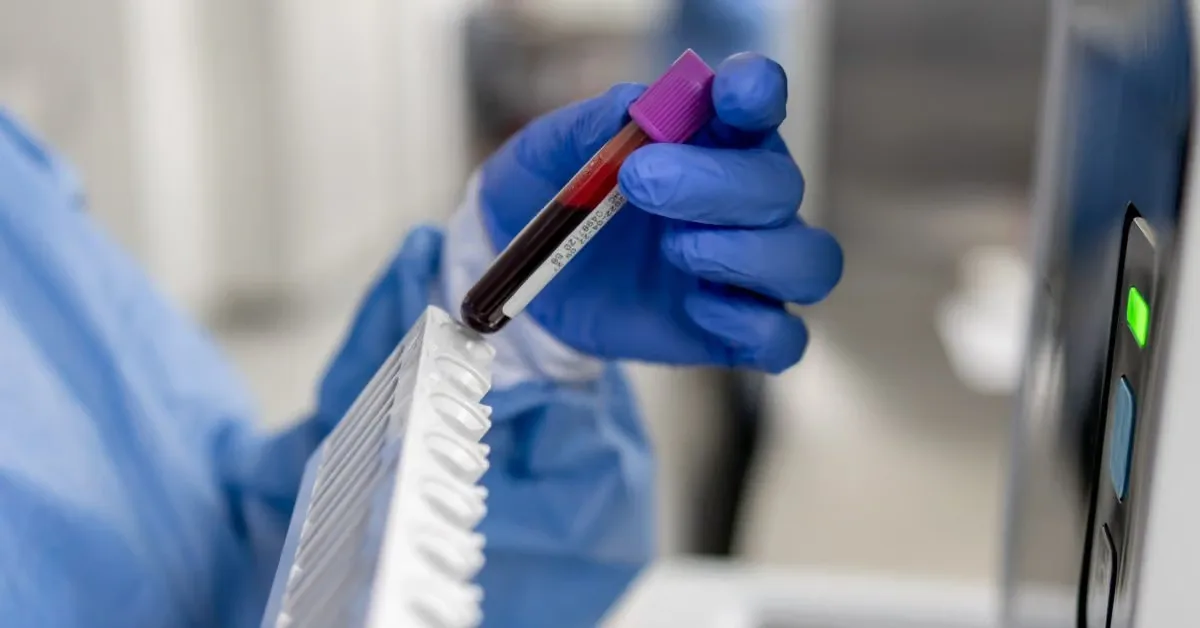
Prostate cancer risk can apparently be read from blood long before symptoms appear. A study led by Oxford Population Health found a number of blood proteins associated with a prostate cancer diagnosis more than 15 years later, including aggressive forms. The findings were published in European Urology and presented at the American Society of Human Genetics Annual Meeting.
Prostate cancer is the second most common cancer in men worldwide and the fifth leading cause of cancer death. Until now, the exact causes and why some tumors become more aggressive have been difficult to explain. Early detection is key, because the earlier cancer is found, the more treatment options are available.
Researchers analyzed blood samples from 982 men who later developed prostate cancer and 1,573 men randomly selected from the European Prospective Investigation into Cancer and Nutrition (EPIC) study. They measured more than 6,000 proteins in blood and followed participants for about 16 years. As a result, 12 proteins were linked to prostate cancer diagnosed more than 15 years after sample collection, and 7 other proteins were linked to aggressive prostate cancer.
One notable finding is the protein granzyme K (GZMK), produced by immune cells, especially T cells and natural killer cells. GZMK was found to be linked to prostate cancer diagnosed more than 15 years after blood collection. "GZMK is produced by immune cells, particularly certain T cells and natural killer cells," explained Karl Smith-Byrne, senior author of the study and associate professor of molecular epidemiology at Oxford Population Health. "We found that circulating GZMK was linked to prostate cancer risk more than 15 years before diagnosis. This is interesting because prostate cancer is generally considered an immunologically 'cold' tumor," he added.
Besides GZMK, the protein ankyrin repeat domain 1 (ANKRD1) showed a consistent association with several serious forms of prostate cancer, including those that had spread to other parts of the body or were fatal. "ANKRD1 is involved in the cellular stress response and regulation of gene expression. Previous research has also linked it to cancer-related processes, although its exact role in prostate cancer remains unclear," said Smith-Byrne. "In our study, ANKRD1 was consistently linked to several aggressive forms of prostate cancer, including advanced and fatal disease. This makes it an interesting candidate for further research," he added.
Researchers also found links with proteins produced by genes already known to play a role in prostate cancer, such as ERBB3, KRAS, and NRAS. These associations were mainly seen in aggressive prostate cancer diagnosed about a decade after blood collection. The findings could help scientists investigate the molecular pathways involved in the early development of aggressive prostate cancer.
Although promising, the study has not established whether these proteins directly contribute to cancer development or merely reflect other biological processes. "These protein differences could reflect underlying biological susceptibility or early changes in pathways involved in cancer development. However, the exact mechanisms remain unclear, and further experimental studies are needed to understand these relationships," said Zhe Huang, first author of the study and a postdoctoral epidemiologist at Oxford Population Health.
Huang stressed that the study aimed to identify proteins linked to prostate cancer risk and outline their potential biological roles, not to develop a risk prediction test. "Although some proteins are linked to aggressive disease, this does not mean they can accurately predict an individual's risk. Further studies in larger and more diverse populations, together with dedicated risk prediction analyses, are needed to explore their potential clinical applications," she said.
The researchers emphasized that the proteins found are not yet suitable for use as a clinical screening test. The findings should be seen as an early step toward understanding the biology of the disease, not as evidence that a new blood test is ready for use. Future research through the Prostate Cancer Aetiology and Prevention Programme (PCAP), funded by Cancer Research UK, will investigate whether these findings can contribute to better approaches to predicting or preventing prostate cancer.
For Indonesia, the findings are relevant given that prostate cancer is also a significant men's health problem. Globocan 2020 data show about 13,563 new cases and 5,108 deaths from prostate cancer in Indonesia. Early detection remains a challenge because many men are reluctant to get checked. If these marker proteins prove valid in further research, a simple blood test could one day help identify high-risk men long before symptoms appear, so that intervention can be carried out earlier. However, the journey from laboratory findings to clinical application is still long and requires validation across various populations, including in Asia.
The big question: will we have a protein-based screening tool within the next decade that can distinguish aggressive prostate cancer from slow-growing cancer? The answer still awaits further research, but the direction is beginning to emerge.