Trump-Xi Summit in Washington: Fragile Trade Truce, Only a Promise of AI Dialogue
Baca dalam 60 detik
- Pertemuan puncak Trump-Xi menghasilkan perpanjangan gencatan senjata dagang dua bulan dan kesepakatan dialog AI, tanpa terobosan besar.
- Ketiadaan pernyataan bersama dan minimnya hasil konkret memicu keraguan bahwa detente dapat bertahan lama.
- Bagi Indonesia, ketidakpastian ini berpotensi mengganggu arus perdagangan dan investasi di kawasan Asia Tenggara.
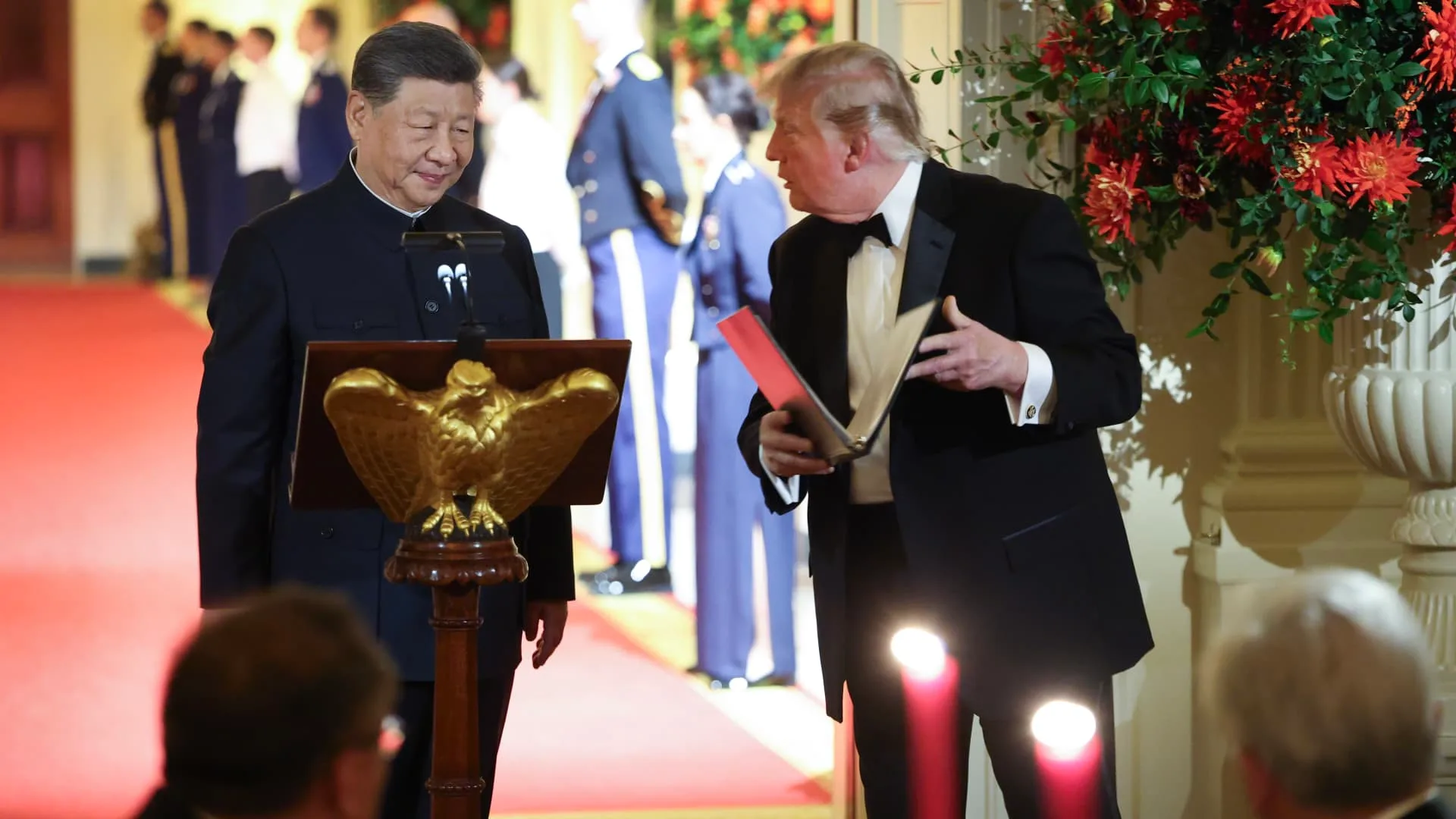
The summit between US President Donald Trump and Chinese President Xi Jinping in Washington, D.C., last week ended without major surprises. The two leaders agreed to extend the trade truce for two months—shorter than expected—and committed to holding a formal dialogue on the risks of artificial intelligence (AI) in the coming weeks. However, no joint statement was issued, signaling that the two countries are still keeping their distance.
Xi's state visit to the US, which ran from Wednesday to Friday, was his second since 2015. Trump welcomed Xi directly at the airport—a rare gesture—and more than 100 guests attended the state dinner. Despite the symbolism, concrete results were minimal. Analysts say the two-month extension of the truce shows how fragile the agreement is.
“I worry that this kind of diplomacy and fragile detente is really not sustainable—if it doesn't produce more tangible results or at least address the clear strategic challenges across the relationship, from strategy to economics,” Daniel Kritenbrink, a partner at the consultancy The Asia Group, told CNBC.
In separate statements, the two countries agreed on several points: Trump's and Xi's attendance at the APEC summit in Shenzhen in November and the G20 in Miami in December; the AI dialogue; and the formalization of a Trade Council and an Investment Council. However, the terms used differ—the US says “Super Intelligence” while China still uses “AI”. The difference is seen as reflecting a fundamental conceptual gap.
Peter Alexander, Managing Director of Shanghai-based Z-ben Advisors, said he was surprised that the two sides issued separate statements rather than a joint one. “It means both sides are really engaged in a battle to determine where the escalation dominance lies,” he said. He suspects Xi would not have traveled to the US unless a joint statement had been agreed in advance.
Historical references also came up. Both leaders cited US-China cooperation during World War II, with Trump mentioning the Flying Tigers and Xi referring to resistance against Japanese military aggression. Analysts see this as a signal of broader cooperation efforts, though the Chinese social media account “Chairman Rabbit” directly linked it to Japan, even calling the government of Prime Minister Sanae Takaichi the party most harmed.
The Taiwan issue was also discussed, but it did not make it into the official statements of either side—indicating no progress. Xi urged the US to oppose “Taiwan independence”, while Beijing considers the self-governing island part of its territory.
For Indonesia, these dynamics are not merely geopolitical spectacle. As a major trading partner of both China and the US, uncertainty over tariff policy and investment flows could directly affect the export sector, especially commodities such as coal, palm oil, and manufactured goods. The short extension of the truce means businesses in Indonesia must prepare for the possibility of sudden tariff changes. In addition, the US-China AI dialogue could influence global technology governance, including the standards that ASEAN countries will adopt.
Scott Kennedy, a senior adviser at the Center for Strategic and International Studies (CSIS), called the summit's outcome “very limited and tentative”. “Despite the red carpet and the warmth from Trump and Xi, the two sides' fact sheets show how wary they are of each other,” he said. “The deliverables on trade, rare earths, refined oil, investment, and AI are all quite limited and tentative.”
Going forward, market players will watch the implementation of the agreement, especially the two-month truce deadline and the start of the AI dialogue. Without concrete follow-up, US-China relations could heat up again, with global implications including for Indonesia. Will the two countries be able to turn rhetoric into real action, or will they get stuck in an endless cycle of tension?