Workers Surround Bundaran HI, Demand Labor Protection Bill Be Discussed Immediately
Baca dalam 60 detik
- Ribuan buruh memadati kawasan Bundaran HI, Jakarta Pusat, pada Kamis (24/9) untuk mengawal pembahasan RUU Perlindungan Ketenagakerjaan.
- Aksi ini menandai eskalasi tekanan publik terhadap DPR yang tengah membahas regulasi strategis di sektor ketenagakerjaan.
- Pemerintah dan legislatif dituntut memastikan RUU tidak mengurangi hak dasar pekerja, sementara dunia usaha berharap iklim investasi tetap kondusif.
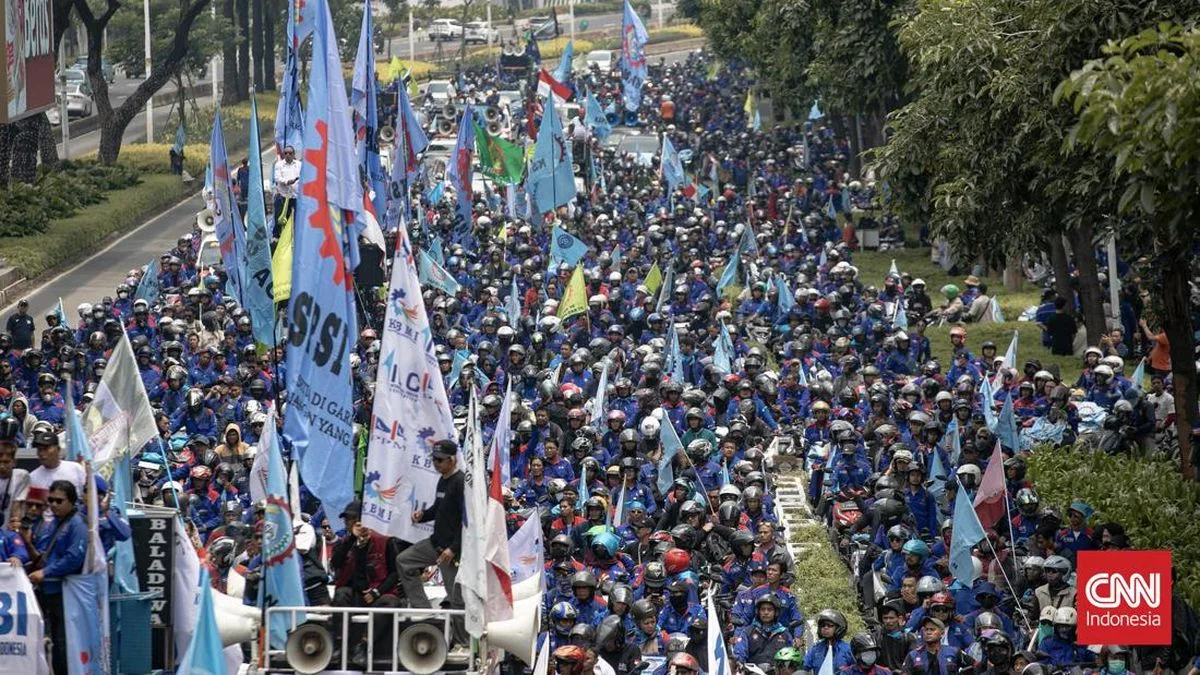
Masses of workers from various labor unions held a large demonstration at the Bundaran Hotel Indonesia (HI), Central Jakarta, on Thursday (24/9). They demanded that the Labor Protection Bill (RUU) currently being deliberated at the DPR truly side with workers, not merely be a legislative formality.
The action signals that the labor issue has once again taken center stage in national politics. Previously, deliberations on the bill had sparked speculation about the direction of government policy: whether it would strengthen the social safety net for workers, or instead give employers more leeway in managing industrial relations. The crowd carried banners and posters demanding transparency in the legislative process and the involvement of labor unions at every stage of deliberation.
In the Indonesian context, this bill could potentially change the landscape of industrial relations, from wage mechanisms, social security, to procedures for termination of employment. Labor groups fear that several articles will instead loosen company obligations, while the government argues that new regulations are needed to adapt to the dynamics of the global labor market and encourage investment. This tension reflects a classic dilemma: on one hand, worker protection must be strengthened; on the other, businesses demand flexibility to remain competitive.
Labor policy observers assess that the action at Bundaran HI is a signal that public communication by the government and the DPR has been inadequate. According to several analysts, if this bill is not socialized in a participatory manner, resistance from labor unions could potentially spread to other industrial cities such as Bekasi, Karawang, and Surabaya. They remind that the legitimacy of a law is largely determined by how much the affected groups are involved in its formulation.
"We do not reject regulatory reform, but basic workers' rights must not be sacrificed for economic growth alone," said a field coordinator in the action, as quoted from a news source.
From an economic perspective, uncertainty in labor regulations can affect investor decisions, especially in labor-intensive sectors. However, if this bill is able to create a balance between protection and productivity, Indonesia has the opportunity to improve the competitiveness of its workforce in the ASEAN region. The government needs to ensure that every article agreed upon later does not create multiple interpretations that lead to industrial disputes in the future.
The DPR and the government are scheduled to continue deliberations on this bill in the near future. The public will observe whether workers' demands are accommodated or instead ignored. The question is, will the Labor Protection Bill become a milestone for improving workers' fate, or merely a name without substance?