Kelapa Gading–Manggarai LRT Officially Begins Operation: Rp8 Fare for 8 Days, 15 Groups Free
Baca dalam 60 detik
- LRT Jakarta rute Kelapa Gading–Manggarai mulai melayani penumpang dengan tarif perdana Rp8 selama delapan hari sejak diresmikan.
- Pemprov DKI menggratiskan transportasi publik bagi 15 golongan, termasuk lansia, disabilitas, veteran, pendidik, TNI/Polri, dan warga Kepulauan Seribu.
- Proyek senilai Rp12,1 triliun yang digarap Jakpro ini menargetkan 80 ribu penumpang harian, menjadi ujian bagi integrasi transportasi ibu kota.
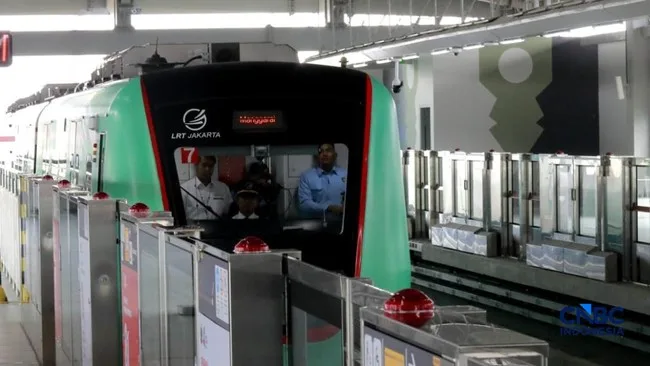
Jakarta Governor Pramono Anung officially launched the Jakarta LRT Kelapa Gading–Manggarai route on Wednesday (16/9/2026). For the next eight days, the public can try the service at a symbolic fare of Rp8 per trip—a policy rarely seen in modern public transport.
The introductory fare policy is not merely a promotion. Pramono stated that the Jakarta Provincial Government has made public transport access free for 15 groups. These include the elderly, people with disabilities, veterans, educators, early childhood educators, members of the Indonesian National Armed Forces (TNI), the Indonesian National Police (Polri), and residents of the Thousand Islands. This means the subsidy burden is not only borne by the regional budget but also serves as an instrument for equitable mobility.
The project was fully built by PT Jakarta Propertindo (Jakpro) as a region-owned enterprise with funding from the Jakarta regional budget. This step underscores the provincial government's position as the main actor in providing infrastructure, unlike the central financing model through the Ministry of Transportation. Consequently, fiscal and operational risks are attached to the regional coffers.
For readers in Indonesia, the presence of this LRT is not just about adding a mode. The Kelapa Gading–Manggarai route connects densely populated residential and commercial areas in North Jakarta with the Manggarai transport hub, which serves the KRL Commuter Line. Intermodal integration could cut travel time, but it also tests the readiness of the ticketing system, schedules, and carrying capacity. With a capacity of 270 passengers per trip, the daily target of 80,000 passengers requires high frequency—about 296 trips per day if calculated linearly. That number is an early indicator of whether the LRT can absorb a surge in demand.
In investment terms, the cost of Rp12.1 trillion for 12.2 kilometers is equivalent to about Rp992 billion per kilometer. This figure is relatively competitive compared with other elevated rail projects in Greater Jakarta, but it still demands discipline in capital recovery. The provincial government needs to ensure that ticket revenue, advertising, and transit-oriented development (TOD) property development can cover long-term operating costs. Without that, the Rp8 fare subsidy and free rides for 15 groups risk burdening the regional budget sustainably.
"LRT Jakarta was fully built by Jakpro as a region-owned enterprise and uses funds from the Jakarta regional budget," Pramono said, underscoring the project's financing independence.
The broader Indonesian context: this policy sets a precedent for other regions that want to develop mass transit without waiting for central funding. However, regional fiscal challenges vary. For investors and professionals, the signal to watch is the direction of DKI's transport policy, which tends to be expansionary amid budget pressures. If this LRT succeeds in attracting passengers, Jakpro's financing model could be replicated—or even become a new burden.
Going forward, the crucial question is not only whether the Rp8 fare can boost ridership, but whether fare integration with the KRL, TransJakarta, and MRT will materialize. Without integration, the Kelapa Gading–Manggarai LRT will only be a costly separate line. Conversely, if connected into one system, it could permanently change the capital's mobility map.