US and Germany Press Iraq on Corruption and Weapons: Is the Investment Signal Changing?
Baca dalam 60 detik
- Utusan Khusus AS Tom Barak menuntut Baghdad membuka kembali kasus korupsi besar tanpa pandang bulu serta memperketat pengawasan perbankan dan perbatasan.
- Kanselir Jerman Friedrich Merz menilai Irak telah mengambil langkah signifikan dalam pemberantasan korupsi dan menyebut perusahaan-perusahaan Jerman tengah menggarap proyek perintis di sana.
- Ketegangan di Selat Hormuz dan Laut Merah menjadi latar yang memperkuat urgensi reformasi tata kelola Irak bagi stabilitas rantai pasok global.
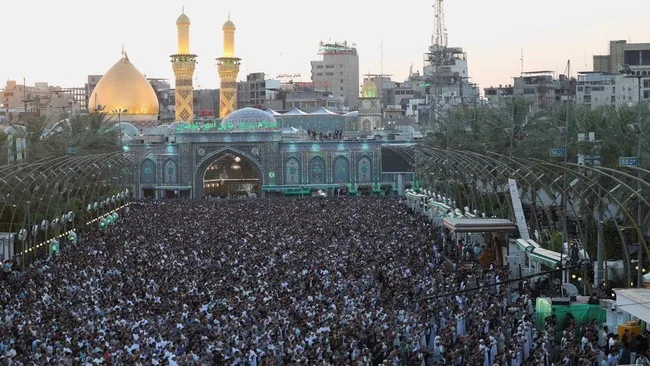
Washington and Berlin have increased diplomatic pressure on Baghdad over the past week, highlighting two issues long seen as obstacles to Iraq's economic recovery: systemic corruption and the presence of armed groups outside state control. U.S. Special Envoy Tom Barak conveyed the demands directly to the head of Iraq's Supreme Judicial Council, Faiq Zeidan, and Prime Minister Ali Faleh Al-Zaidi in Baghdad, while German Chancellor Friedrich Merz discussed them in a bilateral meeting in Berlin last Tuesday.
For the U.S., the message delivered by Barak was not merely a moral appeal. He stressed that major corruption cases must be reopened without regard to political influence or party affiliation, and that defendants must be prosecuted under the law. The statement implied that Washington's political, economic, and security support for Iraq is no longer automatic, but depends on measurable reform progress.
Barak also highlighted two vulnerable points seen as gateways to white-collar crime: the banking sector and border crossings. According to him, oversight in both areas needs to be intensified to prevent smuggling, money laundering, and illegal asset transfers. This step is important because illicit financial flows not only erode state revenue but also widen space for non-state actors to finance their operations.
The issue of weapons control is an inseparable part of that pressure. Barak urged Baghdad to monopolize weapons ownership in the hands of the government and disband all armed groups outside the official security structure, especially those equipped with missiles, drones, and heavy weapons. He acknowledged that groups such as the Hezbollah and Al-Nujba battalions continue to resist disarmament efforts, so he demanded real action, not merely symbolic gestures or media imagery.
"Major corruption cases must be reopened without regard to political influence or party affiliation, and defendants must be prosecuted under the law," Barak said, as quoted from his statement in Baghdad.
Meanwhile, Germany chose a more optimistic tone. At a joint press conference with PM Al-Zaidi, Chancellor Merz stated that the Iraqi government has taken significant steps to fight corruption. He also noted that many German companies in Iraq are doing pioneering work, a signal that Berlin sees economic opportunities behind governance reform.
However, Merz's optimism was not without geopolitical concern. He specifically highlighted the tense situation in the Red Sea due to the protracted conflict, and demanded that Iran end the closure of the Strait of Hormuz. This statement underscores that Iraq's stability cannot be separated from the security of global shipping lanes that are the lifeline of energy and goods trade.
For Indonesia, the dynamics in Baghdad and Berlin are not merely distant news. Iraq is one of the crude oil suppliers on Indonesia's import radar, although its share is not dominant. Tensions in the Strait of Hormuz and the Red Sea could raise shipping risk premiums, which in turn may push up logistics costs and domestic energy prices. For investors and market players, signals of Iraqi governance reform are an important indicator of whether Baghdad can create a more stable and transparent business climate.
In addition, U.S. pressure on weapons control and corruption eradication reflects an increasingly common pattern in Washington's foreign policy: security assistance and economic support are tied to governance improvements. Partner countries, including in Southeast Asia, need to watch how this precedent may affect future strategic cooperation negotiations.
Going forward, the question is how far Baghdad can translate Washington's demands and Berlin's hopes into concrete action. If reform proceeds half-heartedly, international support could loosen and foreign investment flows could slow. Conversely, if Iraq succeeds in fixing its financial sector and enforcing the rule of law, its position as a regional energy player could strengthen. For Indonesia, following these developments is important for gauging the direction of energy policy and economic diplomacy in the Middle East.