Government Weighs Restricting 3 Kg LPG by Decile, Here's the Impact on Consumers and Businesses
Baca dalam 60 detik
- Kementerian ESDM mencatat konsumsi LPG 3 kg terus merangkak naik setiap tahun, menekan anggaran subsidi.
- Skema pembatasan berbasis desil kesejahteraan tengah dirancang bersama Pertamina, dengan desil 9-10 sebagai kandidat kelompok yang tak lagi berhak.
- Pedagang kecil resah jika aturan baru memicu kelangkaan dan kenaikan harga seperti yang pernah terjadi.
The government is preparing a major transformation in the distribution of 3-kilogram LPG. The Ministry of Energy and Mineral Resources (ESDM), together with PT Pertamina (Persero), is reviewing restrictions on purchases of the subsidized gas cylinder based on household welfare data, a move that could reshape the map of national household energy consumption.
Director General of Oil and Gas at the Ministry of ESDM, Laode Sulaeman, said the current subsidized LPG distribution system is still too open. As a result, anyone can buy it without verification of economic status. The situation is seen as one of the main drivers of the annual surge in consumption, which has led to a swelling subsidy burden in the state budget.
The scheme under discussion is the use of welfare decile data. In this grouping, deciles 9 and 10 represent the upper-middle and upper segments of society. The government has not yet decided whether those two groups will be removed from the subsidy recipient list or merely have their purchase volumes capped. What is clear is that the policy direction is toward tightening.
For consumers in big cities, the price gap between official depots and retailers has become a daily reality. The difference of up to Rp3,000 per cylinder shows that the distribution chain still leaves gaps that make final prices uneven. If restrictions are imposed without improving governance, there are fears the price disparity will only widen.
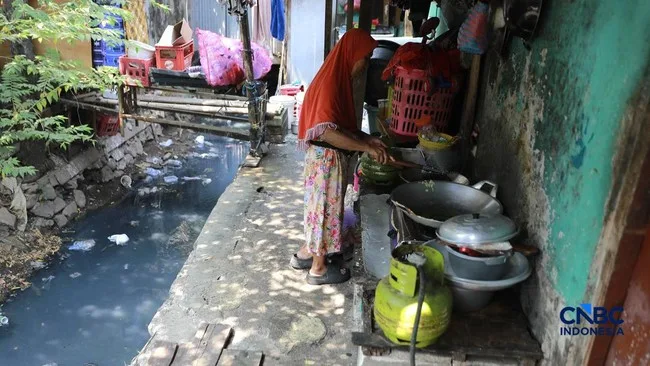
On the other hand, micro-businesses that depend on 3 kg LPG have their own concerns. A fried-food vendor in East Jakarta hopes the new policy will not repeat the shortages experienced in the past. According to him, if gas is hard to obtain, small businesses like his will be hit immediately because the main fuel for their trade becomes uncertain.
"We small traders use gas cylinders every day. I hope it won't be scarce like before and won't go up in price. Business is already hard; if gas is hard to get because of regulations, it gets even more complicated," he said.
That statement illustrates that the policy's impact is not only about subsidy figures, but also about the survival of small businesses. The government needs to ensure the restriction mechanism does not create new barriers for lower-income groups, who are in fact the main target of the subsidy.
In a broader context, this step is part of a long-awaited reform of energy subsidies. So far, the 3 kg LPG subsidy has been seen as disproportionately enjoyed by affluent groups because there is no purchase restriction. By using decile data, the government hopes the subsidy will become more precise and the fiscal burden will be reduced.
However, implementation on the ground is not simple. It requires integration of population data, oversight at the depot level, and readiness of verification systems at retailers. Without that, the restrictions risk becoming merely rules on paper that do not significantly change consumption patterns.
For investors and market players, this policy deserves close attention because it could affect Pertamina's performance and projections for energy subsidy spending in the state budget. If 3 kg LPG consumption can be curbed, fiscal space could loosen for other programs. Conversely, if supply disruptions occur, the government must be ready to disburse additional funds for stabilization.
Equally important, public communication must be built from the outset. The public needs to understand that the restrictions are not meant to make things difficult, but to direct subsidies to those who truly need them. Without adequate explanation, this policy is vulnerable to rejection on the ground.
To date, the government has not set a definite deadline for when the new rule will take effect. Everything is still in the review stage. The public is waiting to see whether this transformation will become a breakthrough in energy subsidy governance, or instead create new turmoil for households and small businesses that have long depended on 3 kg LPG.