Nusron Wahid Absent from Two House Commission II Meetings, Deputy Minister of ATR/BPN Speaks on Assignment
Baca dalam 60 detik
- Menteri ATR/BPN Nusron Wahid tidak hadir dalam dua rapat kerja dengan Komisi II DPR pada 15–16 September 2026 dan diwakilkan kepada Wamen Ossy Dermawan.
- Absennya Nusron bertepatan dengan sorotan publik atas penanganan kasus dugaan suap di lingkungan Kementerian ATR/BPN yang sebelumnya ditangani KPK melalui operasi tangkap tangan.
- Wamen Ossy menyatakan komunikasi dengan Nusron tetap berjalan harian, namun enggan memastikan keberadaan Menteri saat ditanya wartawan.
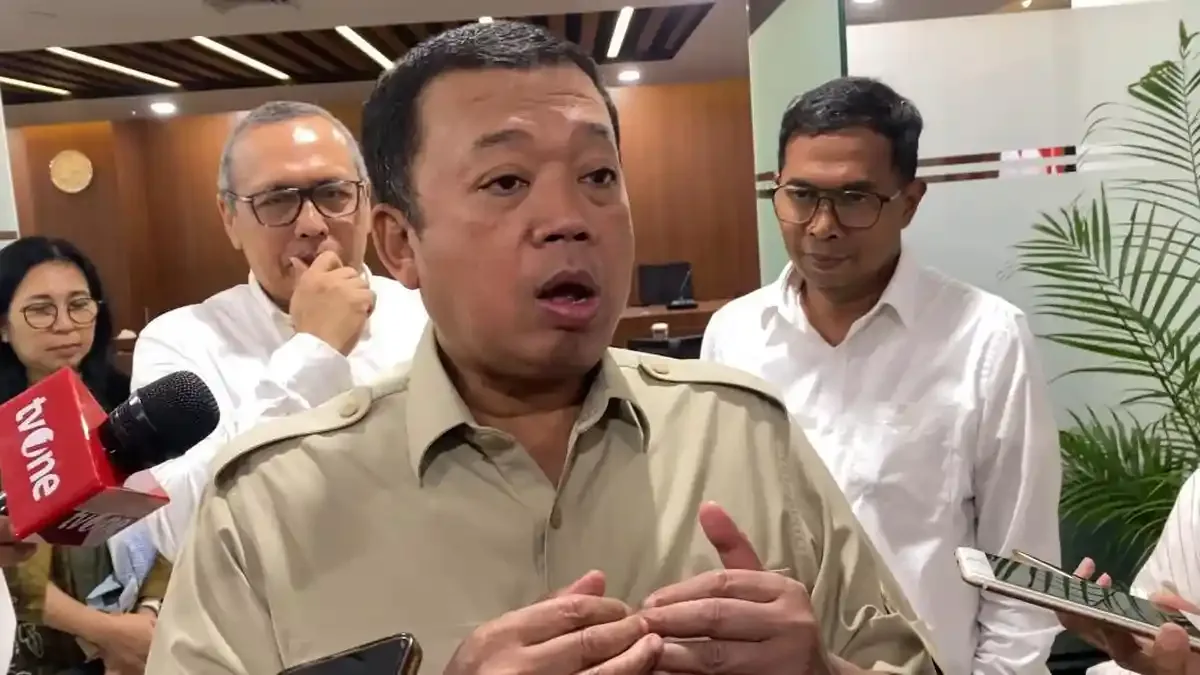
Minister of Agrarian Affairs and Spatial Planning/Head of the National Land Agency (ATR/BPN) Nusron Wahid was recorded as absent from two consecutive joint meeting agendas with House Commission II, namely on Tuesday (15/9/2026) and Wednesday (16/9/2026). On both occasions, the government seat in the meeting room was filled by Deputy Minister of ATR/Deputy Head of BPN Ossy Dermawan.
Nusron's absence is not merely a matter of scheduling. Its timing intersects directly with public scrutiny of the Ministry of ATR/BPN, which had previously been the target of a sting operation (OTT) by the Corruption Eradication Commission (KPK) over alleged bribery. In such a situation, the direct presence of a minister before Commission II is usually an accountability moment that is awaited, especially since the commission's counterpart oversees the land sector, which is laden with interests.
Ossy stressed that his presence in Senayan was part of an official assignment from Nusron. According to him, the Minister had a number of already scheduled agendas so he could not attend in person. "I was here yesterday representing him. Of course that is an assignment from him as Minister of ATR BPN," Ossy said at the Parliamentary Complex, Senayan, Jakarta, Wednesday.
When pressed on Nusron's position at the time—whether he was in Jakarta or out of town—Ossy did not give a firm answer. He only said that the Minister was carrying out an already scheduled assignment, and added that he needed to check with the Minister's secretariat to be sure. That answer left room for interpretation, especially since the absence of a minister at a House meeting usually raises its own political questions.
Nevertheless, Ossy ensured that the line of communication with Nusron was not cut. All directives, including the assignment to represent the Minister at the House, were said to still flow from Nusron. "Still (communicating), this is all still his direction," he said. He also stressed that the ministry remains under Nusron's leadership as Minister of ATR/BPN.
For the public, this issue is not only about the protocol of officials' attendance. The agrarian and spatial planning sector holds enormous economic value—from land certification, land acquisition for national strategic projects, to the resolution of land disputes involving communities and corporations. When the ministry managing that domain stumbles into an alleged bribery case, expectations for transparency and for its leader's presence in legislative forums automatically rise.
"That means he has assignments and activities that are already scheduled," Ossy said, adding that he would have to check with the Minister's secretariat if asked in more detail about Nusron's whereabouts.
From an oversight perspective, House Commission II has the authority to summon its counterparts to request explanations on current issues. A minister's repeated absence can be read as a signal that the government is managing its communication strategy amid political pressure. However, it can also be understood as a consequence of the ministry's packed agenda as it is overhauling governance after the sting operation.
What readers in Indonesia need to watch—especially property businesses, banks channeling land ownership credit, and investors in the infrastructure sector—is the continuation of bureaucratic reform at ATR/BPN. Any turbulence in this ministry could affect legal certainty over certificates, the speed of land services, and the investment climate in the regions. Leadership uncertainty, even if temporary, can delay strategic decisions affecting many parties.
Going forward, the question is not only when Nusron will appear directly before Commission II, but how quickly the Ministry of ATR/BPN can close the governance gaps that make it vulnerable to bribery. If the Minister's absence continues without an adequate official explanation, the public has the right to ask whether the main priority now is fixing the institution or avoiding scrutiny.