Constitutional Court Limits Government's Room to Change Budget, House Holds the Key
Baca dalam 60 detik
- Mahkamah Konstitusi mewajibkan persetujuan DPR untuk setiap perubahan belanja pemerintah pusat, memangkas kewenangan pemerintah mengubah anggaran lewat peraturan presiden.
- Putusan ini menegaskan mekanisme saling mengawasi antar-lembaga, meski perubahan yang sudah ditetapkan sebelum putusan tetap diakui sah hingga akhir tahun anggaran 2026.
- Implikasi jangka panjang: setiap revisi APBN ke depan harus melalui jalur legislasi, memperlambat eksekusi program namun memperkuat akuntabilitas fiskal.
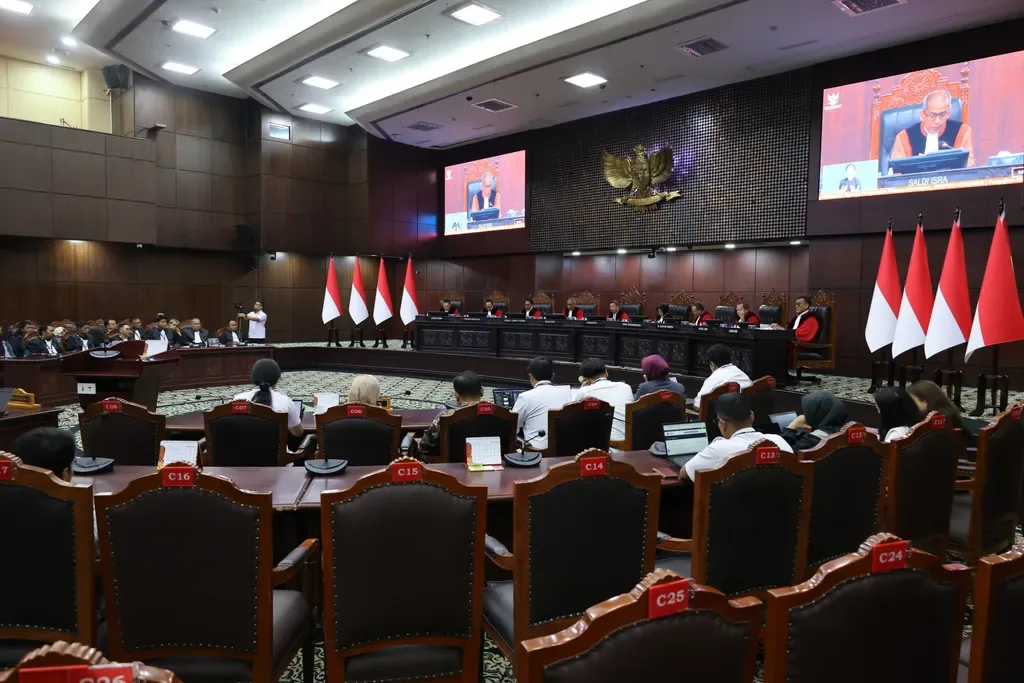
The Constitutional Court (MK) ruled that any change affecting the amount of central government spending by function must obtain approval from the House of Representatives (DPR). The ruling was read out in a judicial review hearing of Law Number 17 of 2026 on the 2026 State Budget at the MK Building, Jakarta, Wednesday (16/9/2026).
With the ruling, the government can no longer unilaterally change spending items through the state budget annex or a presidential regulation (perpres). The mechanism of check and balances among state institutions is affirmed as a constitutional principle in the management of state finances. Constitutional Justice Arsul Sani stated that the urgency of DPR approval applies to budget changes in the state budget law after this ruling is pronounced and in subsequent years.
However, there is an important caveat: because Law No 17/2026 remains in force until the end of the 2026 budget year, changes already stipulated through a perpres before the MK ruling are still considered valid. This gives the government transitional room to adjust to the new governance without disrupting ongoing programs.
"Thus, the urgency of DPR approval for changes to the law governing the state budget, including its annex, applies to budget changes in the law governing the state budget after the a quo ruling is pronounced and takes effect in subsequent years," said Constitutional Justice Arsul Sani.
The ruling is an important marker in Indonesia's fiscal landscape. Until now, the government has often used a perpres to change spending allocations without DPR approval, drawing criticism for being seen as reducing transparency and accountability. The MK affirmed that budget changes must go through the legislative mechanism, not merely an executive decision.
For financial markets, this certainty can boost investor confidence in budget governance. On the other hand, however, the DPR approval process could slow the fiscal response to urgent needs, especially in a crisis. The government needs to adjust its budget planning strategy so it remains flexible without violating the constitution.
Going forward, the DPR will hold a greater role in overseeing every change in state spending. The question is whether this new mechanism will strengthen oversight or instead lengthen bureaucracy. What is clear is that the MK ruling changes the map of budget power in Indonesia.