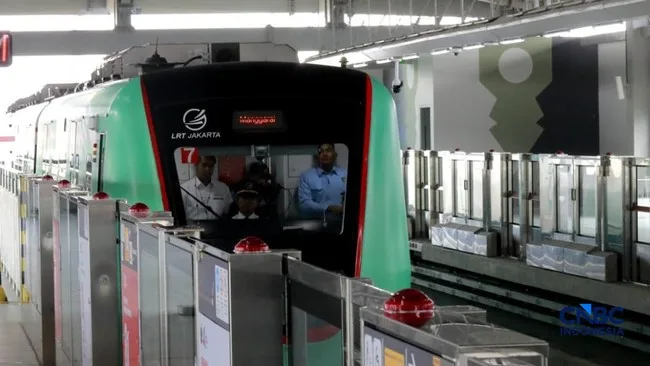
Kelapa Gading–Manggarai LRT Officially Opens, North–South Jakarta Connectivity Further Linked
Baca dalam 60 detik
- Presiden Prabowo Subianto meresmikan pengoperasian LRT Jakarta rute Kelapa Gading–Manggarai pada Rabu (16/9).
- Perpanjangan jalur ini menyatukan tiga wilayah administratif: Jakarta Utara, Jakarta Timur, dan Jakarta Selatan.
- Konektivitas baru berpotensi mengubah pola mobilitas warga dan mendorong pertumbuhan ekonomi di koridor timur Ibu Kota.
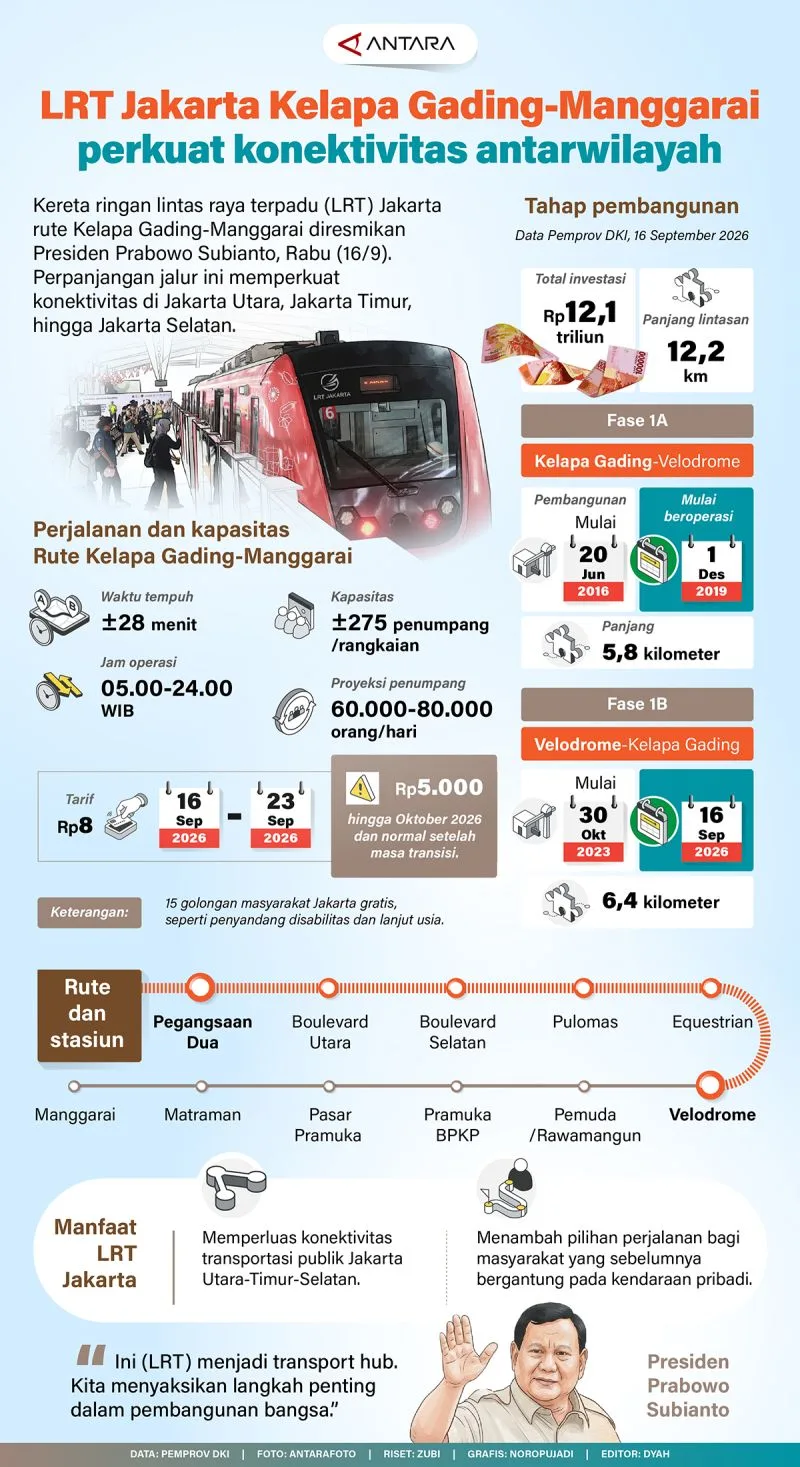
President Prabowo Subianto officially opened the Jakarta Light Rail Transit (LRT) service for the Kelapa Gading–Manggarai segment on Wednesday (16/9). The inauguration marks the operation of a line connecting three municipalities at once: North Jakarta, East Jakarta, and South Jakarta.
The arrival of this new route is not merely an addition of tracks. It completes the mosaic of the capital's public transportation that has long been considered uneven: the northern and eastern areas are often less served than the southern and central corridors. With its endpoint at Manggarai—the main hub of the KRL Commuter Line—the Kelapa Gading LRT is expected to become a feeder that eases congestion at Manggarai Station, which has long been one of the busiest points in the Jabodetabek rail network.
For residents who have relied on buses or private vehicles from the Kelapa Gading area to the city center, this light rail option cuts travel time while avoiding congestion on Jalan Perintis Kemerdekaan and Jalan Casablanca. However, the classic challenges of mass transportation projects still loom: intermodal ticket integration, parking capacity at stations, and consistent trip frequency. Without these, the LRT risks becoming merely a vanity project without loyal passengers.
From an economic standpoint, the Kelapa Gading–Manggarai corridor passes through several areas dense with activity: shopping centers, small industrial zones, and densely populated neighborhoods. The presence of rail access can trigger a property boom around the stations—a pattern already seen at several other TOD (transit-oriented development) points in Jakarta. For businesses, this opens new opportunities to get closer to their consumer base without being trapped by swelling logistics and parking costs.
"This line extension strengthens interregional connectivity," read an official statement quoted from a government source, emphasizing that the focus of transportation development is now directed at inter-zone connectivity, not merely adding lines in the city center.
For readers outside Jakarta, this inauguration can be read as a signal of the direction of national infrastructure policy. A similar pattern—linking peripheral areas with main transportation hubs—could potentially be replicated in other cities such as Surabaya, Medan, or Makassar. Investors monitoring the property, retail, and logistics sectors need to pay close attention to how local governments prepare spatial planning regulations around stations, because that is where long-term added value will be created or, conversely, evaporate.
The remaining question: how quickly can the operator adjust carrying capacity to the surge in passengers during peak hours, and will fare integration with the KRL and TransJakarta soon materialize? Without that clarity, the inauguration euphoria could quickly fade. Conversely, if this intermodal ecosystem runs smoothly, the Kelapa Gading–Manggarai LRT can become a blueprint for developing similar networks in other regions—as well as a real test of the government's commitment to providing public transportation that is actually used, not merely inaugurated.