Central Java Women's Parliamentary Caucus Inaugurated: 30 Percent Representation Target Still Far Off
Baca dalam 60 detik
- Kaukus Perempuan Parlemen (KPP) Jawa Tengah resmi dibentuk untuk periode 2025–2030 dengan Rr. Maria Tri Mangesti sebagai ketua.
- Keterwakilan perempuan di DPRD Jateng baru 19 persen, jauh dari target minimal 30 persen yang diamanatkan regulasi.
- KPP akan fokus pada isu stunting, kekerasan terhadap perempuan dan anak, penguatan ekonomi keluarga, serta akses pendidikan dan kesehatan.
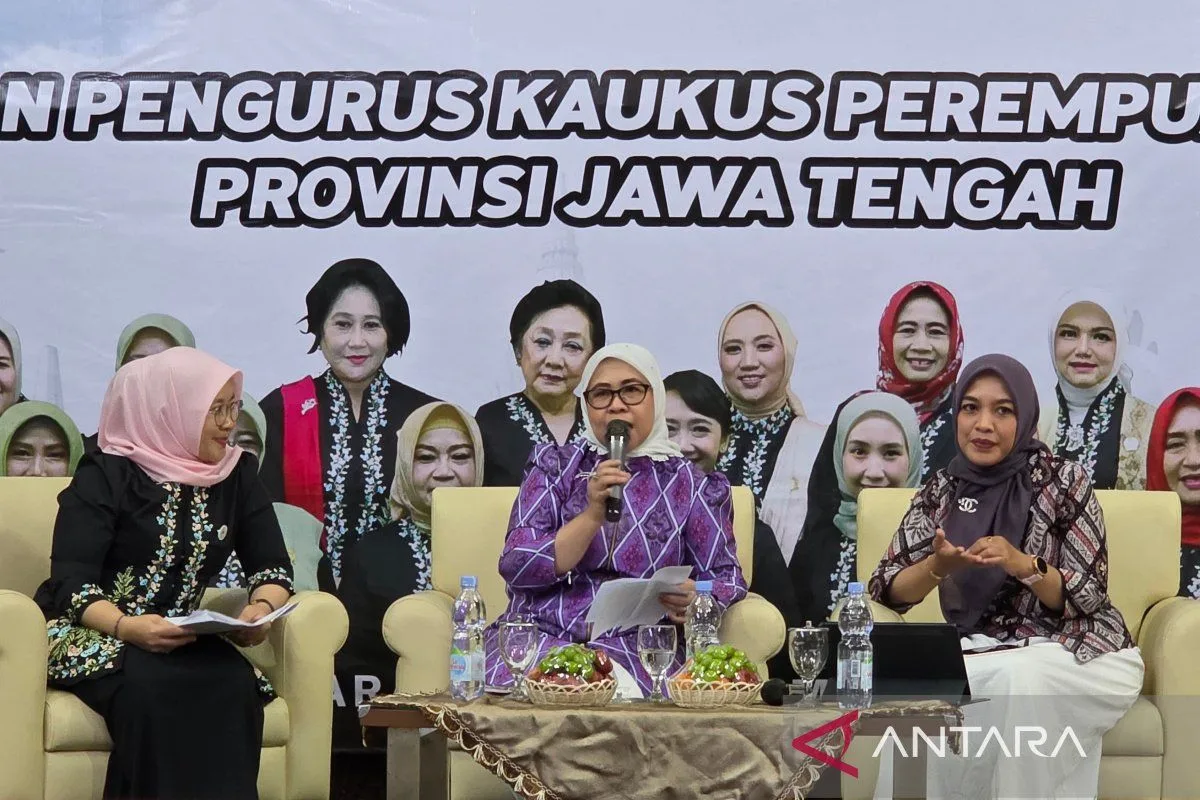
The inauguration of the leadership of the Central Java Province Women's Parliamentary Caucus (KPP) for the 2025–2030 term in Semarang on Wednesday signals that the agenda of women's representation in regional legislatures still leaves much work to be done. Member of Commission VII of the Indonesian House of Representatives (DPR RI) Siti Mukaromah, who attended the event, stressed that the forum is not merely ceremonial but an instrument for championing the interests of women, children, and vulnerable groups that have long been sidelined from the policy table.
In her remarks, Siti highlighted a striking numerical gap. Of the 120 members of the Central Java Regional House of Representatives (DPRD), only 23, or about 19 percent, are women. This figure has yet to move toward the 30 percent threshold mandated by regulations and recommended by various international bodies. "This condition must be concretely fulfilled," Siti said, emphasizing that the target is not merely a statistical number but a representation of the voices of groups that have been underrepresented.
Although the realization remains far from expectations, Siti argued that the situation should not discourage women legislators. In her view, the limited number actually demands sharper strategies in guarding specific issues, such as reproductive health, child protection, and family economic empowerment. She also encouraged KPP at the provincial and regency/city levels to serve as a channel for increasing women's participation in political life and public office.
Chair of the Presidium of the Indonesian Republic KPP Badikenita Br. Sitepu directly inaugurated the Central Java KPP leadership. Rr. Maria Tri Mangesti has been entrusted to lead the caucus for the next five years. Maria stated that her team will give serious attention to a number of strategic issues, including stunting handling, prevention of violence against women and children, strengthening the family economy, and equitable access to education and health. This focus reflects an understanding that women's issues do not stand alone but are closely tied to the overall quality of regional development.
"The issues of women, children, and other vulnerable groups must be a portion that is thought through together," Siti Mukaromah stressed, emphasizing that these issues cannot be left to only a handful of women legislators.
For readers in Indonesia, especially stakeholders in the regions, the dynamics in Central Java mirror challenges that also occur in many other provinces. Women's representation in parliament is often hampered by a still-patriarchal political culture, the high cost of politics, and minimal party support for women cadres. Yet the presence of women in legislative seats has been proven to bring changes in budget priorities, for example allocations for posyandu, maternal and child health services, and poverty alleviation programs targeting vulnerable households.
From a policy standpoint, the 30 percent target has in fact long been adopted in various regulations, including the Election Law and rules on women's representation in state institutions. However, implementation often stumbles on unfavorable nomination mechanisms. KPP at the provincial level is expected to serve as a bridge between public aspirations and the decision-making process in the DPRD, while also pushing political parties to more seriously prepare women cadres from an early stage.
Going forward, the effectiveness of the Central Java KPP will be tested by the extent to which it can translate its agenda into concrete policy products. Will this caucus merely become a discussion forum, or will it truly drive regulatory and budgetary changes that directly impact women and children? The public is certainly waiting for proof, not just promises.