KPK Put to the Test: How Far Must It Probe the ATR/BPN Minister in the Bogor HGB Bribery Case?
Baca dalam 60 detik
- KPK menetapkan empat orang dekat Menteri ATR/BPN Nusron Wahid sebagai tersangka dalam dugaan suap pengurusan HGB di Bogor, memicu pertanyaan publik tentang keterlibatan atasannya.
- Peneliti Pukat UGM Zaenur Rohman menilai ada dua alasan kuat KPK harus mendalami peran menteri: kedekatan personal para tersangka dan kewenangan strategis menteri dalam mengendalikan kebijakan pertanahan.
- Ujian bagi KPK adalah menelusuri aliran dana hingga ke aktor paling atas, termasuk dugaan Rp106 miliar, tanpa tebang pilih.
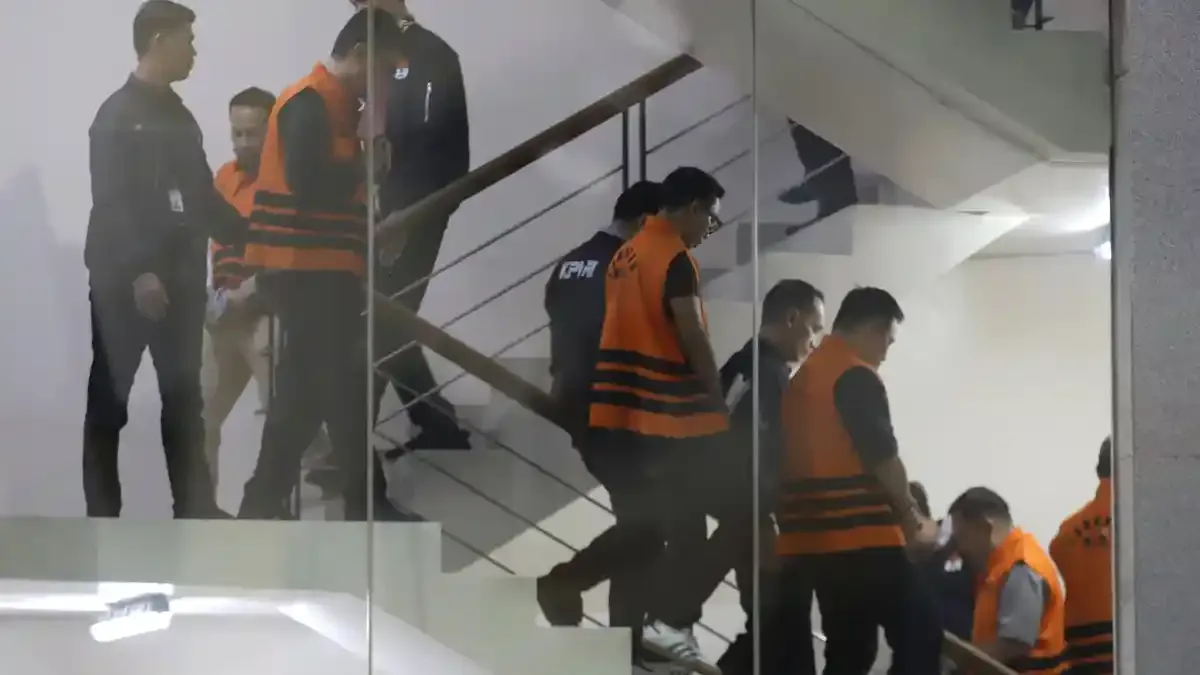
The Corruption Eradication Commission (KPK) has named four people described as confidants of Agrarian and Spatial Planning Minister/Head of the National Land Agency (ATR/BPN) Nusron Wahid as suspects in an alleged bribery and gratification case related to the processing of Hak Guna Bangunan (HGB) permits in Bogor. The move raises a fundamental question: how far will the KPK reach to actors above them?
The four suspects are Muhammad Fakhry, Erwin, Fahd A Rafiq, and Rizal Pahlefi. They were arrested in a sting operation that also seized evidence worth a total of Rp106.3 billion. That figure makes this one of the largest cases in recent years in the land sector. For the public, however, the measure of enforcement success does not stop at arrests in the field. The question shifts to how deep investigators dare to probe the possible involvement of the suspects' direct superiors.
Researcher at the Center for Anti-Corruption Studies at Gadjah Mada University (Pukat UGM), Zaenur Rohman, argues there are two main reasons the KPK cannot ignore that possibility. First, the suspects are people with personal ties to the minister. Second, the authority structure at the ATR/BPN Ministry places the minister as the final decision-maker on various strategic policies, including those related to HGB.
"First, these are the people caught, people close to the minister. Second, the minister's authority is the most decisive. So the KPK must look at the possible involvement of the ATR BPN minister," Zaenur said in a television program on Tuesday (15/9/2026).
Zaenur detailed several steps investigators can take to test the extent of the minister's involvement. First, examining the communications of the parties already detained, including traces of conversations on their phones, to see whether there was direct or indirect contact with the minister. Second, cross-examining the suspects to dig into each person's role and test whether there was knowledge, approval, or even orders from superiors. Third, tracing the flow of funds not only in current transactions but also in previous events that may have involved the minister.
The follow the money method becomes crucial. The alleged flow of around Rp106 billion that has surfaced in this case, according to Zaenur, must be traced to its final destination. If investigators stop at the four suspects without probing the possibility of flows upward, the public will judge the KPK as not serious in handling a case involving high-ranking officials.
This case is also a test of the courage of the KPK leadership. Amid political pressure and high public expectations, the decision to question or not question a minister will be a benchmark for the independence of the anti-graft agency. Zaenur calls this a crucial moment that will determine the KPK's reputation in the eyes of the public.
For market players and property investors, this development deserves close attention. The ATR/BPN Ministry holds a central role in issuing land certificates, including HGB, which forms the foundation of many property and investment projects. Legal uncertainty caused by this case could affect the investment climate, especially if the permitting process in the regions is also affected. The government needs to ensure that land services continue to run transparently and accountably, without sacrificing business certainty.
Going forward, the public will wait to see whether the KPK summons Minister Nusron Wahid for questioning. If that step is taken, the process must proceed within legal corridors and uphold the presumption of innocence. Conversely, if it is not, the KPK needs to openly explain the reasons behind that decision so as not to spark speculation. Either way, this case will be a mirror for the commitment to fighting corruption in a sector that has long been prone to irregularities.