Escaped Peacock in Brisbane Finally Returns Home After a Week, Survives Deadly Tick Threat
Baca dalam 60 detik
- Hex, merak peliharaan warga Brisbane, ditemukan kembali setelah sepekan berkeliaran dan nyaris tewas akibat serangan kutu.
- Upaya pencarian melibatkan ratusan warga yang memantau pergerakan burung melalui media sosial hingga penangkapan dramatis di halaman rumah.
- Keberhasilan penyelamatan ini menyoroti risiko kesehatan hewan peliharaan eksotis saat lepas ke alam liar dan pentingnya penanganan medis cepat.
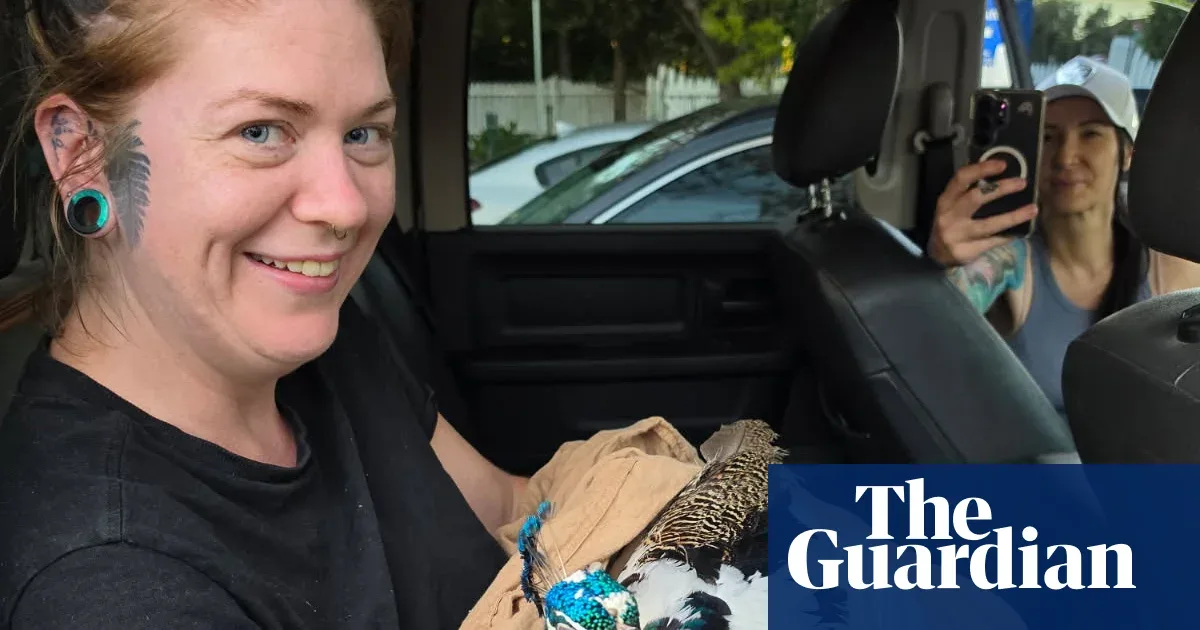
A pet peacock named Hex has finally returned to its owners in Alexandra Hills, Brisbane, after more than a week on the loose and at one point on the brink of death. The male bird was first found admiring his own reflection in the bathroom mirror of the home of Geoff and Delwyn Ballantyne, who had just returned from a coffee shop at the time.
The incident began last week when Hex suddenly entered the couple's home. Wildlife officers then shooed him away and released him into nearby bushland. Since then, the strikingly feathered bird appeared in residents' yards one after another, triggering a large-scale hunt involving hundreds of people. Local residents exchanged information via social media to track Hex's whereabouts, turning him into something of an overnight celebrity in the area.
Hex's capture was dramatic on Thursday (5/11). He was cornered in a resident's yard. Elliot Ross, Hex's owner and a tattoo artist, along with his partner Cassie Alexander and helped by a friend, Jordy Barker, managed to catch the bird with a blanket and bare hands. "Jordy just lunged and grabbed his legs. Hex went berserk, but he held on. He wasn't scared at all," Ross said, recounting his friend's heroic move.
But the joy soon turned to worry. On examination, Hex's body was covered in about six ticks that had been sucking his blood while he lived in the wild. Ross and Alexander immediately took him to a 24-hour veterinary hospital. "We left the clinic with very heavy hearts, really not sure whether we would see our beautiful boy again," Alexander said, describing their despair.
Fortunately, the veterinary team at the clinic decided to try antiserum therapy usually used for dogs, though it had also worked on other animals. "Hex responded amazingly," Alexander said. The decision proved to save the unfortunate bird's life. Hex has now returned home and is back together with the peahen named Nyx.
According to Ross, Hex most likely ran off out of mating instinct. "People say that during breeding season you should have two females, otherwise the male may go looking elsewhere. We had actually scheduled to bring in another female this weekend, but it seems we were too late," he said.
Emeritus professor Darryl Jones of Griffith University, an urban ecologist and author of the book Wild Neighbours, suspects Hex was not looking for a mate but was feeling lonely. "Most birds would see their reflection as a rival or a threat and attack it. But this bird may just have been lonely," Jones said. He added, "It's very unusual for two male peacocks to hang out together, but it can happen sometimes. Peacocks aren't very smart. He may be dumb, but he knows what a female looks like."
Hex's story captured the attention of the Brisbane public and serves as a reminder that keeping exotic animals such as peacocks requires extra vigilance. Pets escaping into the wild not only endanger the animals themselves but can also potentially disrupt the local ecosystem. Hex was lucky to have alert owners and a caring community. However, not every animal fares as well as Hex. Going forward, there needs to be greater awareness of the importance of secure enclosures and understanding of animal behavior before deciding to keep one.