UK Supreme Court Reviews Palestine Action Ban as 4,000 Arrests Fuel Trust Crisis
Baca dalam 60 detik
- Sidang di Mahkamah Agung Inggris mempertanyakan legalitas pelarangan Palestine Action sebagai organisasi teroris.
- Lebih dari 4.000 penangkapan terjadi sejak larangan diberlakukan, dengan 1.200 dakwaan menunggu hasil putusan.
- Keputusan hakim akan menentukan apakah larangan tersebut proporsional atau justru melanggar kebebasan berekspresi.
The UK Supreme Court on Wednesday (5/3) began hearing a judicial review of the ban on Palestine Action, a pro-Palestinian activist group outlawed last year. The hearing is the first in which the UK's highest court must decide whether banning an organization under terrorism law is compatible with the rights to freedom of speech and assembly.
In the opening session, the legal team for Huda Ammori, one of Palestine Action's founders, asserted that no other protest organization has been treated in the same way. They argued that the ban has triggered a "crisis of trust" in UK counterterrorism law and sparked unprecedented civil disobedience from law-abiding citizens.
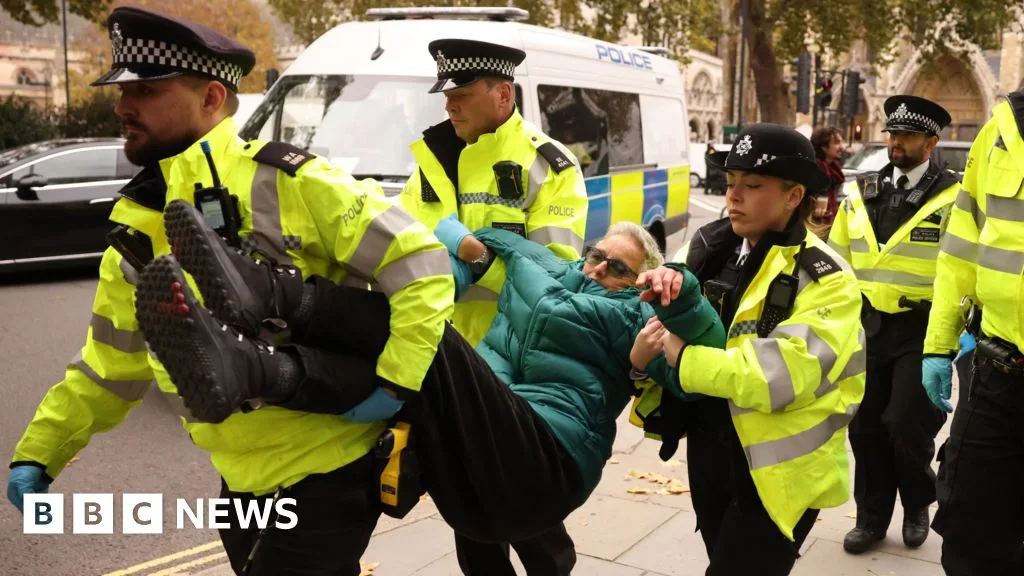
Outside the courtroom, Metropolitan Police officers arrested 27 demonstrators holding a solidarity action. The figure lengthens the list of arrests since the ban took effect. Home Office data obtained by the BBC shows more than 4,000 people have been arrested for carrying placards supporting the group. Most of them have been arrested repeatedly, and 1,200 charges have been authorized by prosecutors so far, but their trials are on hold pending the Supreme Court ruling.
Henry Blaxland KC, Ammori's lawyer, said the ban had instead given the group free publicity and had not cost it support. "Rather than extinguishing the fire, the ban is like pouring petrol on the most heated public debate of the moment," he told the panel of judges. He argued the measure was disproportionate and entirely unnecessary.
In their arguments, Ammori's team acknowledged that Palestine Action cannot be described as an ordinary peaceful protest group. They carried out direct action by occupying or damaging property of companies linked to the Israeli military. However, of the 385 incidents evaluated by the Home Office, only three were categorized as terrorism offences. Raza Husain KC, another lawyer, stressed that the UK definition of terrorism covers serious property damage for a purpose, but the majority of the group's actions amounted only to minor vandalism, graffiti, and occupations.
Husain asked the judges to set aside the criminal allegations—which he said are already covered by numerous criminal laws—and focus on whether the Home Secretary's decision to proscribe the group as terrorist was proportionate. "Palestine Action was banned on the basis of less than one percent of its actions over five years that were judged to fall within the outer limits of the definition of terrorism," he said.
The Supreme Court also heard from free speech campaigners who argued the ban obstructs the right to protest. In contrast, a coalition of Jewish organizations submitted written arguments describing Palestine Action as a "sinister" organization intent on attacking their community's interests. Adam Wagner KC, lawyer for the coalition, asserted that the Court of Appeal had rightly concluded that Palestine Action is a violent organization involved in terrorism against a range of targets.
"The group's network has shifted from targeting Elbit, an Israeli-parented defence company, to figures or institutions deemed 'Zionist'. Because the majority of British Jews have ties to Israel, campaigns against institutions seen as 'complicit' with Israel in practice threaten mainstream Jewish communities," Wagner said in his written statement.
The case is a test of the balance between national security and civil liberties in the UK. If the Supreme Court rules the ban unlawful, the government must review its use of terrorism law against protest organizations. Conversely, if the ban is upheld, the wave of arrests is expected to continue and could widen the trust gap between the public and law enforcement institutions.
The hearing will continue on Thursday (6/3), with a ruling expected to take several weeks. Meanwhile, in Indonesia, the case mirrors how democracies grapple with the boundary between protective action and the right to expression—a discourse also relevant to Indonesia as it strengthens its counterterrorism legal framework and freedom of speech.