Third Wave of French Protests Ends in Violence: 511 Detained, Police Attacked with Molotovs
Baca dalam 60 detik
- Aksi unjuk rasa bertema biaya hidup di Prancis diikuti sekitar 320 ribu orang, menurun dibanding pekan sebelumnya yang mencapai 410 ribu peserta.
- Meski sebagian besar berlangsung damai, sekelompok perusuh bertopeng memicu bentrokan dengan aparat di Paris, Lyon, dan Toulouse hingga menewaskan satu petugas yang terkena molotov.
- Pemerintah menghadapi tekanan ganda: memulihkan ketertiban sekaligus merespons tuntutan ekonomi yang kian meluas ke Jerman dan Spanyol.
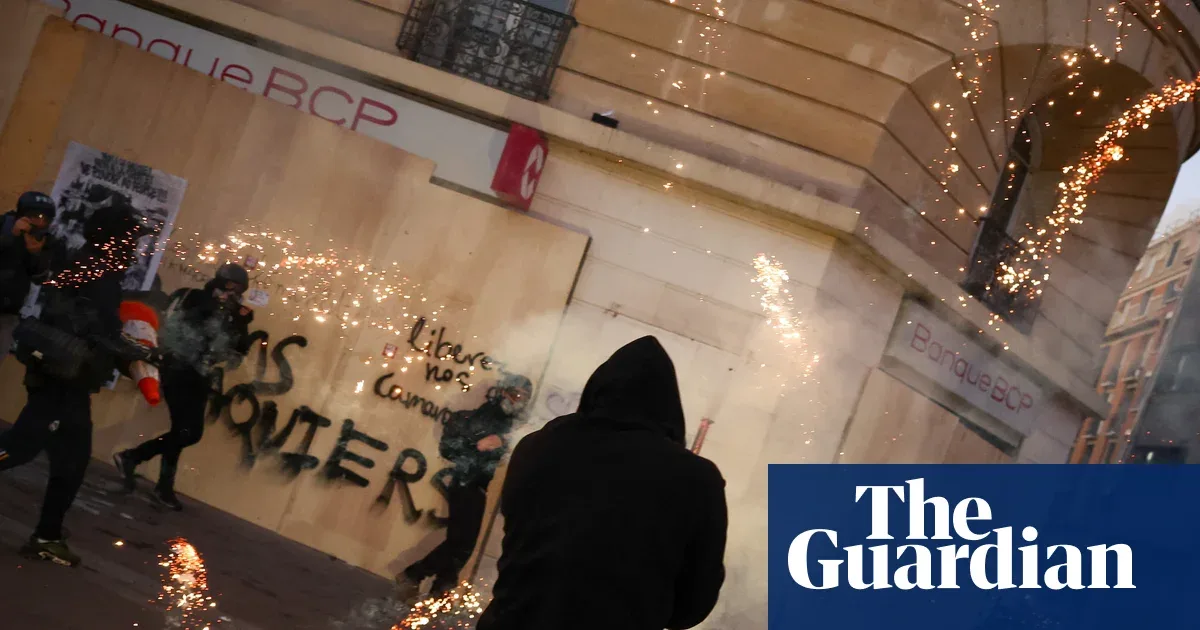
A total of 511 people were detained across France after demonstrations against the rising cost of living and deteriorating public services ended in clashes in several cities on Saturday (31/10). The action, which began peacefully, turned violent when a group of masked rioters attacked police officers with stones, molotovs, and fireworks.
Interior Minister Laurent Nuñez said around 150 planned demonstrations in various regions took place without significant incidents. However, he highlighted what he called an "extraordinary" level of violence from those seeking confrontation. A member of the anti-riot police in Paris was hit by a molotov cocktail and suffered serious burns. Nuñez described the incident as an attempted murder.
Interior Ministry data showed mass participation reached 320 thousand people, down from an estimated 410 thousand the previous week. In Paris alone, around 70 thousand demonstrators marched along boulevards on the southeastern outskirts, avoiding the city center, which was the focus of extra security. The government deployed 70 thousand police and gendarmerie personnel, including elite units, to anticipate further unrest.
The most intense clashes occurred at Porte de Charenton, the end point of the march in Paris. Dozens of people dressed in black and wearing masks used hammers to pry up paving stones and threw them at police. At least one incendiary device was thrown at officers. Paris police described "a small group of rioters" attacking officers with projectiles, and police responded with tear gas and batons. In Lyon, demonstrators threw objects at officers, who responded with tear gas. Meanwhile in Toulouse, police used water cannons to disperse an unofficial action attended by thousands of people, mostly young people.
"The French economy is deteriorating no matter what happens, because today we are governed by a group of incompetent people playing with billions of euros while families struggle with a few cents," said Jérôme Rodrigues, a demonstrator in Paris.
The action was the third wave after major riots on 17 October that hit several cities and became one of the most chaotic days in modern French history. The demonstrations united high school students who had spent a month demanding improvements to education conditions, trade unions, and yellow vest groups angry over economic inequality. A demonstrator in Nantes, Camille Guérin, reaffirmed rejection of the high cost of living and the far right, while supporting the students' demands and public participation in decision-making.
The wave of protests was not limited to France. In Germany, police fired water cannons to disperse a crowd that threw fireworks at officers in an action initiated by the group "Gen Z regelt!". In Frankfurt, two shops were looted and several others damaged. Similar actions in Cologne, Berlin, and Hamburg also turned violent, with barricades set on fire and police using pepper spray. Authorities in Barcelona and Italy stepped up vigilance following calls for action through anonymous TikTok networks and recent clashes in Milan, Turin, and Bologna.
For Indonesia, the wave of protests in Europe is a mirror showing that cost-of-living pressures can trigger social instability across countries. As a trading partner and investment destination, political stability in France and Germany could affect the business climate and fiscal policy with an impact on global markets, including commodity prices and capital flows to developing countries. The Indonesian government needs to monitor these developments, especially if the turmoil continues and shakes the euro zone.
With trade unions having called for a major demonstration on 5 November, as well as plans to blockade schools and campuses on Tuesday and Thursday, pressure on President Emmanuel Macron's government is predicted not to ease. The question is, will the government be able to answer economic demands before the next wave of protests turns into a broader political crisis?