Malaysia Offers Amphibious Aircraft and Helicopter to Help Extinguish Indonesian Forest Fires
Baca dalam 60 detik
- Pemerintah Malaysia menawarkan satu pesawat amfibi CL-415MP, satu helikopter Mi-171, dan 44 personel untuk mendukung operasi pemadaman karhutla di Indonesia.
- BNPB telah mengerahkan 71.878 personel darat dan 63 armada udara, termasuk 39 helikopter water bombing, per 25 Oktober.
- Kedua negara menjajaki kerja sama teknologi deteksi dini dan pemantauan, dengan koordinasi teknis lanjutan melalui NADMA dan Kementerian Luar Negeri.
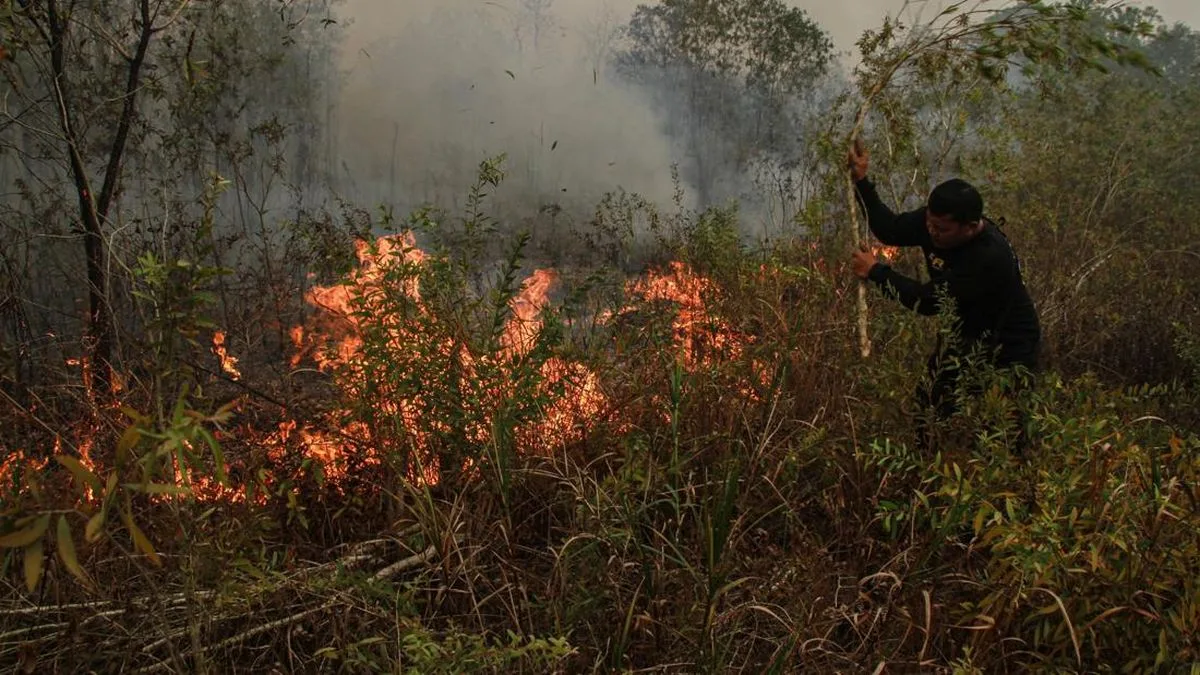
The National Disaster Management Agency (BNPB) disclosed that Malaysia has offered assistance in the form of amphibious aircraft and helicopters to reinforce firefighting operations against forest and land fires (karhutla) in Indonesia. The offer came as Indonesia continues to deploy tens of thousands of personnel and an aerial fleet to bring scattered hotspots under control across several regions.
At a meeting between BNPB Chief Lt. Gen. Kristomei Sianturi and Malaysian Ambassador to Indonesia Muzafar Shah Mustafa at Graha BNPB, Jakarta, on Tuesday (27/10), Malaysia expressed its willingness to send one CL-415MP amphibious aircraft, one Mi-171 helicopter, and 44 personnel consisting of crew and technicians. According to Acting Head of BNPB's Disaster Data, Information, and Communication Center Berton SP Panjaitan, the offer is part of exploratory bilateral support to bolster the handling of forest and land fires.
Malaysia's move is more than a gesture of regional solidarity. Widespread forest and land fires often produce transboundary haze that disrupts air quality in neighboring countries, making operational assistance a shared interest. For Indonesia, additional aerial assets—especially amphibious aircraft capable of scooping water from the sea surface or lakes—could speed up suppression in areas that are difficult for ground teams to reach.
BNPB stressed that the current handling of forest and land fires is carried out in an integrated manner through ground suppression, aerial suppression with water bombing helicopters, and weather modification operations coordinated with BMKG. The combination of these three approaches is considered important because the characteristics of fires in Indonesia—particularly on peatland—often cannot be adequately addressed by a single method alone.
"This offer is part of both countries' efforts to explore support that can bolster forest and land fire handling operations in Indonesia," Berton said.
Beyond operational assistance, BNPB and the Malaysian government are also exploring cooperation in technology. The scope covers monitoring and early detection, data collection and analysis, assessment of affected situations, suppression strategies, research and innovation, technical coordination, and human resource capacity building. The cooperation is expected to strengthen data-driven decision-making in disaster management.
As a follow-up, BNPB will coordinate technically with Malaysia's National Disaster Management Agency (NADMA), facilitated by the Ministry of Foreign Affairs. The discussion agenda covers the suitability of assistance, deployment readiness, logistics needs, aviation safety procedures, and alternative support if thick smoke and low visibility hamper aerial operations. BNPB stressed that operational control remains in the hands of the Indonesian government, and any international assistance will be adjusted to needs and applicable provisions.
Going forward, the effectiveness of Malaysia's assistance will depend on the speed of technical coordination and field conditions. If thick smoke continues to restrict flights, ground suppression and weather modification will again become the backbone of operations. The question is how quickly a technical agreement with NADMA can be executed before the dry season ends—and whether the technology cooperation being explored can strengthen both countries' early detection capacity in the long term?