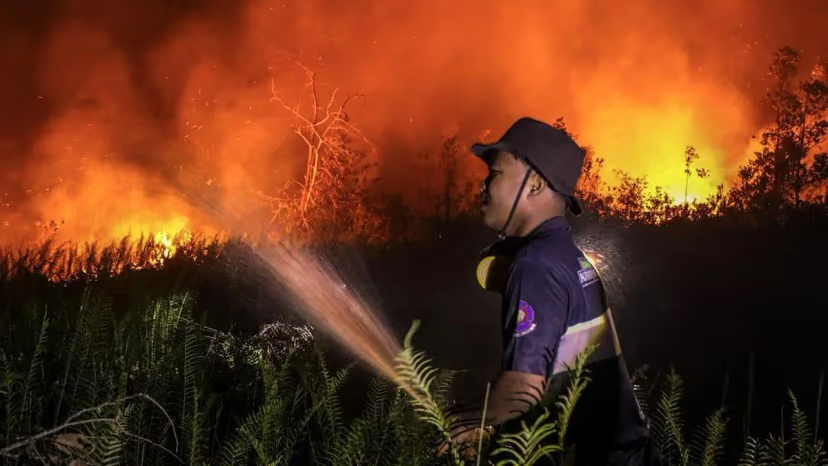
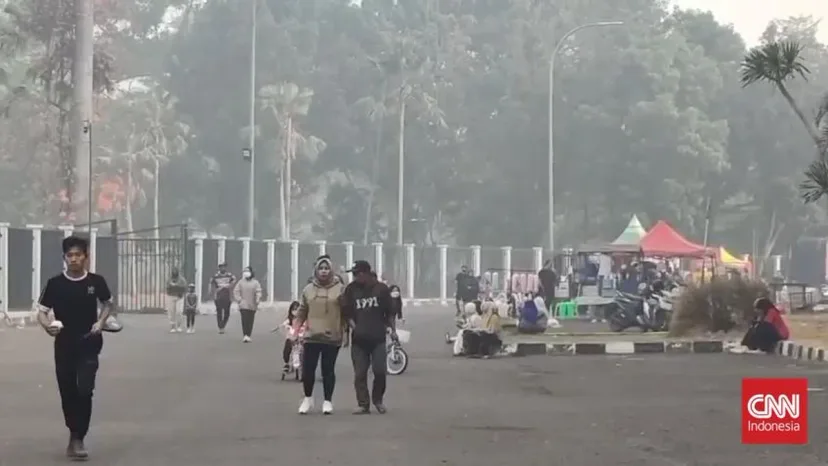
Haze From Forest and Land Fires Still Blankets Sumatra to Papua, Pangkalan Bun Air Reaches Hazardous Level
Baca dalam 60 detik
- BMKG mendeteksi sebaran asap karhutla meluas dari Sumatera, Kalimantan, hingga Papua, dengan polusi lintas batas terpantau di Malaysia dan Singapura.
- Konsentrasi PM2.5 di Pangkalan Bun mencapai 1.048,8 µg/m3, jauh di atas ambang batas berbahaya, sementara BNPB mencatat ribuan titik panas di enam provinsi prioritas.
- Pemerintah menghadapi tekanan untuk mempercepat penanganan karhutla sebelum dampak kesehatan dan diplomatik kian meluas.
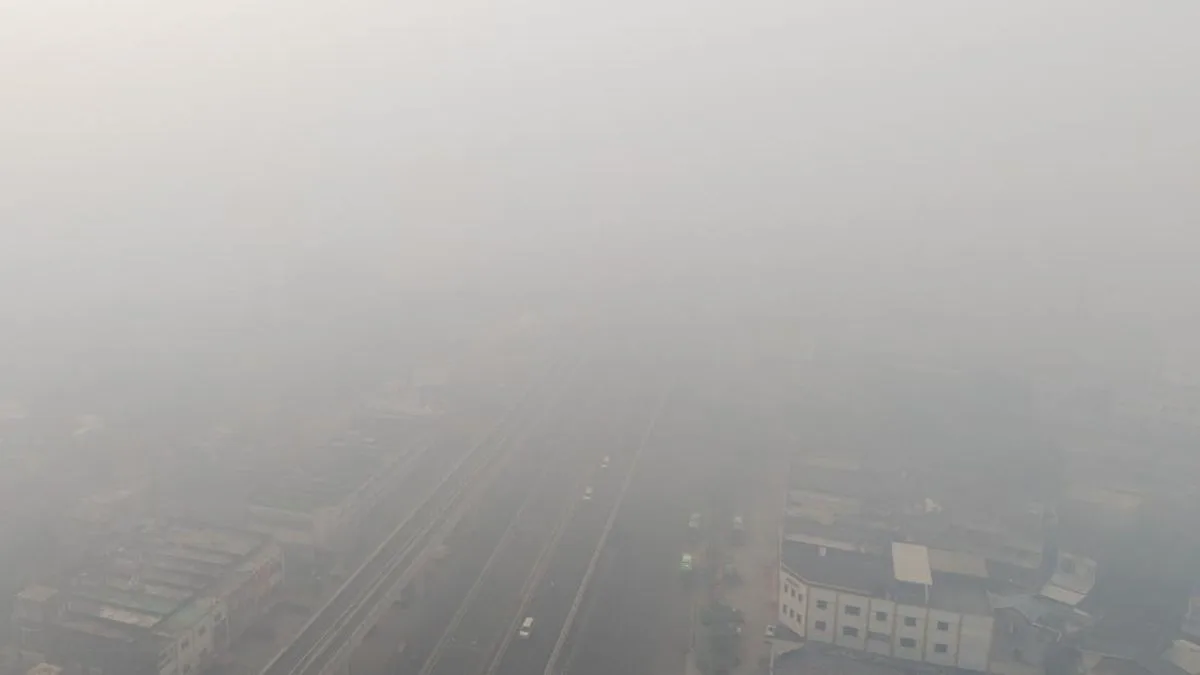
Haze left over from forest and land fires (karhutla) on Monday (19/10) still blanketed several provinces in Indonesia, with air quality in four areas falling into the hazardous category. Monitoring by the Meteorology, Climatology, and Geophysics Agency (BMKG) via the Himawari satellite showed the haze spreading northwest to northeast, covering Sumatra, Kalimantan, Maluku, and Papua.
In Sumatra, haze was detected in North Sumatra, West Sumatra, Riau, Jambi, Riau Islands, Bengkulu, Bangka Belitung, South Sumatra, and Lampung. In Kalimantan, haze covered West Kalimantan, Central Kalimantan, South Kalimantan, and East Kalimantan. Eastern Indonesia was also affected, including Maluku, North Maluku, Southwest Papua, West Papua, Central Papua, Highland Papua, and South Papua.
The smoke pollution has not only had domestic effects. BMKG reported that transboundary haze from Sumatra and Kalimantan was detected in Peninsular Malaysia, Singapore, and Sarawak. In addition, haze from Papua New Guinea also drifted toward South Papua. The situation adds diplomatic pressure on Indonesia, given that neighboring countries often highlight Jakarta's responsibility in handling the fires.
The worsening air quality has serious implications for public health. Exposure to PM2.5 at extreme concentrations can trigger respiratory problems, worsen heart disease, and increase the risk of acute respiratory infections (ISPA), especially in children and the elderly. Regional governments are expected to take emergency measures immediately, such as distributing masks and restricting outdoor activities.
From a law enforcement perspective, fires that recur every year raise questions about the effectiveness of sanctions for those who burn land. Although firefighting efforts continue, the still-high number of hotspots shows that prevention has not been optimal. Environmental organizations argue that a firmer approach is needed, including compliance audits of plantation companies and stronger integrated patrols.
Economically, the haze also has the potential to disrupt flight activity and airport operations in affected areas. In previous incidents, reduced visibility forced flight delays or cancellations, affecting the tourism and logistics sectors. Economic losses from the fires are estimated to reach trillions of rupiah every year.
"Air quality in Pangkalan Bun is already at a hazardous level. We urge the public to reduce outdoor activities and wear masks," a BMKG official said in a written statement on Monday (19/10).
Going forward, the success of handling the fires will depend on synergy between the central government, regional governments, and the public. Without improvements in land governance and consistent law enforcement, the haze threat will keep recurring. The question is, can Indonesia break this annual cycle before its impact spreads further?