Markets Bet the Fed Holds Rates, but Kevin Warsh Could Surprise the World
Baca dalam 60 detik
- Pasar berjangka hanya memberi peluang 15% untuk kenaikan suku bunga The Fed pada Oktober, mencerminkan ekspektasi penundaan yang kuat.
- Ketua The Fed Kevin Warsh menolak memberikan panduan ke depan dan menjauh dari proyeksi kolega, membuka ruang kejutan hawkish.
- Data inflasi AS yang masih tinggi dan kondisi keuangan yang longgar dapat menjadi dasar kenaikan, dengan implikasi global termasuk Indonesia.
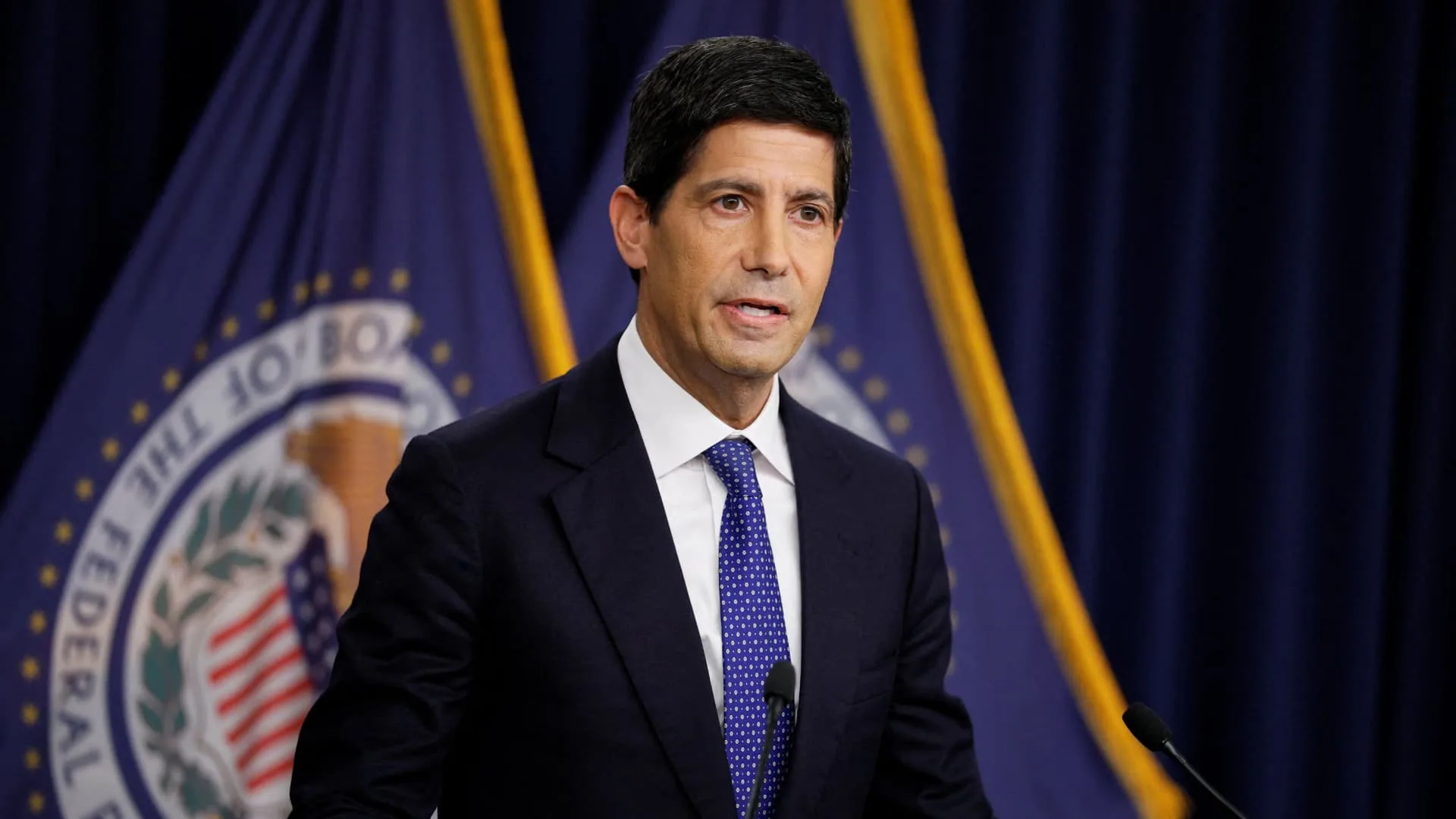
Global market participants are almost unanimous in believing the Federal Reserve will not raise interest rates at its late-October meeting. But that conviction rests on assumptions about central bank communication that may no longer hold under Kevin Warsh's leadership. The Fed chair has deliberately kept the option of a hike open, and that makes investors' position far more fragile than it appears.
At an International Monetary Fund event in Bangkok on Friday, Warsh stressed he was not sending any signal about a decision. The remark actually reinforced market expectations that the Fed will hold rates, with futures markets putting the probability of an October hike at just 15%. Several senior Fed officials, including Vice Chair Philip Jefferson and New York Fed President John Williams, had earlier expressed comfort with holding rates. Markets moved quickly to lock in that expectation.
There are strong reasons to expect the Fed to wait. But recent inflation data contain arguments Warsh could use to push the Federal Open Market Committee to raise rates on October 28. Investors appear to be ignoring that scenario because they are used to the old Fed's communication pattern. Yet Warsh has repeatedly rejected the convention of telling markets in advance about the committee's plans.
Market conviction rests on several assumptions. First, that the chair's top deputies speak for his view, or at least will not contradict it in public. That convention used to hold, but it may not survive a leadership transition. Warsh, Jefferson, and Williams form an informal decision-making team known as the troika. Warsh can coordinate with them even if he is reluctant to reveal his own view. But outsiders cannot be sure whether the communication tradition of the New York Fed president and the vice chair remains intact.
The second assumption is that Warsh broadly accepts the committee's view of the economy. In a speech at Jackson Hole in late August, he laid out his own reading of the economy: strong growth, inflation more worrying than the labor market. That hawkish view drove a simultaneous rate hike in September. His argument rests on credit conditions that are still loose. The Chicago National Financial Conditions Index has indeed risen about 0.05 points since Jackson Hole, but remains negative, meaning financial conditions are tightening but not yet tight overall.
"There should be no misunderstanding. The 2% PCE target is a firm and fixed target," Warsh said at Jackson Hole, responding to a question about whether he could tolerate inflation above 2%.
Warsh also openly rejected the economic projections in the September Summary of Economic Projections (SEP). "That is not my forecast," he told reporters. At the time, the median Fed official projected one more hike in 2026, leaving room to hold in October and raise in December. Warsh's distancing from the SEP makes the policy direction even harder to read.
The question is whether Warsh judges that markets have already done the work. Is "removing one dose of accommodation," as he said Thursday, enough? We can only infer, and the definitive answer will emerge only at the FOMC press conference. Inflation data strengthen the case for a hike: CPI at 3.7% and PPI at 6.3% imply the next core PCE inflation reading of around 3.1% year-on-year, while headline PCE could be higher because of energy prices.
Warsh appears to be learning on the job. He may be starting to understand that a Fed chair cannot work alone and must rely on staff and the committee. He may also realize that markets do not give clean signals independently of the Fed. But that certainty is not yet there. Warsh could enter the October meeting intending to bluff wavering committee members, leaning on surging AI spending demand and hot inflation data. Or he could choose to mediate and follow the committee's drift after assessing their views.
For Indonesia, a hawkish Fed surprise would directly pressure the rupiah exchange rate and widen the yield spread with US Treasuries. Bank Indonesia may be forced to hold rates longer or intervene in the foreign exchange market to maintain stability. Conversely, if the Fed does hold, room for domestic monetary easing could open, though still overshadowed by global uncertainty. Market participants in Jakarta need to watch not only the final decision but also Warsh's hard-to-predict communication tone.
Warsh could still surprise markets, and assuming otherwise is a risky bet. Will the Fed under Warsh be a more aggressive central bank than in the previous era, or a more pragmatic one? The answer will begin to emerge on October 28.