Wall Street Splits: Dow Rises, Nasdaq Pressured by Micron and Middle East Tensions
Baca dalam 60 detik
- Indeks S&P 500 nyaris stagnan pada pembukaan pekan, sementara Dow Jones melonjak 192 poin dan Nasdaq melemah 0,1% akibat koreksi saham Micron.
- Musim laporan keuangan kuartal ketiga dimulai dengan ekspektasi pertumbuhan laba 29,6%, tetapi investor lebih mencermati komentar manajemen soal tekanan biaya energi dan bunga.
- Data inflasi September serta hasil bank-bank besar akan menjadi penentu arah pasar pekan ini, di tengah eskalasi geopolitik di Timur Tengah dan perang dagang teknologi AS-China.
US stock markets opened the week on a mixed note on Monday (11/10), after posting positive performance the previous week. The S&P 500 moved just 0.1%, while the Dow Jones Industrial Average climbed 192 points, or about 0.4%. By contrast, the Nasdaq Composite fell 0.1% amid selling in Micron Technology shares, which dropped 3%.
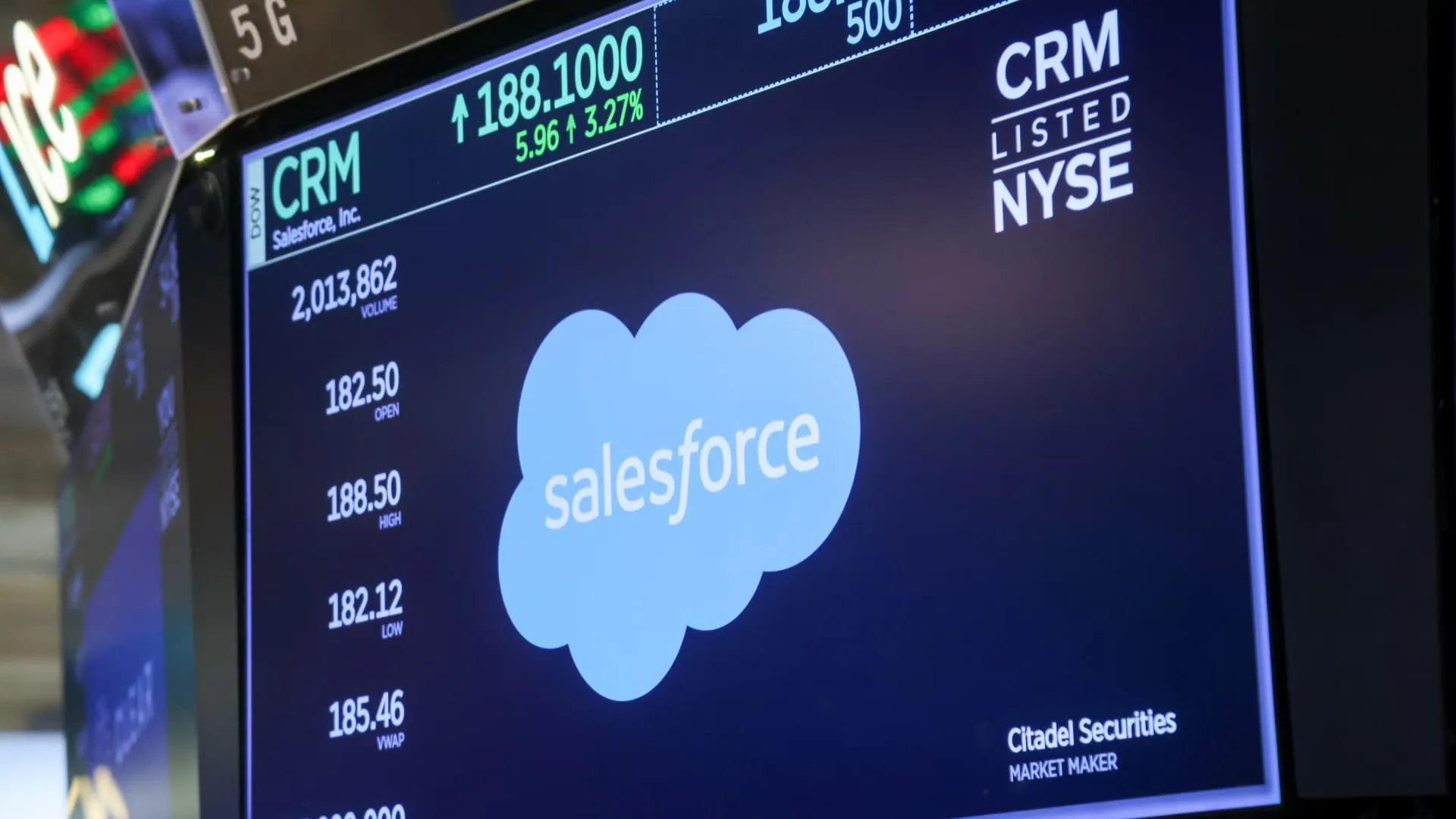
Micron's decline was triggered by investor concerns over rising competition from Chinese memory giant ChangXin Memory Technologies (CXMT). The company is reported to be developing a new generation of DRAM chip structures that could erode the market share of American and South Korean manufacturers. On the other hand, the Dow got a boost from a 3% jump in Salesforce shares after Bank of America upgraded the stock two notches to buy from underperform, with a price target raised from US$160 to US$285.
Crude oil prices were also in focus. After weakening earlier, prices reversed higher after US President Donald Trump announced an "energy ceasefire" between Russia and Ukraine over the weekend. However, doubts emerged after Ukrainian President Volodymyr Zelenskyy said Moscow had violated the agreement. West Texas Intermediate (WTI) rose 2% to around US$93 per barrel, while Brent gained 2% to US$106 per barrel. Trump also said he was considering joining Saudi Arabia in a confrontation against Iran-backed Houthis in Yemen, following a deadly attack at Riyadh's international airport. The statement fueled fears of an escalation of conflict in the region.
Wall Street had just closed a solid week, with the Dow and S&P 500 each posting their second positive week in the last three, while the Nasdaq notched its fourth straight weekly gain. The tech stock rally helped investors shrug off rising oil prices and bond yields. Attention now turns to the third-quarter earnings season, which is expected to be strong. According to John Butters of FactSet, the S&P 500 is projected to post earnings growth of 29.6% this quarter, marking the fourth consecutive quarter with growth above 25%, driven by AI data center construction.
But more crucial for investors are comments from company managers about their ability to cope with higher fuel and borrowing costs. "Investors have highlighted several important aspects," said Brian Leonard, portfolio manager of the Keeley Gabelli Small Cap Dividend Fund (KSDIX). "Can these companies withstand the current situation? Continue margin expansion, and the future will be better than the recent past."
This week, major banks such as Bank of America, Citigroup, Goldman Sachs, JPMorgan Chase, Morgan Stanley, and Wells Fargo are scheduled to release results. In addition, key inflation data will be released: the September consumer price index (CPI) on Wednesday and the producer price index (PPI) on Thursday. This week also marks four years since the start of the S&P 500 bull run after it hit a low of 3,577.03 in October 2022. Since then, the index has more than doubled.
In European markets, automaker shares rose after the European Union and China reached an agreement to reduce Chinese hybrid car exports to the bloc. The Stoxx Europe 600 Automobiles and Parts index rose 0.96%, with Stellantis surging 2.7%. Meanwhile, Volkswagen shares fell after reporting a 9% year-on-year decline in deliveries in the first nine months of 2026, with a sharp 38.5% drop in China in the third quarter. In Asia, South Korea's market closed down 3.65% due to Middle East tensions, while Hong Kong's Hang Seng and China's CSI 300 moved mixed. Foxconn shares fell 1.81% after the United States launched a patent infringement investigation into the company.
For Indonesia, this global market turmoil carries layered implications. Rising world crude oil prices could widen the oil and gas trade balance deficit and pressure the rupiah exchange rate, which in turn could trigger foreign capital outflows from domestic stock and bond markets. On the other hand, US-China technology tensions could be an opportunity for Indonesia to attract semiconductor industry relocation, although it requires infrastructure and human resource readiness. Domestic investors need to watch US inflation data and this week's central bank meeting results as a reference for the direction of global monetary policy.
Looking ahead, can a strong earnings season sustain the market amid geopolitical uncertainty and heated technology competition? The answer will be visible in the market's reaction to inflation data and comments from major bankers in the coming days.