Marco Rubio's Speech at the Acropolis: A Questioned Rhetoric of Western Glory
Baca dalam 60 detik
- Menteri Luar Negeri AS Marco Rubio menyampaikan pidato di Athena yang menyerukan Eropa menghidupkan kembali nilai ekspansi dan penaklukan.
- Kritik muncul karena pidato tersebut mengabaikan kontribusi peradaban non-Barat dan konteks demokrasi yang menjadi dasar pendiri AS.
- Pidato ini dinilai sebagai simbol nostalgia tanpa kebijakan konkret, sementara pemotongan riset dan iklim menjadi sorotan.
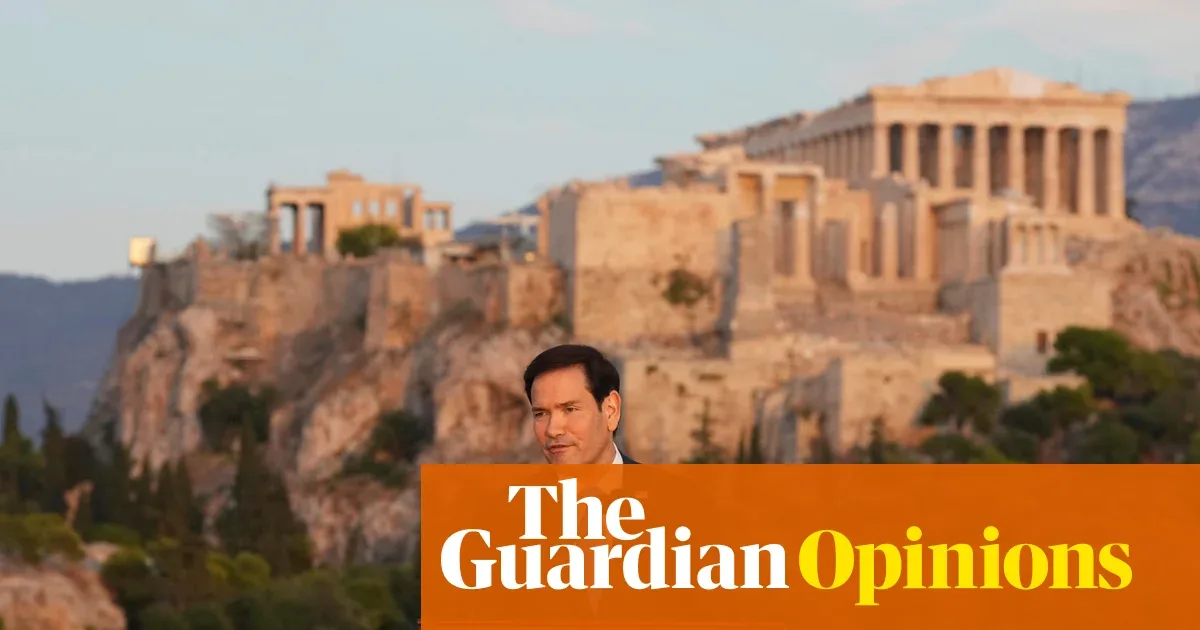
United States Secretary of State Marco Rubio sparked debate after delivering a speech in Athens with the Acropolis as a backdrop, calling on America and Europe to reassert the values of exploration and conquest that once drove centuries of expansion. The speech, delivered on October 7, according to several observers, highlighted nostalgia for past glory rather than offering a new policy direction.
In his speech, Rubio stated that the West must revive the spirit of adventure and conquest or face decline. He said history is determined by "great men" who dare to defy hardship and subdue other nations. However, critics argue that such rhetoric ignores the fact that much of the knowledge that shaped Greece and Rome actually came from Eastern civilizations, such as writing from Sumeria and mathematics from the Arab world.
The speech is also seen as contradictory to the reality of the current administration's policies. At the same time, the United States is facing tensions with Iran, with oil prices remaining high and a number of military assets withdrawn from the region. This situation, according to analysts, makes the narrative of glory through conquest feel irrelevant.
Rubio also said that America and Europe need to emulate ancient Greece in its achievements in philosophy, poetry, sculpture, and drama. However, this statement is considered inconsistent with significant cuts to scientific research budgets, including in the climate field. A former director of the White House Office of Science and Technology Policy, Arati Prabhakar, assessed that the cuts were instead taking the US back to the "Stone Age" rather than a golden age.
"We believe Europe can awaken from its long slumber and rekindle the fire that burned thousands of years ago," Rubio said, as quoted from his speech.
Nevertheless, Rubio's speech this time was not as harsh as his previous one in February that warned of the "erasure of civilization". He appeared to offer an olive branch to Europe. However, for many, the speech is still seen as a call that is difficult for US allies to follow, especially since no concrete policy was announced.
In the Indonesian context, such rhetoric could influence how non-Western countries view US global leadership. If the US continues to emphasize the superiority of Western civilization without acknowledging the contributions of other civilizations, this could potentially widen the diplomatic gap with developing countries, including Indonesia, which has its own rich history of civilization. Indonesia's non-aligned position and active role in multilateral cooperation could be disrupted if the US returns to a narrative of domination.
Furthermore, Rubio's speech reflects the tension between a vision of past glory and current global challenges, such as climate change, pandemics, and economic instability. Instead of inviting cooperation, the narrative of conquest could actually isolate the US from its traditional allies. The question is, will a speech like this be followed by concrete action or will it just be an opportunistic photo op in the shadow of the Parthenon?